The future of brand tracking: using social listening for continuous brand intelligence
Use Case guide contents
Today, brand health is shaped in the scroll: a creator’s throwaway line, a forum thread that catches fire, a review that influences thousands of purchases. If your measure of awareness, consideration and loyalty still waits on surveys and memory, you’re looking in the rear-view.
Social listening for brand tracking turns public conversation into a continuous learning curve. It captures high-level metrics such as share of voice, reach, sentiment, emotion, narrative alignment and crucially ties them to who is talking: the audiences, creators and communities that move markets. Instead of making decisions based on what people claim they did, you watch what they’re doing now - what they share, praise, drag and buy. In doing this, you don’t just give your brand and its stakeholders a clearer, real-time picture of brand health, but you see it early enough to act.
This guide walks you through a brand tracking logic that’s fast, forensic and predictive: mapping social signals to the classic awareness to loyalty funnel, benchmarking against competitors in real time, and using social listening to spot weak signals before they steer your brand off course. By using social listening for brand tracking, you can ensure your brand’s image is always guided in the direction you want it, regardless of what is thrown your way.
Why social listening is non-negotiable for brand tracking
Traditional brand tracking methods, such as quarterly or annual surveys, suffer from inherent latency. By the time data is collected, processed, and analyzed, the cultural context that birthed the opinions has often evolved dramatically. The consumer conversation moves at the speed of virality, yet the measurement remains slow. The core challenge here is not merely the speed of data collection, but the data’s relevance. Surveys capture stated preference - what a consumer claims they might do. Advanced social listening, however, captures demonstrated behavior and spontaneous emotional reactions as they happen, providing information closer to the moment of truth for purchase or advocacy.
Modern brand tracking requires universal scope. Platforms capable of deep Audience Intelligence must collect signals from a wide range of sources. For instance, solutions like Pulsar TRAC gather data from public conversation sources including news, print, TV, radio, podcasts, niche communities on social forums and Twitch, and search data, ensuring a complete and unfiltered view that extends far beyond the traditional metrics of major social networks. This ability to combine disparate data streams provides the context required to understand why a brand's perception may be shifting, as well as the historical context of its perception.
Mapping the brand funnel using real-time social signals
The foundation of an effective modern brand tracking strategy lies in mapping observable social behaviors to traditional marketing funnel metrics that your brand may be used to using: Awareness, Consideration, Preference, Purchase Intent, and Loyalty. While traditional tracking relies on asking consumers about their intent, social listening utilizes behavioral proxies. A sudden increase in specific, positive product-related searches coupled with high-sentiment comparison mentions (e.g., "switching from competitor X to brand Y because...") acts as a highly reliable, real-time indicator of purchase intent, far surpassing the reliability of subjective survey responses.
This direct relationship between observable social data and strategic marketing metrics is formalized by aligning the traditional funnel stages with their dynamic social listening counterparts.
Below is one example of how social listening can be applied to the traditional brand awareness to loyalty funnel.
| Traditional Brand Metric | Brand Funnel Stage | Social Listening Indicator (Pulsar TRAC Focus) | Benefit |
| Awareness & Recall | Top of funnel | Share of Voice (SoV), mention volume, total reach, impressions, are people recognising the brand? | Quantifies brand visibility and the attention it’s getting relative to competitors. |
| Consideration & Preference | Mid-funnel | Sentiment Score, Engagement Rate (ER), comment topic clustering, comparison mentions, pain point identification | Identifies qualitative drivers of choice and measures desire based on product-related discussions. |
| Purchase Intent | Mid-to-bottom funnel | Direct intent queries (e.g., "where to buy X"), positive review sentiment, loyalty emojis/language | Gauges real-time readiness to convert and isolates competitive barriers. |
| Loyalty & Advocacy | Bottom of funnel/equity | Positive reviews, community shares, brand advocate identification, fandom language (e.g., emojis) | Tracks emotional trust, long-term customer relationships, and advocacy behavior. |
Modern brand tracking reimagines the traditional marketing funnel by replacing claimed attitudes with observed behaviour. Share of Voice (SoV) reveals which brands dominate attention and where that visibility originates, while sentiment and emotion analysis uncover not just what audiences say, but why they say it. Topic clustering and audience segmentation expose the drivers of desire, highlighting opportunities for innovation and positioning. At the base of the funnel, social data captures the proof points of loyalty - advocacy language, positive reviews, and user-generated content - offering a dynamic proxy for traditional metrics like NPS or CSAT. Combined, these insights turn brand tracking into a living system that continuously diagnoses, benchmarks, and strengthens brand equity in real time.
Cultural impact on brand tracking: quantifying the vibes
True cultural trend tracking for brand tracking goes beyond reacting to mentions; it requires identifying the deeper stories, beliefs, and cultural movements. These are the Narratives that fundamentally shape public discourse.
One important factor in brand tracking is tracking your brand’s relevance. To maintain relevance in an accelerating media environment, brands must shift focus from simply counting conversational volume to analyzing the beliefs and behaviors driving that conversation. This is the role of Narrative Intelligence - Pulsar Narratives AI detects, summarizes, and ranks the narratives emerging across billions of news and social media pieces of content in real-time and historically.
This capability provides substantial competitive advantage. Understanding how a macro-trend or brand message plays out differently across various communities is crucial for achieving authentic relevance. And you don’t need to keep this information in isolation - by using Pulsar TRAC to instantly segment the audiences participating in a conversation, marketers can listen specifically to custom segments (e.g., "tech journalists" or "millennial parents") to tailor strategy, creative, and targeting effectively. Let’s take a look at some use cases of social listening for brand tracking to dive deeper into how using narrative and audience intelligence are crucial for your brand.
Quantifying the emotional bond: who loves you?
Long-term brand equity is founded on loyalty and deep emotional connection. In our Beloved Brands study, which included analysis of brands Pandora, Patagonia, Lululemon, UGG and Burberry demonstrated how social data can quantify these deep bonds - and what makes up ‘love’ for your brand.
Emotional connection is not a monolithic concept; the analysis revealed that love manifests differently across niche communities and product lines. Tracking requires granular analysis of the language, tone, and specific emojis used by fandoms to express themselves. Simple positive sentiment analysis is inadequate for this purpose. Instead, advanced audience intelligence for brand tracking must categorize the archetype of love (e.g., aspirational love, nostalgic love, utilitarian love) to genuinely inform strategy.
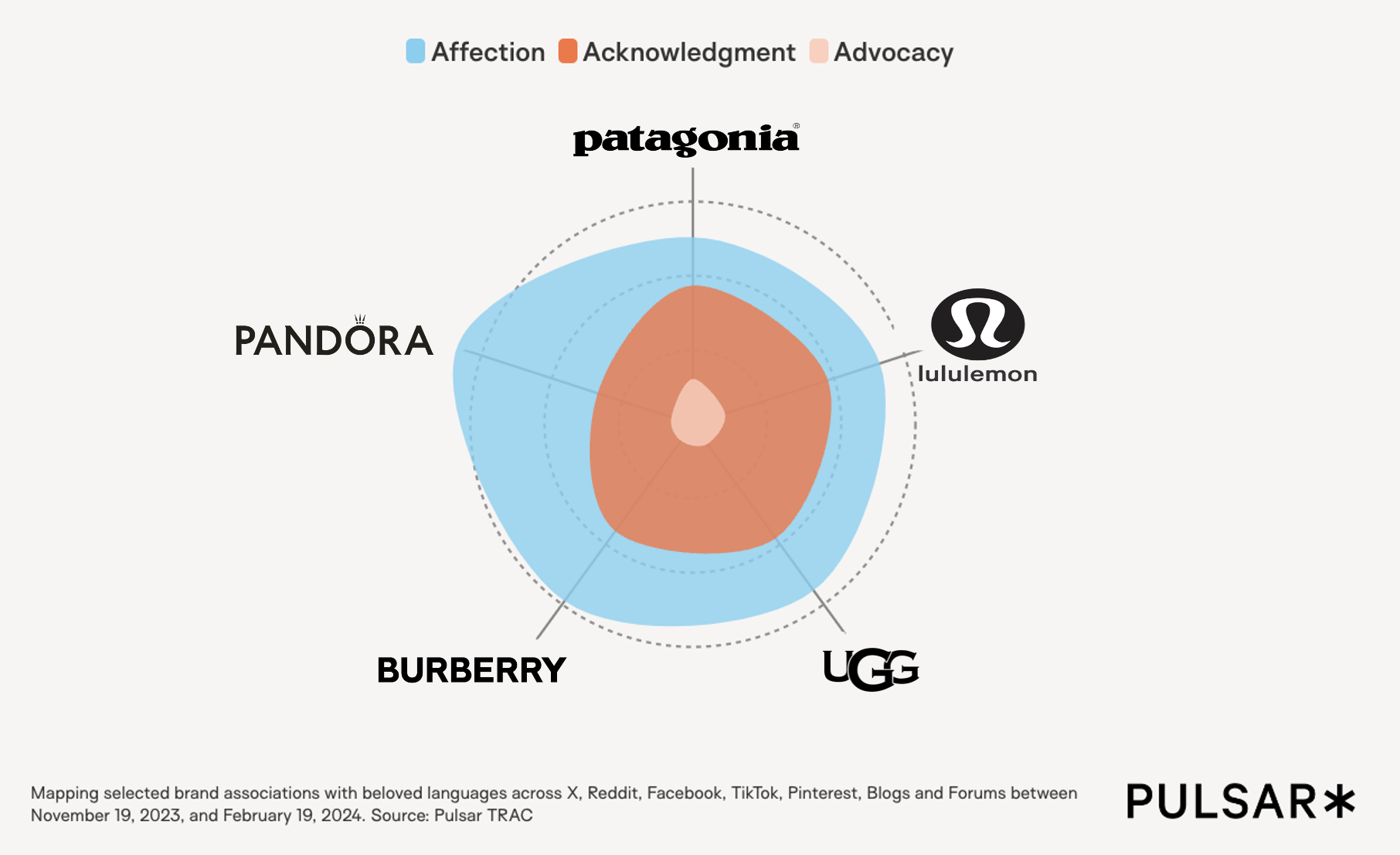
Pulsar TRAC supports this level of segmentation by allowing the creation of custom audience segments, keyword analysis and emoji analysis. By listening specifically to your audience panels over time, and what they’re saying about your brand, marketers can continuously track the evolution of loyalty language and sentiment, providing a far richer understanding than flat, periodic survey scores. This works whether they are fans of a hero product or simply a member of a certain demographic or special interest group.
In this way, social intelligence for brand tracking moves beyond measuring how much people talk about a brand to understanding why they care. By combining behavioural signals, emotional nuance, and audience segmentation, it reveals the real drivers of loyalty - turning social data into a continuous, evidence-based readout of long-term brand equity.
Defining your digital identity: the Social Brand Personality Index (SBPI)
People create emotional relationships with brands just as they do with other people. Every brand projects a personality - a set of human traits that audiences instinctively associate with it, like sincerity, excitement, competence or innovation.
These perceptions shape everything from loyalty to purchase intent, yet they’re rarely measured with precision. Pulsar’s Social Brand Personality Index (SBPI) provides a framework to do exactly that. By analysing language, tone and emotional cues in social and media conversation, our SBPIs map how people describe and feel about a brand, revealing which personality traits and archetypes dominate public perception - and how those associations evolve over time.
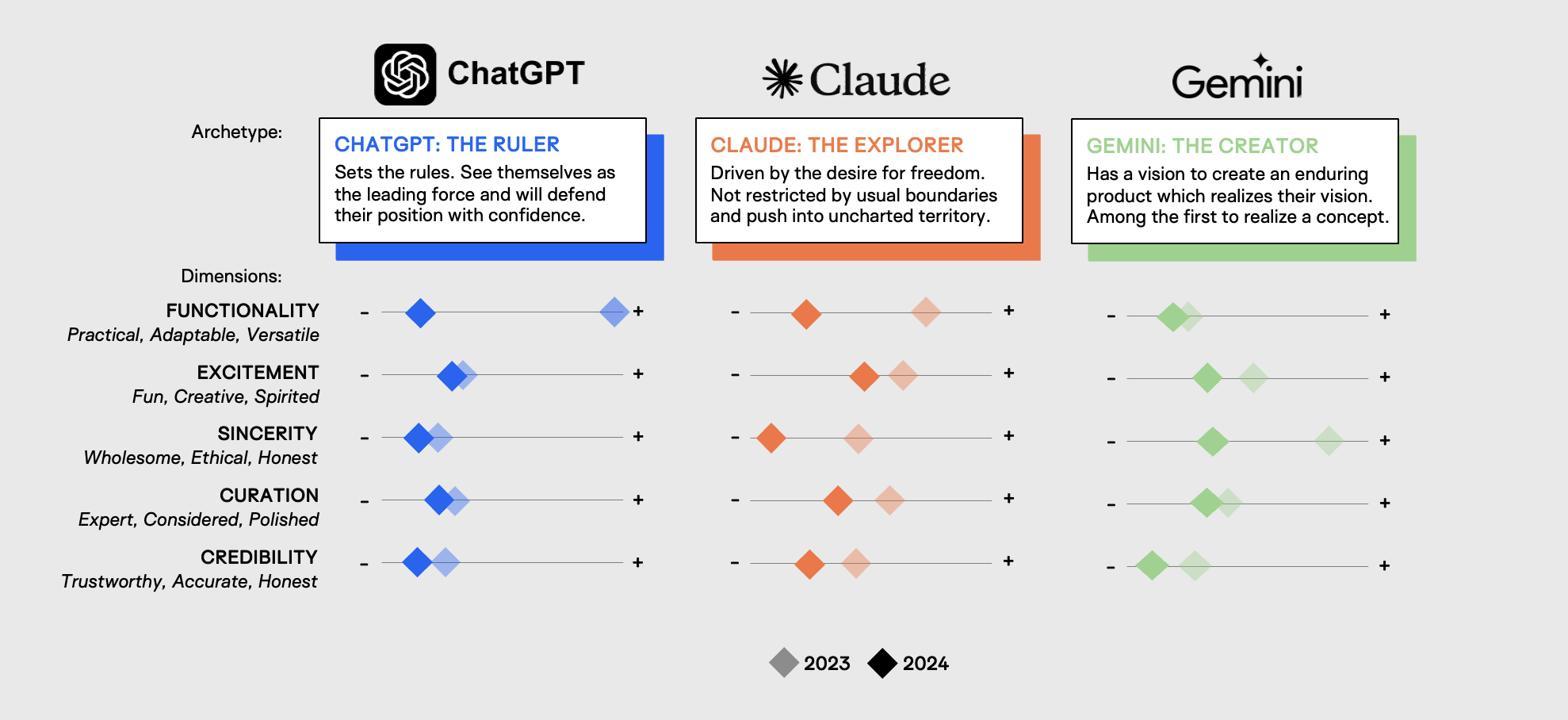
To demonstrate this approach, Pulsar applied the SBPI framework to one of today’s most dynamic and fast-evolving sectors: AI chatbots. The AI SBPI study analysed how audiences characterise ChatGPT, Claude and Gemini, uncovering distinct personality archetypes for each. From ChatGPT’s “Ruler” confidence to Claude’s “Explorer” independence and Gemini’s “Creator” ambition. The findings show how even emerging tech products develop clear, measurable personalities in the public imagination.
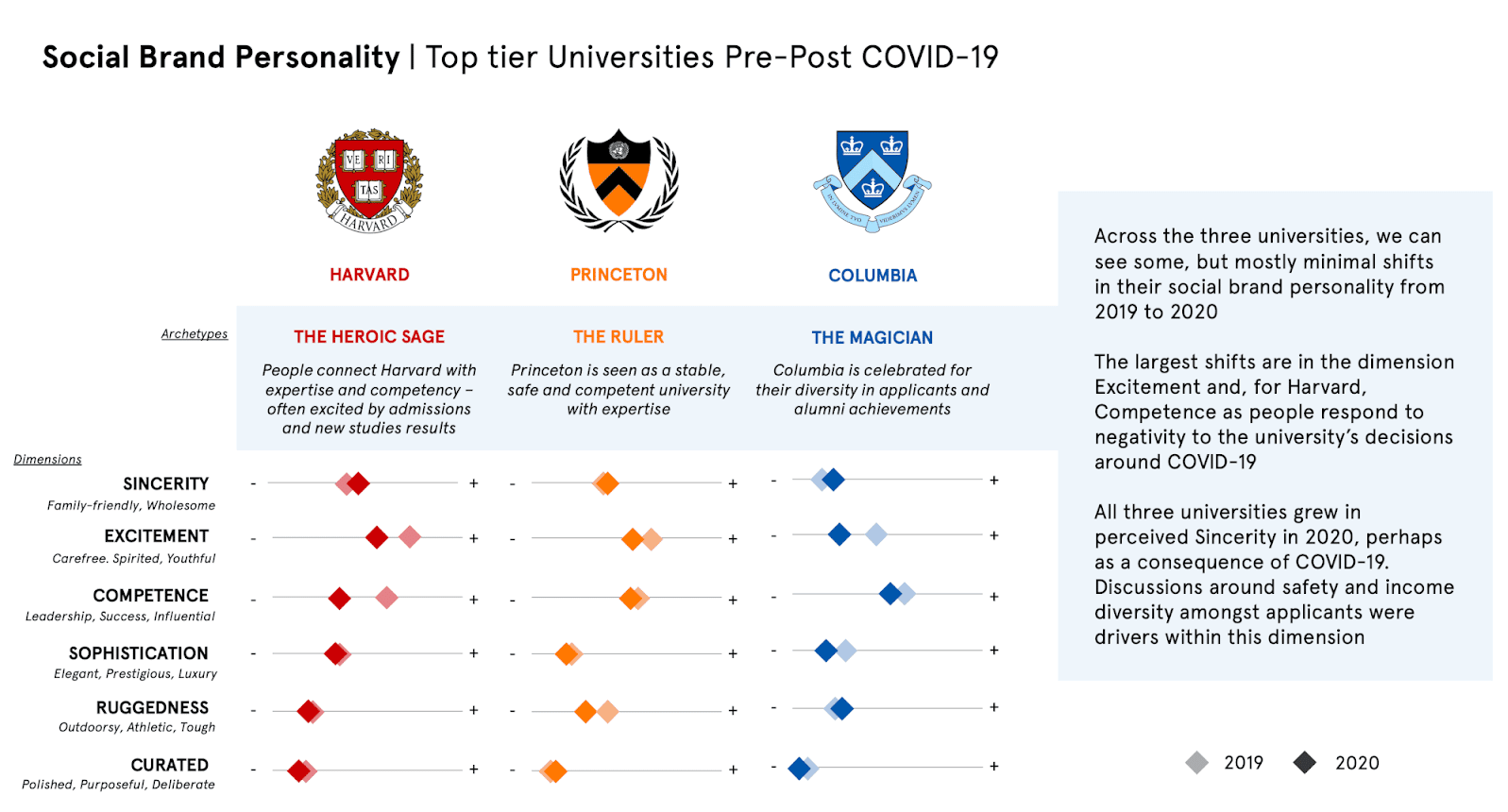
The same framework was also applied in our Universities SBPI study, which analysed how audiences perceived Ivy League institutions like Harvard, Princeton and Columbia. Even within this traditionally stable category, social data revealed subtle but meaningful shifts in brand personality - Harvard’s “Heroic Sage” identity becoming less confident amid criticism of online tuition, Princeton retaining its “Ruler” reputation for competence, and Columbia’s “Magician” archetype strengthening through conversations about diversity and access. These findings show how the SBPI can surface nuanced changes in trust, prestige and purpose - the emotional dimensions that shape how enduring brands are experienced over time.
More broadly, applying SBPI analysis within social intelligence for brand tracking enables marketers to quantify not just awareness or sentiment, but who their brand is perceived to be. Tracking those personality shifts over time offers a powerful new dimension to brand health measurement - one rooted in emotion, identity, and audience meaning rather than metrics alone.
How entertaining are you? Building a system to analyse performance in context
In an age of endless content and diminishing attention spans, entertainment has become a key brand-building strategy. Tracksuit’s Entertain or Die report, whose metric was created using Pulsar TRAC, posits that brands must prioritize earning attention through cultural relevance rather than simply buying it.
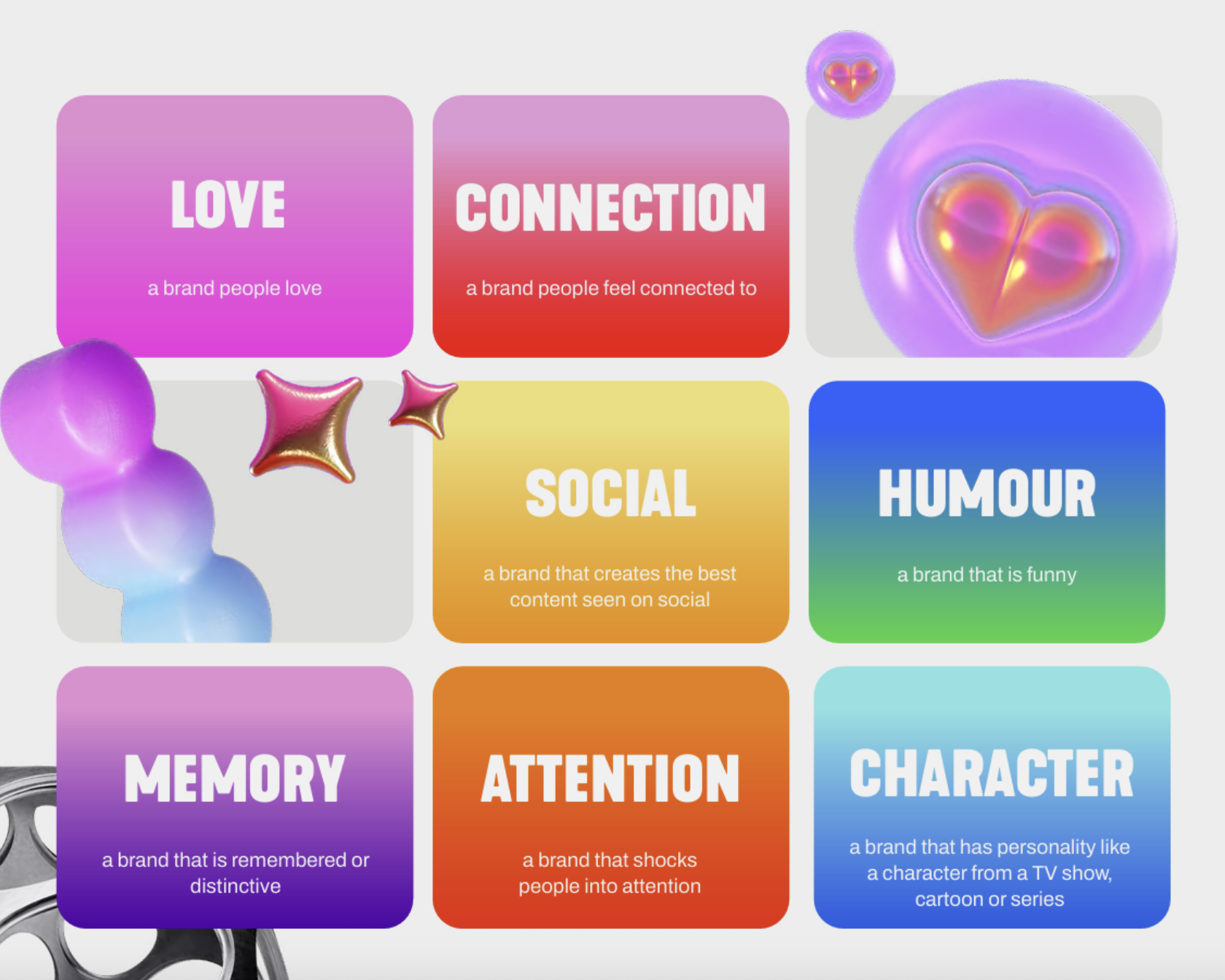
This approach is quantified using the ‘Entertainment Index’ which measures how effectively brands successfully "steal share of voice" from market leaders through pure entertainment content. The proprietary index combines a specific Entertainment Metric with share of search, media, and social media data to provide a robust measurement of cultural cut-through. Through analysing brands through the facets of love, connection, social, humour, memory, attention and character, consultant Sam Martin was able to create a ranking system that showed where each brand stands in relation to others. The result is a live cultural scoreboard showing which brands are truly connecting, and why.
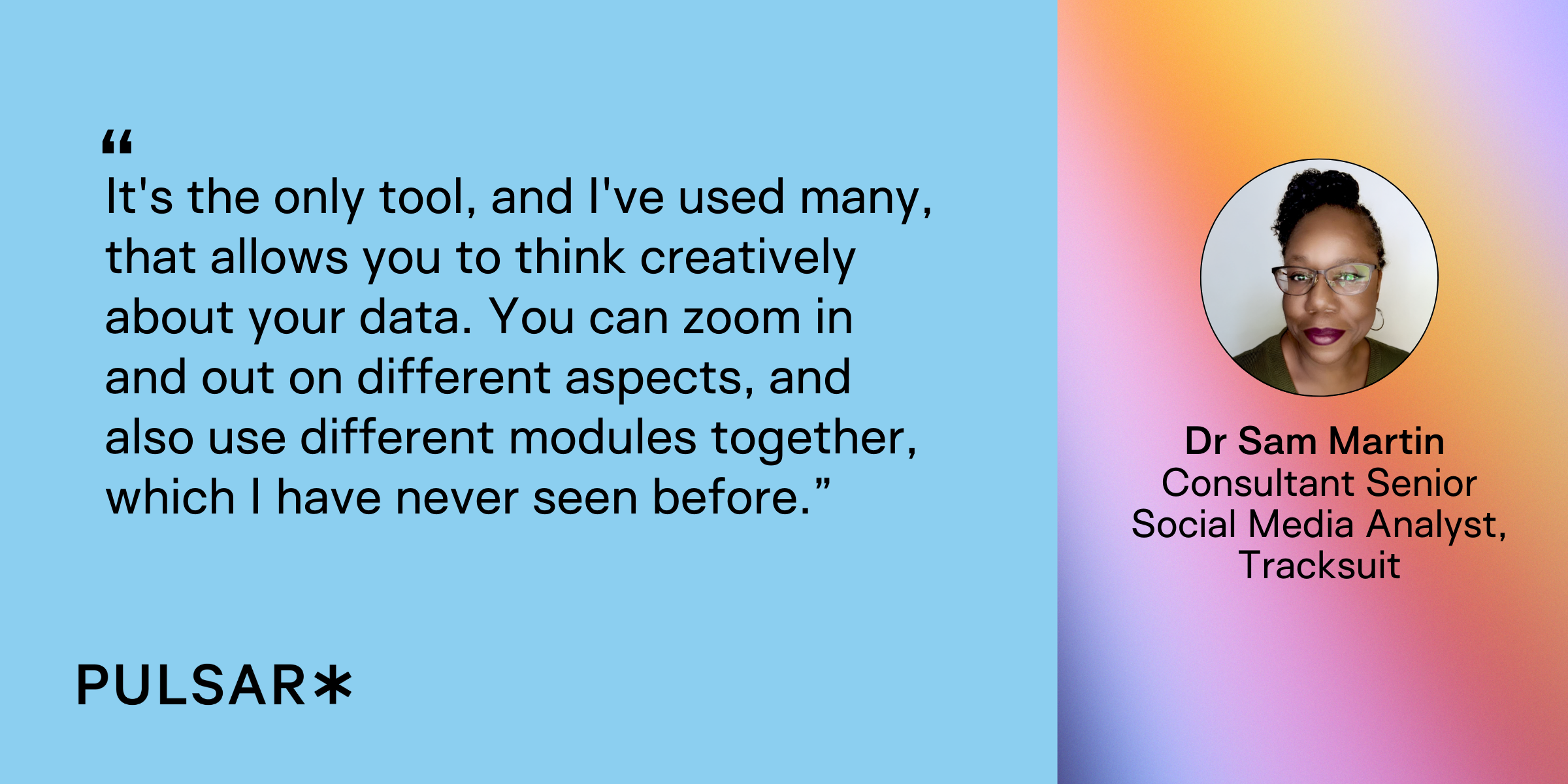
Brands can use Pulsar TRAC to build their own equivalent system, tracking how they sit within the wider cultural conversation, benchmarking their personality, tone, and creative resonance against leaders in their sector. Embedding this into brand tracking provides the missing context that surveys and sentiment alone can’t: not just what people think of your brand, but where it stands within culture. Understanding that position is critical for shaping future campaigns, protecting long-term equity, and ensuring your brand remains relevant in an attention economy that never stops moving.
Smarter brand tracking through AI-driven listening
Effective brand tracking today must operate at the speed and scale of modern media. Simply counting mentions is no longer enough. The most advanced platforms, such as Pulsar, combine social and media data with integrated machine learning models to measure sentiment, identify emerging themes, and forecast shifts in brand perception before they surface in traditional metrics.
Pulsar’s new Insight Agents, for example, bring this next generation of automation directly into the brand tracking workflow. Each Agent type is designed to enhance a different stage of brand health monitoring: Sentinels provide real-time alerting when perception changes or crises emerge; Oracles use predictive models to anticipate narrative or reputational shifts; Custodians maintain data quality and compliance across global datasets; and Analysts synthesise multi-source signals into clear, actionable brand insights. Deployed together, these agents ensure brand tracking becomes a continuous, proactive system - capable of surfacing weak signals, spotting cultural inflection points, and guiding strategic responses in-flight.
This agentic approach transforms social listening for brand tracking from periodic measurement into a living diagnostic: a self-updating feedback loop that benchmarks performance, contextualises sentiment, and links narrative shifts to long-term brand equity. By translating the noise of public conversation into structured, predictive intelligence, Pulsar enables brands to not only track reputation, but steer it.
Frameworks and practical steps: Listen–Map–Activate
To transition from mere data collection to a continuous strategic intelligence system, organizations must adopt a clear operational framework. The Listen–Map–Activate cycle is designed to integrate Audience Intelligence seamlessly into existing brand tracking and communication workflows.
LISTEN: Capturing the universal scope of conversation
The initial phase requires capturing comprehensive, high-fidelity data across the entire digital ecosystem. This begins with configuring Pulsar TRAC for omnichannel data collection, pulling data from both major and niche public sources.
Effective listening depends on setting up granular queries that capture not just the brand name, but product names, industry buzzwords, campaign hashtags, competitor names, and common misspellings. Crucially, users must leverage Pulsar TRAC's advanced filtering capabilities, utilizing over 50 available filters to slice and dice conversations by audience segment, demographics, behaviors, affinities, and keywords. This precise ability to zoom in on the relevant part of the public conversation is what transforms massive data streams into meaningful data sets.
MAP: Translating signals into actionable insights
The Mapping phase contextualizes the collected data and translates signals into strategic intelligence. This requires two key actions: audience segmentation and narrative application.
Pulsar TRAC allows marketers to recreate customer personas as dynamic social panels (e.g., "Gen Z gamers," "early adopters," or "B2B tech journalists") and listen to their conversations over time. This process enables the capture of real-time signals of how evolving trends and brand perceptions play out exclusively within the specific communities a business cares about.
The data is then run through the intelligence layer, where machine learning models interpret depth and identify patterns. Pulsar Narratives AI detects, summarizes, and ranks the underlying Narratives - the key opinions, beliefs, and behaviors - driving conversations. This moves tracking from a quantitative counting exercise (volume) to a qualitative explanation (why that volume exists). By classifying narratives, Pulsar Narratives provides instant answers and full Narrative Briefings without requiring complex Boolean queries, democratizing sophisticated insights for the entire marketing and insights team.
ACTIVATE: Closing the loop for campaign optimization and strategy
Activation involves translating the mapped intelligence into tangible execution across marketing and communications channels. If the mapping phase reveals high-engagement discussions around a competitor's product failing in a niche forum, the activation step is immediately crafting targeted content that addresses that pain point or highlights the brand's superiority in that specific, segmented community.
Pulsar CORE is essential for benchmarking performance and optimization. This tool tracks how organic and paid content performs based on the intelligence generated from Pulsar TRAC and Pulsar Narratives. Key metrics monitored include Engagement, Visibility, and Reach, enabling side-by-side comparison and benchmarking against competitors and industry leaders. The ultimate goal is to establish a continuous feedback loop: the content performance data gathered by Pulsar CORE then feeds back into the TRAC listening phase, refining audience segments and keyword queries. This integration ensures that brand tracking is truly continuous and self-optimizing.
The Listen–Map–Activate Framework for Brand Tracking
| Phase | Objective | Brand Tracking Outcome | |
| LISTEN | Universal data capture & granular filtering | Establishing baseline Share of Voice, identifying all relevant mentions (brand, competitor, industry). | |
| MAP | Contextualization & insight generation | Tracking sentiment evolution, isolating key pain points, detecting emergent cultural narratives, and segmenting resonance by community. | |
| ACTIVATE | Strategic implementation & measurement | Campaign optimization, rapid crisis communication strategy, content inspiration, and validating real-time ROI of brand activities. |
Key takeaways: How companies doing brand tracking gain a competitive edge through listening
The new era of brand tracking is defined by motion, the constant hum of audience conversation, cultural change, and creative reinvention. Social listening brings order and intelligence to that motion. It captures every layer of brand meaning: visibility through share of voice, emotion through sentiment, identity through personality archetypes, and relevance through the narratives and cultural moments that surround you.
By combining these dimensions into a single, continuous system, social intelligence for brand tracking turns what used to be retrospective measurement into living strategy. You’re no longer checking brand health after the fact, you’re managing it in real time, seeing how audiences feel, talk and act before those signals become market shifts.
The brands that thrive in this landscape will be those that treat tracking not as reporting, but as navigation - using social data, AI insight, and cultural analysis to steer their reputation forward. Continuous listening is no longer optional; it’s how brand equity grows stronger, smarter, and more in sync with the world around it.
2026 Outlook
Ready to transform your brand tracking strategy with deep audience insight?
Explore the power of Pulsar TRAC, Pulsar CORE and Pulsar Narratives to start uncovering the insights that matter most. Our Pulsar newsletter for more expert guides and industry insights.
To learn more, sign up to our newsletter below: