Mastering the moment: why social listening is critical for real-time event management
Use Case guide contents
In today’s hyper-connected world, events are no longer contained to a stage or venue. Product launches, festivals, or conferences unfold simultaneously in physical spaces and across vast digital landscapes. Success depends not just on planning, but on how quickly brands can adapt to shifting sentiment, viral moments, or sudden crises. Without real-time intelligence, event managers risk missing the very signals that define whether an activation lands or falls flat.
This is where social listening becomes essential. Unlike simple monitoring, it unpacks the speed and scale behind conversations - along with tone, context, even cultural nuance - revealing how audiences are truly experiencing an event. Real-time insight allows brands to spot pain points, track preferences, and capture emerging demands as they happen.
For brands and institutions whose function relies on live events, keeping on top of the events’ social media impact in real-time is a must-have, especially when their entire business model depends on the events’ success. Events also act as live laboratories: every launch, showcase, or sponsorship generates unfiltered feedback akin to instant user testing. With tools like Pulsar TRAC and Pulsar Narratives, this feedback becomes more than event campaign measurement - it fuels brand success itself. Social listening for events allows businesses to become engines of innovation, feeding directly into roadmaps and future campaigns, products and viral moments.
The real-time advantage: key lenses for event management with social listening
Social listening gives event teams a powerful, multi-dimensional view of what’s happening as it happens. By looking through different lenses such as audience, operations, and cultural impact, organizers can respond quickly and elevate the overall experience. This is a framework that turns live chatter into actionable intelligence.
| Lens | Key Focus | How Social Listening Helps |
| Communications Command Center | Managing public narrative, amplifying messages, crisis communication. | Real-time alerts for sentiment shifts, identifying influencers for amplification, early detection of reputational issues. |
| Resources & Safety | Ensuring attendee well-being, managing logistics, preventing incidents. | Detecting mentions of physical issues or rumors, geo-locating problems, proactive crowd control. |
| Audience Engagement & Trend Spotting | Tailoring experiences, content, and marketing to evolving preferences. | Identifying nascent cultural trends, segmenting audiences for personalized activations, leveraging micro-communities. |
| Campaign Optimization & Measurement | Adjusting marketing efforts, evaluating performance, proving ROI. | Immediate feedback on campaign reception, A/B testing, precise audience targeting, measuring tangible impact. |
| Post-Event Insights & Future Planning | Capturing comprehensive feedback for continuous improvement and innovation. | Analyzing recurring themes, identifying unmet needs, informing future product/service enhancements. |
Communications command center: keeping the narrative aligned
In the high-speed environment of a live event, communication needs to be both proactive and precise. Social listening acts as the control room—monitoring sentiment, amplifying what works, and flagging potential issues before they spiral.
With Pulsar TRAC, spikes in mentions or sudden shifts in sentiment trigger real-time alerts. That means a technical glitch or controversial comment can be addressed instantly through clarification, schedule adjustments, or targeted PR - turning crisis management into reputation protection. At the same time, engagement tracking reveals which hashtags or speaker quotes are resonating, allowing organisers to amplify the content with the most viral potential.
The Brooklyn Museum offers a clear example of how this works in practice. When Alice Northover, Senior Director of Audience, Research, Data and Insights, joined the museum, one of her first priorities was moving beyond manual social media monitoring. Reporting that "ten Instagram posts reached this many people" wasn’t enough. What the team needed was a broader perspective: how are people really talking about the museum? What impact are exhibitions having on culture?
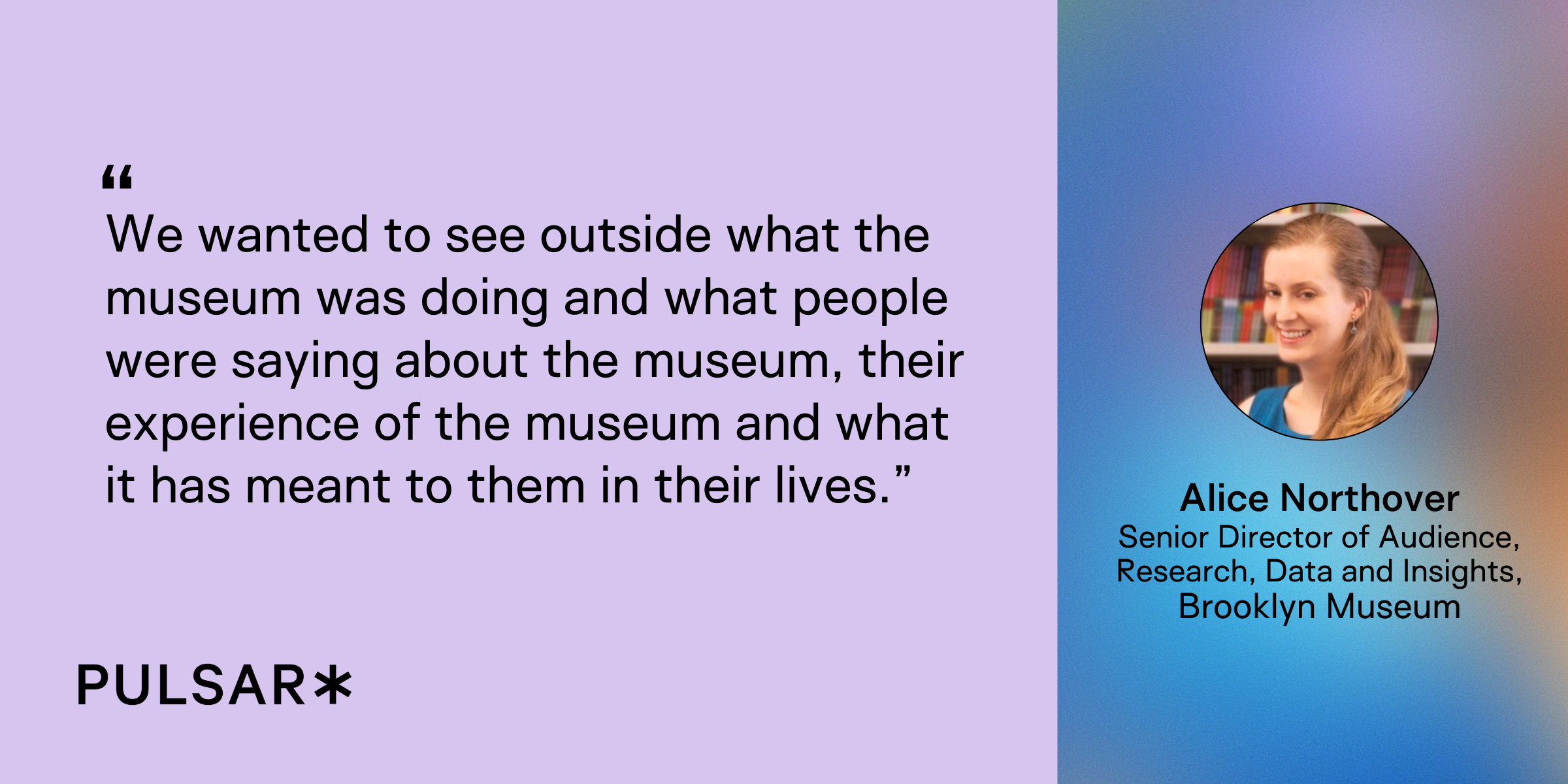
The Brooklyn Museum team now runs TRAC searches for each exhibition. With Thierry Mugler’s Couturissime, they monitored what visitors were saying: how many people were talking, what sentiment looked like, and which influencers or critics were amplifying discussion. That gave the team a much richer sense of cultural impact than lagging social metrics ever could. For the Elizabeth Catlett exhibition, TRAC surfaced a vital insight: nearly half of online conversation about Catlett was happening in Spanish. Given that a significant proportion of Brooklyn’s population speaks Spanish at home, this data point was crucial. It led the team to integrate Spanish-language inclusion across the exhibition and its marketing, ensuring the show was accessible to a core part of their community.
Transitioning from manual monitoring to Pulsar, the museum began using social listening to evaluate the impact of exhibitions, identify key narratives, and better engage its community. While rooted in exhibitions, the same logic applies directly to events: each event is its own "program," with narratives to track, content to amplify, and risks to mitigate. By understanding which stories are gaining traction and which could damage credibility, organisers can act quickly to maintain trust and extend the event’s impact long after the doors close.
To read more about how Brooklyn Museum uses Pulsar, check out the full case study here.
Resources & safety: proactive problem solving
Keeping attendees safe and comfortable is non-negotiable. From managing facilities and tech glitches to preventing dangerous crowd surges, social listening adds a vital layer of "digital eyes and ears," detecting early mentions of broken infrastructure, technical failures, or even rumours that could spark safety risks. With geo-fencing in Pulsar TRAC, organisers can pinpoint where issues are being reported and deploy resources immediately.
This is especially critical at high-density events. A false rumour about a celebrity appearance, for instance, can quickly create unsafe crowd movements. Social listening surfaces those signals early, giving staff time to redirect people or issue clarifications before problems escalate.
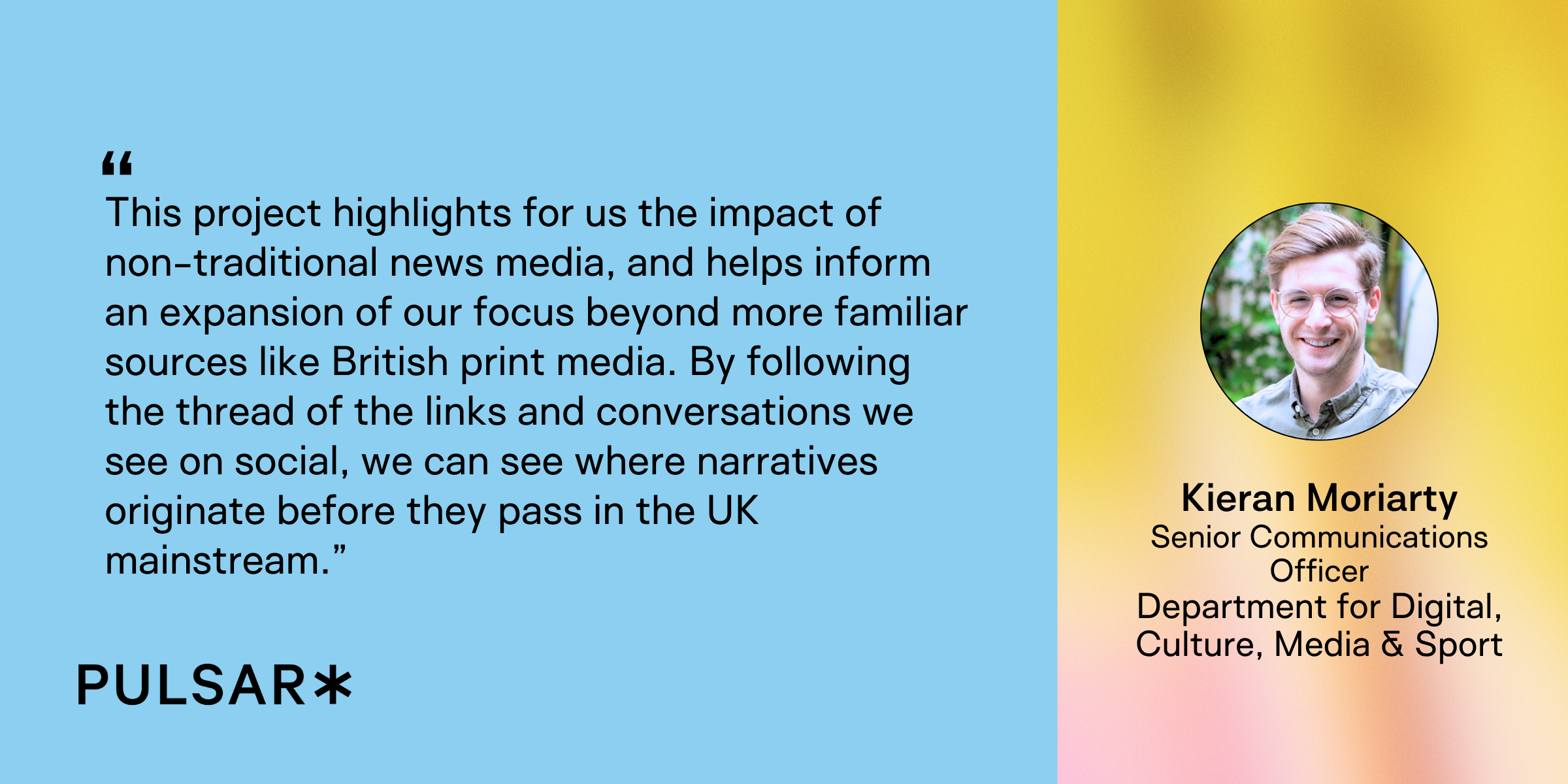
The UK Department for Culture, Media and Sport (DCMS) demonstrates this approach. Using Pulsar, DCMS analyses public conversations around cultural events to inform policy and communication. DCMS wanted to map conversation for safety during the event - misinformation plays a huge part in their safety considerations both in the moment and long-term.
For organisers, this shifts event safety from reactive to preventative. Detecting early signals of discontent or risk allows teams to act before minor complaints or rumours turn into major safety issues—protecting attendees while safeguarding the reputation of the event.
Campaign optimization & measurement: maximizing event impact
To drive maximum impact, campaigns need to be agile. Social listening provides the real-time feedback to make that possible - tracking how audiences respond to messaging, testing creative variations, and gauging reactions to influencers or competitor activity. Rather than waiting for post-event reports, fundraising and events teams can refine strategy on the spot, ensuring energy and spend go where they matter most.
The #GivingTuesday partnership is a clear example. Each year, Pulsar works with GivingTuesday to live-track the most used hashtags, keywords and calls-to-action in the global conversation, publishing hourly updates directly to the campaign homepage. For fundraisers, this becomes a real-time playbook: on the day, teams can adapt messaging to what’s resonating most—whether that means emphasizing duty for Children & Elderly causes or urgency for Health & Healthcare initiatives.
Our research also uncovered "untapped overlaps," such as US sports fans blending World Cup discussions with GivingTuesday appeals, opening opportunities for fused campaigns that bridged communities.
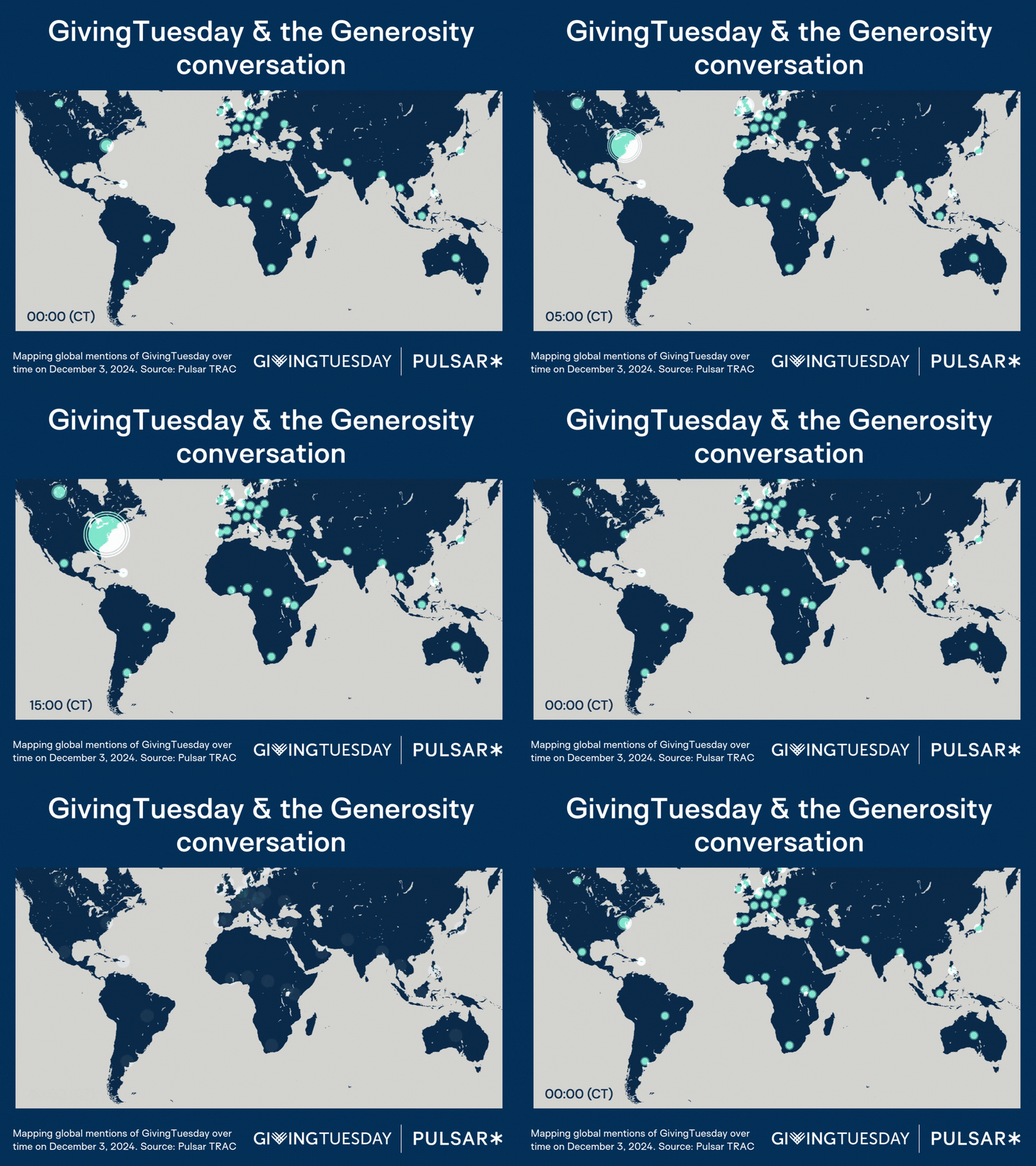
For event organizers and fundraisers on the ground, the lesson is clear: if one activation is generating outsized engagement, you can pivot in real time to amplify it. If unexpected overlaps emerge - such as music fans leaning into sustainability appeals - you can adjust activations, comms, or donor outreach instantly. Social listening turns campaign management from a static plan into a dynamic process, empowering fundraisers to optimize engagement, maximise ROI, and make the most of every moment.
Event insights & future planning: continuous improvement
Some actions can’t be taken live - even if you spot them in the moment. Similarly, the conversation doesn’t end when the lights go down. Post-event chatter is a goldmine of authentic feedback - highlighting what worked, where frustrations emerged, and what audiences expect next. Unlike formal surveys, social listening captures unsolicited sentiment, recurring themes, and the specific moments that sparked strong reactions.
Pulsar’s geo-analysis has helped Brooklyn Museum in the post-event phase in informing touring decisions. For the exhibition Copy Machine Manifestos: Artists Who Make Zines, TRAC data revealed strong conversation bubbling up outside New York, particularly in Toronto - helping the museum identify a new city for the exhibition’s tour. Similarly, when Giants: Art from the Dean Collection of Swizz Beatz and Alicia Keys launched, TRAC revealed unexpected hotspots of conversation in Atlanta, D.C., and Southern California. This evidence gave the team confidence to approach the High Museum of Art in Atlanta, where the show later travelled.
A exposição “Giants: Art from the Dean Collection of Swizz Beatz e Alicia Keys” ganhará uma temporada em Atlanta, no High Museum of Art. Ela se encontra atualmente no Brooklyn Museum até julho deste ano.pic.twitter.com/4m9fZtTMwv
— Portal Alicia Keys Brasil (@PortalAKBR) June 19, 2024
By embedding Pulsar into their workflow, the Brooklyn Museum has transformed exhibitions into live laboratories of cultural feedback. Insights that once took months of manual observation now emerge in real time - helping the museum stay true to its mission of bringing art to the people, while evolving to meet the needs and voices of its diverse audiences.
Social listening also extends beyond logistics to reputation and brand building. Pulsar’s approach to tracking brand narratives across news and social channels enables ongoing monitoring long after an event ends - revealing lasting brand impact or emerging risks. This makes events part of a continuous R&D loop: every reaction feeds into not only better event planning, but also product development and service design.
The result? Events evolve from one-off activations into living research platforms. By analysing not just what people say but why, brands can refine strategy, shape products, and build long-term loyalty.
Frameworks and practical steps for social listening in event management
Implementing social listening for live events isn’t just about collecting mentions - it’s about turning real-time chatter into actionable intelligence. A simple three-step framework helps keep the process structured and impactful.
1. Setting Up Your Tools
Choose the right platform, define clear goals, and configure queries to capture the most relevant conversations. With Pulsar TRAC, that means going beyond brand mentions to track audience behaviours, keywords, and geographies, while setting alerts for spikes in sentiment or conversation. The more tailored your setup, the sharper your insights will be.
2. Analyzing the Data
Monitoring tells you what’s being said; listening explains why. This stage focuses on sentiment analysis, trend detection, and audience segmentation. By identifying which topics resonate, which pain points surface, and which communities are driving the conversation, event teams can move from reactive responses to proactive strategy.
3. Integrating Insights into Strategy
Finally, apply what you’ve learned. If negative sentiment clusters around pricing or logistics, adjust communications or operations. If a specific audience segment is engaging with particular themes, tailor messaging or activations accordingly. By embedding insights into campaign planning, product roadmaps, or on-the-ground event management, social listening becomes a driver of continuous improvement and audience-first strategy.
Key takeaways: managing events in real-time through social listening
In today’s fast-moving, hyper-connected world, responding to audience sentiment in real time isn’t a luxury - it’s mission-critical. Social listening, powered by platforms like Pulsar TRAC and Pulsar Narratives, equips event teams with the intelligence to navigate live moments with clarity and control. By turning raw social data into actionable insights across communications, safety, engagement, campaign optimisation, and post-event analysis, organisers can ensure their events succeed in the moment while also shaping long-term brand relevance and product evolution.
The competitive edge this creates is profound. Rather than reacting after the fact, brands can anticipate shifts in audience behaviour, track emerging cultural trends before they peak, and continuously adapt their strategies in real time. This agility transforms event management into a dynamic process - one where every interaction becomes a source of learning and every campaign is optimised for maximum impact. The result is deeper audience loyalty, stronger reputation, and a steady flow of intelligence that fuels both innovation and growth.
Ultimately, every event becomes more than a one-off activation - it becomes a live laboratory of audience understanding. The conversations, signals, and narratives captured through social listening create a continuous feedback loop that informs not only future events but wider marketing, product, and brand strategy.
The future of event management belongs to those who can listen, interpret, and act with speed and precision. Ready to take that step? Explore the capabilities of Pulsar TRAC and Pulsar Narratives, and sign up to the Pulsar newsletter to stay ahead of the curve in audience intelligence.
2026 Outlook
Ready to transform your real time event management strategy with deep audience insight?
Explore the power of Pulsar TRAC, Pulsar CORE and Pulsar Narratives to start uncovering the insights that matter most. Our Pulsar newsletter for more expert guides and industry insights.
To learn more, sign up to our newsletter below: