Signals over noise: driving content strategy with social listening insights
Use Case guide contents
In an increasingly saturated digital landscape, the fundamental principles of brand communications are undergoing a profound transformation. The volume of content, channels, and conversations has created a chaotic environment where success no longer hinges on broadcasting the loudest message but on listening the most intently before making your move. In this new paradigm, content strategy must evolve from a top-down, brand-centric monologue to a dynamic, audience-first dialogue. This evolution is driven by the strategic discipline of social listening, which has become a non-negotiable prerequisite for any brand seeking to build meaningful connections and achieve measurable growth.
The first step in embracing this discipline is understanding the crucial difference between social monitoring and social listening. While the two terms are often used interchangeably, they represent fundamentally distinct approaches to engaging with digital conversations. Social monitoring is a reactive, "ground-level" process focused on tracking direct mentions, hashtags, and brand interactions in real-time. Its purpose is immediate engagement, such as addressing a customer service complaint, responding to a comment, or managing a sudden, small-scale crisis. A ball is thrown, and you catch it.
Social listening is more than simply catching the ball. It’s about understanding the entire game, the players' strategies, and the crowd's emotional response. Social listening is a proactive, reflective process that involves the systematic analysis of conversations and trends to unearth strategic insights about an industry, a topic, or the overall cultural zeitgeist. The goal is not to observe what is happening in the moment but to understand the underlying motivations and narratives that are shaping public opinion. Social listening’s purpose is to inform long-term business decisions and influence future interactions by providing a comprehensive understanding of consumer behavior, sentiment, and perception.
This deeper, data-driven perspective is what empowers a brand to move beyond reactive content to a strategy that is culturally attuned and strategically potent.
Unlocking growth with audience-first content
Moving from a theoretical understanding of social listening to its practical application reveals its power to provide a measurable competitive edge. When integrated into the core of a content strategy, social intelligence becomes the engine for uncovering cultural and behavioral trends, deepening audience understanding, and optimizing campaigns in real-time. The following examples demonstrate how brands can leverage these capabilities to drive meaningful business outcomes.
1. Jumping along on an unscripted cultural moment
A product’s success is often tied not to its features, but to its ability to become a cultural touchstone. Social listening identifies the cultural currents and niche communities that can be leveraged to drive mainstream adoption. One of the clearest examples of this is the unexpected rise of the Negroni Sbagliato, which we explored on our blog, a trend that took the world by storm not through a marketing campaign, but through a genuine moment of online conversation.
@hbomax I'll take one of each. #houseofthedragon ♬ a negroni sbagliato w prosecco l hbo max - HBO Max
This phenomenon began with an off-the-cuff interview with the cast of "House of the Dragon." When one actor mentioned a "Negroni Sbagliato with prosecco in it," a simple line became a viral sensation. A traditional product launch strategy for a new cocktail - such as A/B testing ads or launching a mass media campaign - would have completely missed this cultural flashpoint. The genius of the moment was that the audience wasn’t only discussing the drink; they were engaging with a shared cultural moment and a specific type of humor that celebrated the actor's charm and authenticity. The drink became a symbol of belonging to an in-the-know community, a secret handshake for a global, organic movement.
dfkgjs
This provides a powerful lesson for marketers. The most impactful product launches today often originate from unexpected cultural flashpoints discovered through social data. A brand that was attuned to this conversation could have "piggybacked" on the trend by creating content that referenced the humor or partnering with the specific creators and communities that amplified the moment. This approach demonstrates that a strategic, data-led understanding of cultural conversations can lead to more authentic, high-impact results than a traditional, top-down campaign.
2. Crafting content that speaks to niche cultures
Viral moments may fade, but the communities that create them often stick around, developing their own languages, in-jokes and story worlds. Social listening helps brands not only spot these micro-cultures but also learn how to speak their language - and make strategic decisions based on these niche cultures.
The most valuable, highly engaged audiences are often hiding in plain sight, building their own worlds and narratives that traditional market research would never uncover. We studied the story of "Goncharov" - a fictional Martin Scorsese film created and sustained by online communities, is a masterclass in this phenomenon.
The "movie" began as a niche joke but quickly expanded into a sprawling universe of lore, fanfiction, and memes, primarily on platforms like Tumblr and Twitter. Social listening identified the platforms and communities where this narrative was spreading and evolving, showing how a highly creative, collaborative audience can build an entire world out of a single piece of shared content.
For content strategists, this insight goes beyond identifying who’s talking - it reveals how to talk to them. The language, humour, and cultural references that drive these communities can inform content calendars, tone of voice, and creative collaborations. Brands can build relevance by producing content that feels like it comes from inside the fandom rather than marketing to it from the outside. For example, your brand could create “in-universe” posts, remixable formats, or subtle nods to the community’s shared lore.
Studying narrative creation exposes untapped audiences, whilst also providing the blueprint for how to plan content that earns trust, fluency and harnesses shareability within them.
3. Deepening audience understanding & building authentic connection
For content to resonate, it must speak to the deepest values and motivations of its audience, which often exist far beneath the surface of traditional demographic data. Social listening goes beyond simple segmentation to reveal the psychographics, values, and nuanced behaviors that truly define a community.
Recognising audience passions and beliefs
Art supply brand Colart demonstrates how social listening can uncover complex, and sometimes contradictory, audience values. A surface-level analysis of the art community might suggest that a socially conscious audience, known for practicing sustainable behaviors like recycling, would prioritize eco-friendly art materials. A deeper dive, however, revealed a hidden contradiction.
The analysis found that artists were not willing "to give up on quality yet" in their art materials. Their core passion for their craft and the desire for durable, high-quality products that would last for decades superseded their desire for sustainability in this specific context. A simplistic content strategy that led with sustainability messaging would have missed the mark. The most effective strategy, informed by this nuanced understanding, had to pivot. The brand's content needed to speak to the audience's deepest value - passion for their art - and their desire for quality and longevity. The brand's sustainable practices could then be framed as an aligned bonus rather than the primary reason for purchase.
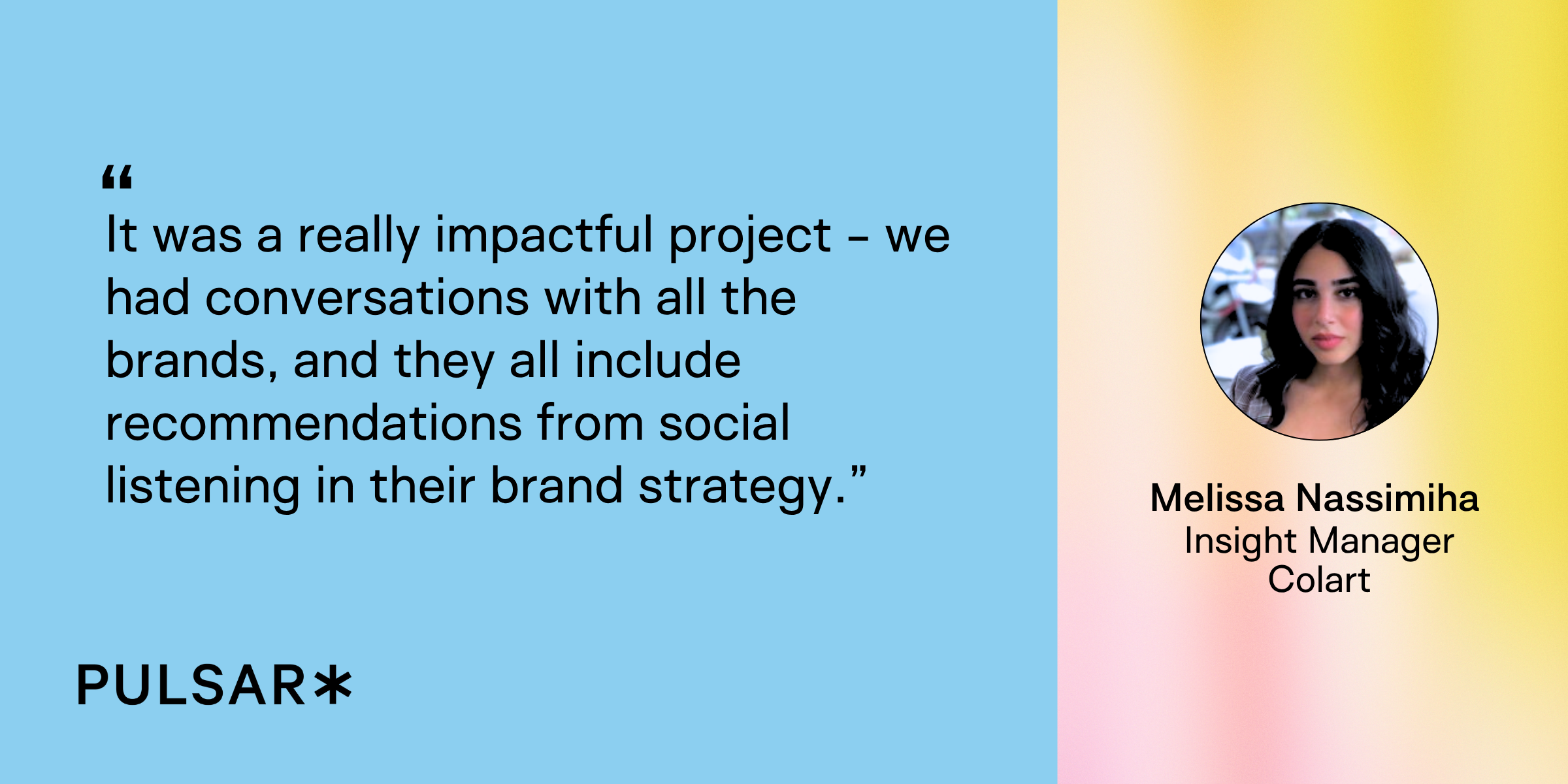
By understanding this contradiction, a brand can create empathetic, non-judgmental content that acknowledges this tension. For instance, a paint manufacturer could launch a campaign discussing the challenge of creating a sustainable product line without compromising quality. This approach reframes the discussion from a simple product message to a value-based conversation, building trust by demonstrating a deep understanding of the audience's real-world constraints and concerns. By using social listening to pinpoint these psychological barriers, brands can create content that reframes perceived negatives as a commitment to a greater purpose or a necessary step toward an identity.This teaches a critical lesson: content strategy must be built on a layered understanding of human motivation. It is about speaking to a community’s most cherished passions, not just their stated beliefs.
Recognising audience identities and cultures
The Brooklyn Museum’s use of social intelligence provides a powerful illustration. The museum’s mission is to make art and culture accessible to the people, but its approach to content and programming was based on traditional research methods. By implementing a sophisticated listening strategy with a platform like Pulsar, the museum transitioned from manual monitoring to an audience-first approach.
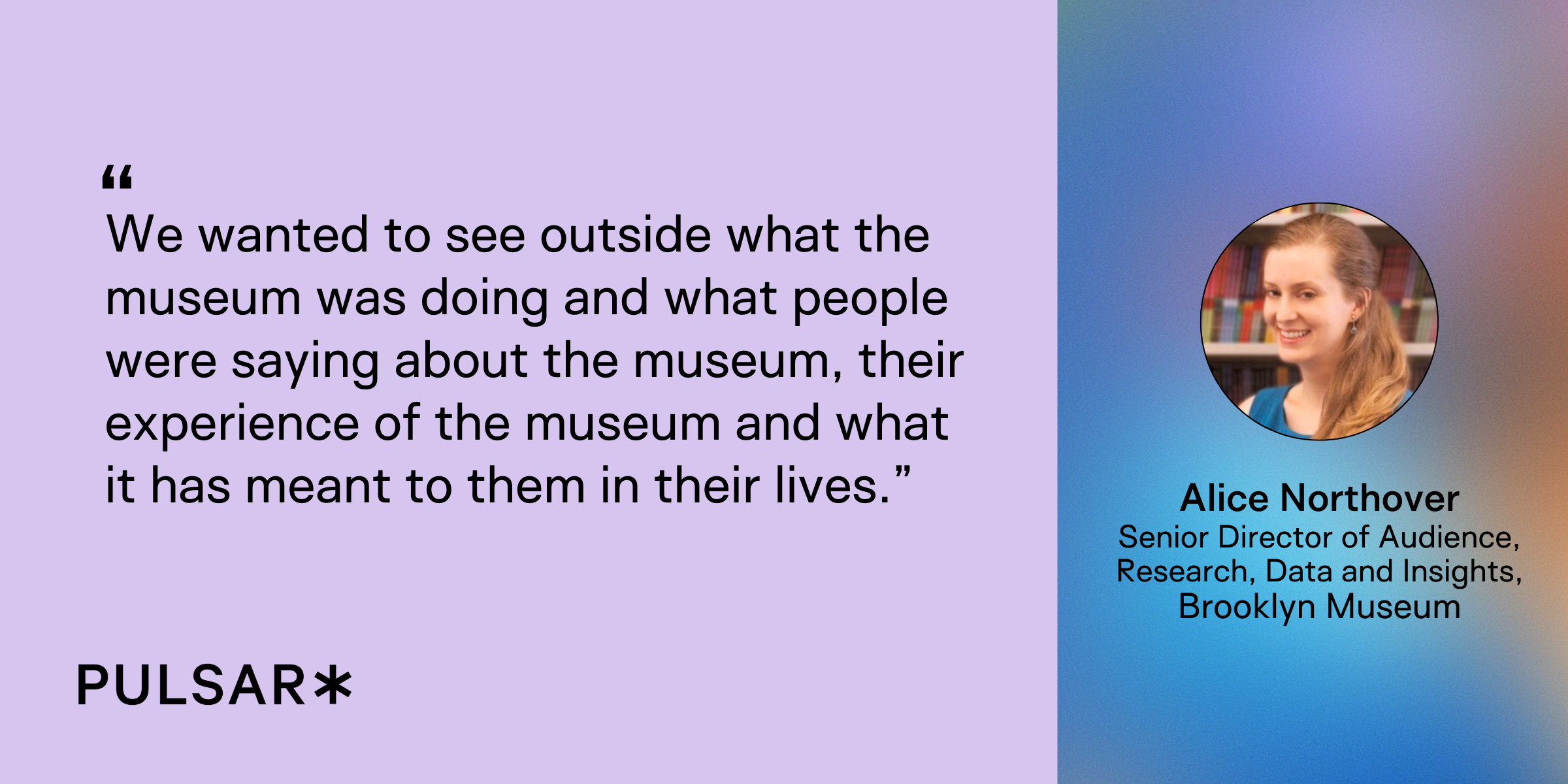
The analysis revealed a critical detail: a significant portion of their online community was speaking in Spanish. This was a profound insight into the community's composition and behavior that was previously invisible to the team. This finding directly informed the museum's content strategy and programming decisions, allowing them to create culturally and linguistically relevant content. The museum was able to achieve greater resonance with its local and global communities and expand its mission in a tangible way. This proves that social listening is a tool for any organization - not just corporations - to build genuine, data-driven connections with its community.
The value of social listening extends far beyond commercial use cases. For non-profits and cultural institutions, it provides a means to understand community resonance, find new donor segments, and make mission-aligned programming decisions. By embedding audience insights into its strategies, the museum transformed its approach to both reporting and programming. This demonstrates that social listening is a fundamental strategic capability that can guide an institution's mission and future direction. It allows an organization to move from simply presenting content to an audience to truly co-creating with its community.
4. Mapping narratives to guide content direction
No single topic is a monolith - a seemingly uniform conversation is, in reality, a fractured landscape of competing narratives, different values, and distinct audience communities. A brand that fails to recognize this nuance risks alienating its audience and wasting valuable resources on a generic message.
Pulsar’s report on the audiences of sustainability revealed that this global concern is not a singular, uniform conversation.This complex ecosystem of four key narrative territories - Ecology, Society, Product, and Business - has a wide spectrum of audience segments, from Rural Conservatives who hold skeptical views to Buy Nothing Sharers who are focused on mutual aid.
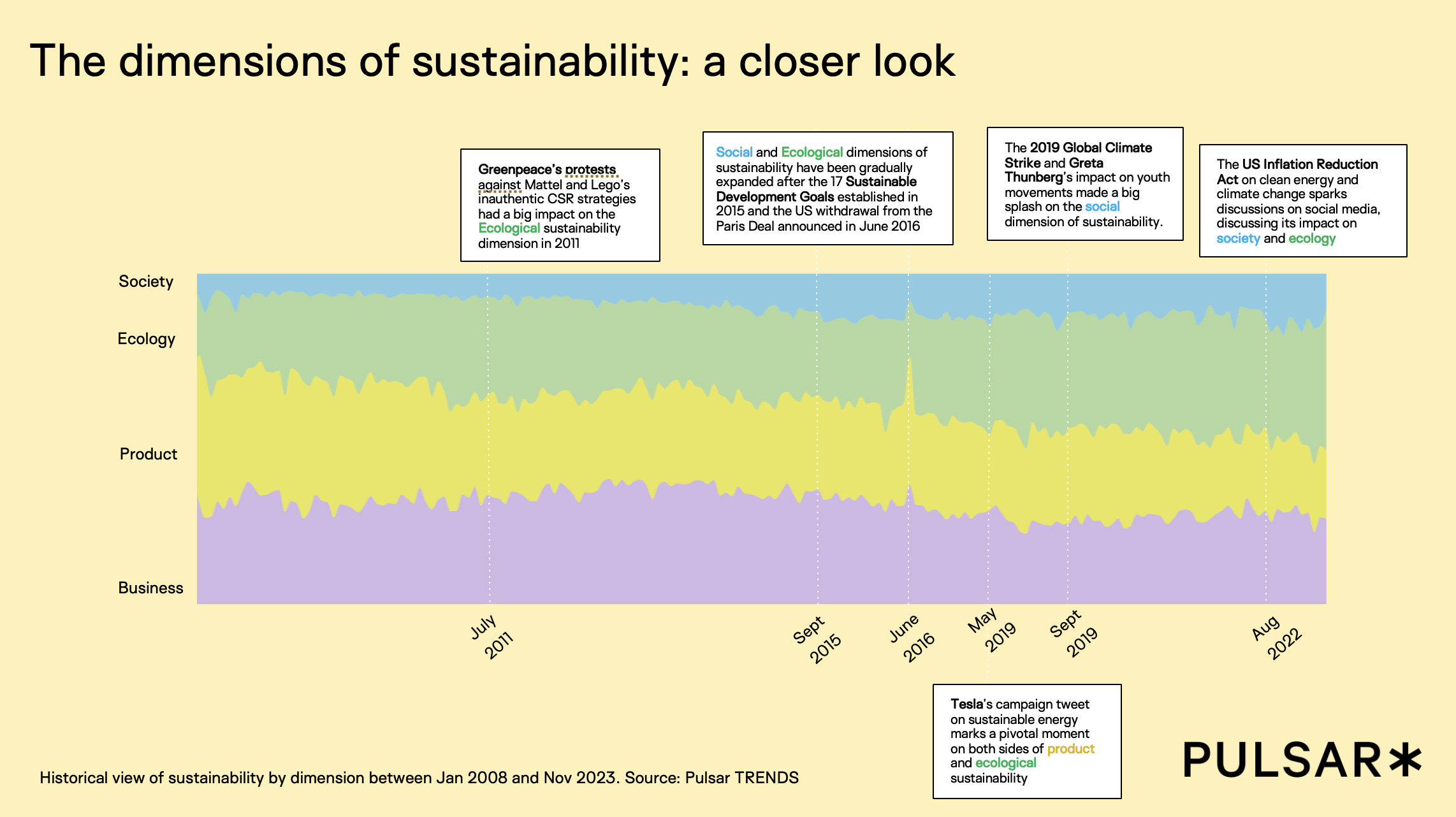
For content teams, this means understanding what kind of content and language resonates within each narrative territory. A brand needs to know if its audience is a values-driven community focused on anti-consumerism, or a more traditional audience that links sustainability to national pride and practicality - and tailor tone, creative direction and messaging accordingly.
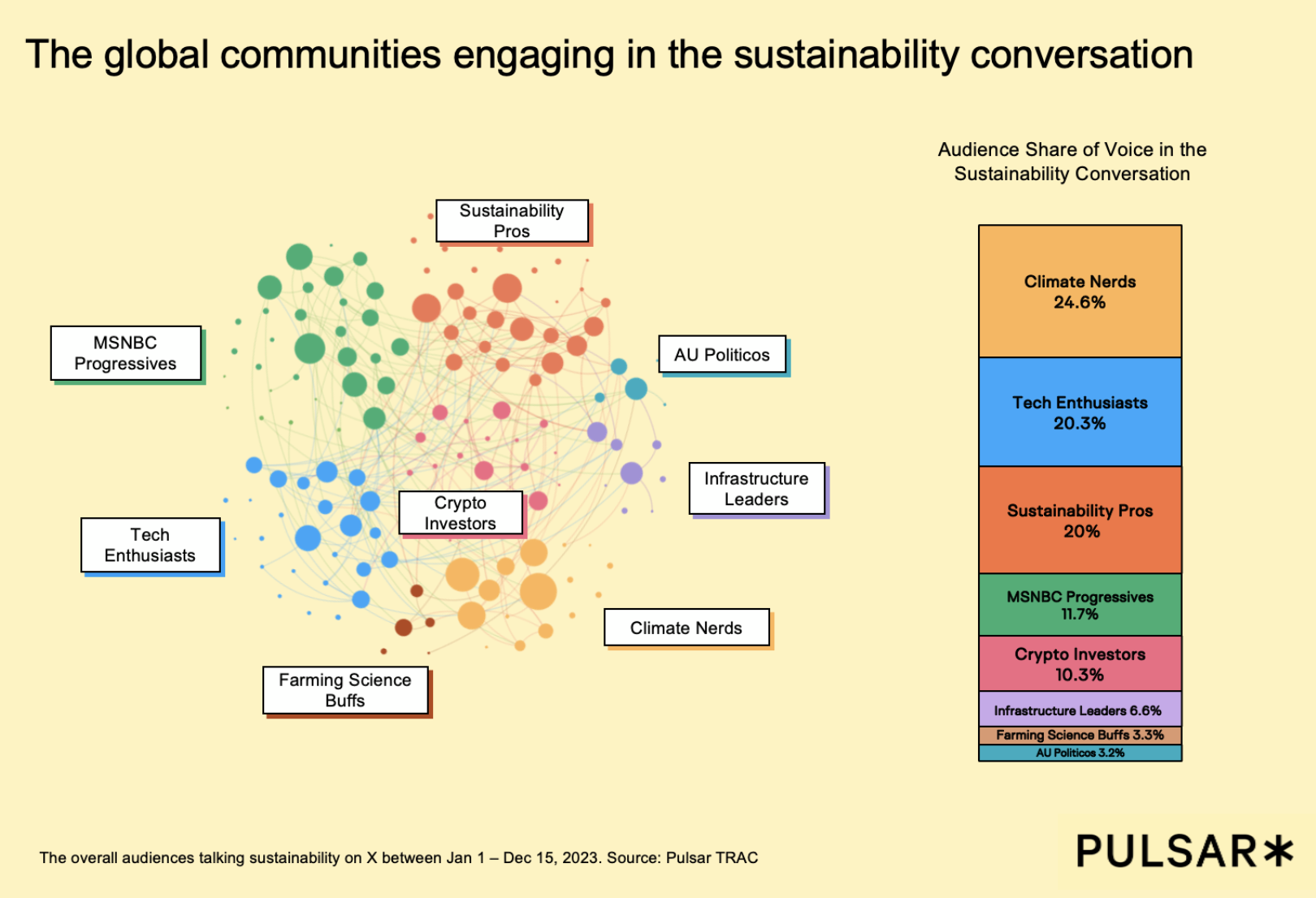
For example, a brand looking to launch a new electric vehicle might assume its target audience is made up of Climate Progressives who value eco-friendliness alone. However, social listening can reveal that a more conservative audience, as seen with the popularity of EV trucks in America, values national identity and practicality in their vehicle choices. By tailoring a campaign to these specific values, a brand prevents marketing to the wrong audience and ensures its message resonates on a deeper level.
5. Pure content currency: authenticity, character & chaos
The digital world has seen the rise of a new brand personality known as "unhinged marketing" - a trend where brands behave more like meme accounts than traditional market leaders. Mentions of unhinged marketing, ads, and campaigns experienced a massive 25-fold increase between the end of 2022 and the end of 2024. This approach, characterized by bizarre skits, cryptic visuals, and surreal humor, is designed to generate views, shares, and affection from a younger, digital-native audience. Social listening lets us tap into this quantifiable trend, as we did in our blog post deep dive.
The marketing department at Nutter Butter must be micro-dosing LSD.
These are all Nutter Butter ads. Enjoy.😂🤷♀️ pic.twitter.com/322EFkM4VH
— SULLY (@SULLY10X) September 21, 2024
This strategy succeeds because it intentionally cuts through the noise of overly polished corporate messaging by embracing chaos and a raw, human feel. While the content may be surreal, its impact feels visceral and real to the audience. The success of brands like Duolingo, which saw a 51% increase in daily active users, and Nutter Butter's "full unhinged mode" on TikTok, which led to fan theories and videos with multi-million views, provides compelling evidence of this approach's material benefits. The brand’s TikTok universe, with its unsettling environments and cryptic characters, cultivated a true fandom, with users treating new posts as lore updates.
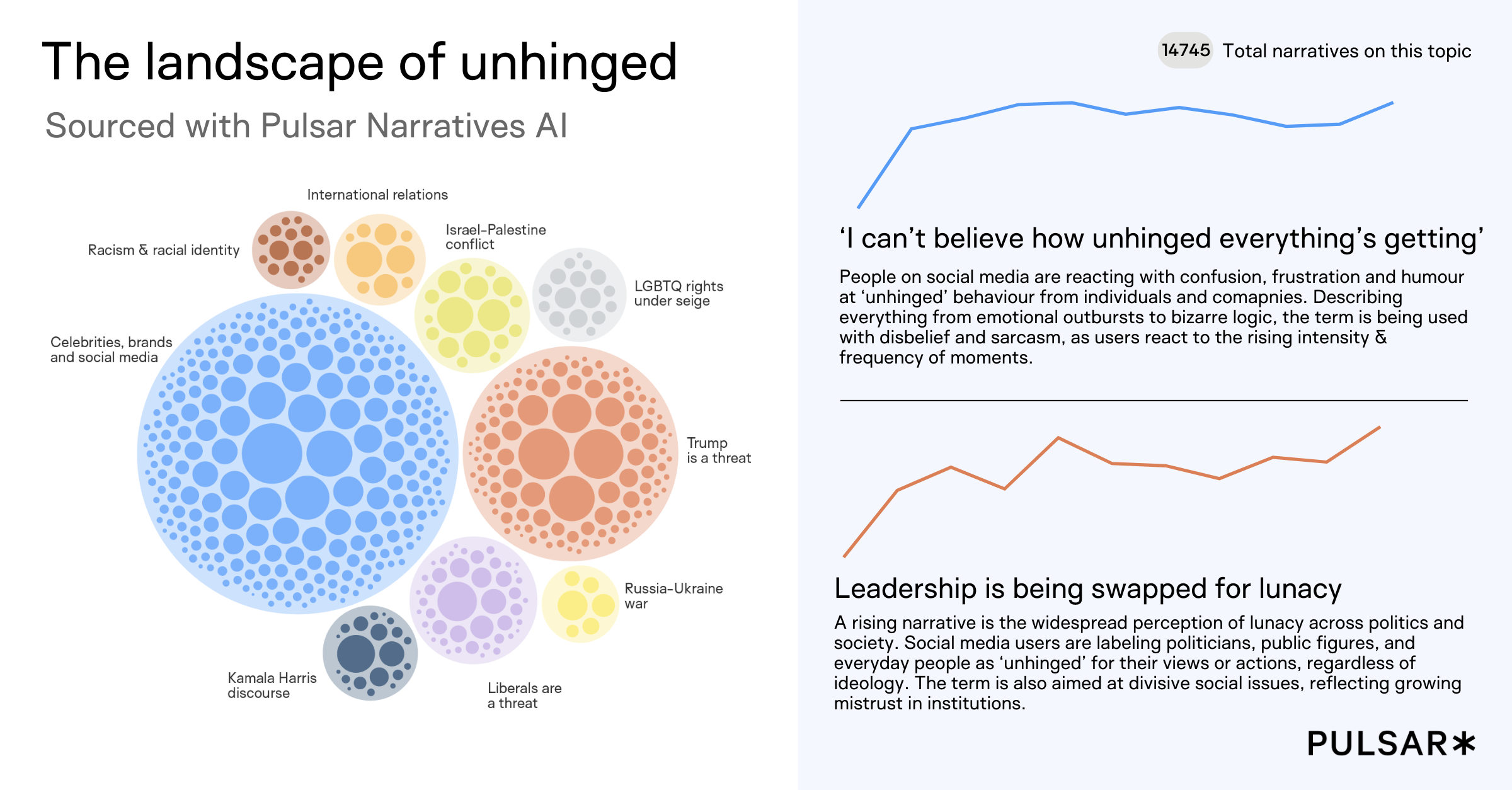
However, the analysis of this trend reveals a critical lesson in content strategy: authenticity and consistency are paramount. The success of an "unhinged" campaign hinges on a genuine, consistent commitment to the "bit". For example, when Dunkin' attempted a temporary shift into this style for a Halloween campaign, it failed to match the engagement of Nutter Butter. The lack of consistency - as the brand "fired" the spider character after the campaign demonstrated that this type of content does not work as a one-off gimmick. A brand must be willing to commit fully to the tone. The conclusion is clear: a content strategy cannot be a series of reactive stunts; it must be a consistent, deeply felt expression of the brand's personality, as informed by its audience's authentic language and cultural norms.
A three-step framework for strategic social listening that informs content
Implementing social listening as a core part of content strategy requires a structured, repeatable discipline. The Listen–Map–Activate framework provides a proven model for embedding social intelligence into the entire content lifecycle, ensuring that every piece of messaging is informed by a deep understanding of the audience.
Step 1: Listen – The art of data collection
The foundation of the framework is the art of data collection. This is the process of setting up listening projects to capture raw, unbiased data from a "firehose" of digital sources. It goes beyond simple keyword tracking to provide a nuanced approach that delves into audience intelligence. With advanced tools like Pulsar TRAC, a brand can get a granular view of conversations, whether it is monitoring for emerging product complaints, tracking competitor reactions, or identifying the reasons behind subscription cancellations. The effectiveness of this step depends on the chosen tool's ability to monitor conversations on diverse platforms, including social media, news, blogs, and forums.
Step 2: Map – the science of uncovering narratives
The strategic phase of the framework involves transforming raw data into meaningful insight. This is where a brand identifies the overarching narratives and cultural movements driving the conversations. Raw data provides a collection of mentions; mapping reveals the stories and beliefs taking hold among the public. This requires a tool capable of unbiased categorization and a deep analysis of the data's context. Pulsar Narratives AI is an engine for this step, designed to surface narratives from the ground up by analyzing billions of posts and stories from social and news media. This capability is crucial as it allows a brand to compare what is being said in traditional media with what is emerging directly from the public. This comparison is key to understanding which stories are truly gaining momentum and resonance within the target audience.
Step 3: Activate – from insight to actions to content
This is the implementation phase, where the insights gained from listening and mapping are applied to create or optimize content. The activation of these insights can take many forms:
- Social Media: The Unhinged, Goncharov and Negroni Sbagliato examples illustrate how to co-opt existing memes and user-generated content to create viral campaigns. The content is not created in a vacuum; it is a direct response to a conversation already taking place.
- Blog & Owned Content: The Brooklyn Museum and Colart cases show how content can be created around nuanced audience values or community-specific needs. This could mean a blog post series in Spanish to serve an identified community or a guide on the quality and longevity of art materials to speak to a core audience value.
Marketing Messaging & Email: The sustainability example demonstrates how listening can directly inform promotional emails and messaging about new value propositions, turning a negative narrative into a positive one. The content becomes a vehicle for a brand to prove it is acting on what it hears.
Need this in a simpler form? The following table provides a clear summary of the entire framework, tying each step directly to the specific Pulsar tools and their functions.
| Framework Step | Purpose | Key Question It Answers | How Pulsar TRAC/Narratives Helps | Content Strategy Action |
| Listen | Data collection & audience observation | What is being said, where, and by whom? | Pulsar TRAC provides a granular view into conversations across diverse sources, including owned channels, forums, news, and social media. | Setting up monitoring for key brand terms, competitor products, and industry topics. |
| Map | Strategic analysis & narrative discovery | What are the underlying cultural narratives and values driving these conversations? | Pulsar Narratives AI analyzes the full volume of data to surface narratives from the ground up, comparing media vs. public opinion. | Identifying emergent trends like "unhinged marketing" or nuanced audience values like the artists' compromise for quality. |
| Activate | Content creation & optimization | How can a brand's content directly engage with these identified narratives? | The insights derived from Pulsar TRAC and Narratives AI provide the data to inform messaging, creative decisions, and content formats. | Creating content that amplifies an audience-generated narrative, launching campaigns in response to public sentiment, and tailoring messaging for specific communities. |
Key takeaways: The competitive edge of a culturally attuned brand
Social listening is no longer a luxury, but a fundamental requirement for strategic growth. It empowers brands to move from reactive crisis management to proactive trend-spotting, from broad-based guesswork to data-driven decision-making.In the era of data-driven branding, the competitive edge belongs not to the companies with the largest advertising budgets but to those with the deepest understanding of their audience. The brands that win are those that move from guessing to knowing, from monitoring to listening, and from producing noise to creating content that truly resonates. The analysis of these case studies demonstrates that strategic social listening is a discipline that provides a clear, measurable return on investment.
By embracing social listening for audience discovery, brands anticipate the conversation, shape it, and gain a definitive competitive edge. The modern marketer recognizes that to discover a new audience is to discover a new opportunity. It is the key to navigating a fragmented media landscape and forging authentic, lasting connections with communities that matter.
To unlock the power of cultural trend tracking for your brand and discover new audience consumption behaviors, explore Pulsar TRAC and Pulsar Narratives.
2026 Outlook
Ready to transform your content strategy with deep audience insight?
Explore the power of Pulsar TRAC, Pulsar CORE and Pulsar Narratives to start uncovering the insights that matter most. Our Pulsar newsletter for more expert guides and industry insights.
To learn more, sign up to our newsletter below: