CX marks the spot: transforming customer experience through social listening
Use Case guide contents
A real contest for loyalty, growth, and attention is playing out in customer experience (CX).
And the numbers tell the story: a 2025 PWC study found that 73% of consumers put CX high on their list when deciding what to buy, just behind price and product. But having the best product or the sharpest price point isn’t enough anymore - a whopping 86% of buyers would pay more for a better customer experience. Because of this, brands that excel in CX create smoother journeys and grow revenue 80% faster than their peers. In other words, CX is an essential thing for brands to focus on.
But there’s a disconnect. While most businesses believe they deliver an excellent customer experience, customers aren’t agreeing. There’s a perception gap built on the wrong signals. Metrics like ticket closure times or CRM log-ins are easy to track, but they don’t reflect what matters most: emotional connection, seamless journeys, and trust.
This is where social listening makes the difference. It’s not about monitoring mentions - it’s about tuning into the unfiltered conversations happening across digital spaces. By analysing these everyday exchanges, social listening surfaces the “why” behind consumer sentiment and behaviour, revealing truths that surveys often miss. It’s a way to hear the culture shift in real time, anticipate what comes next, and bridge the CX perception gap - bringing brands closer to the experiences their audiences actually want.
Use cases, examples & benefits: how social listening transforms CX
Optimizing campaigns & informing product strategy
Customer experience (CX) has become the defining factor in how audiences choose, trust, and stay loyal to brands. In today’s fragmented digital world, people interact with companies across countless platforms and touchpoints, forming impressions at every stage of the journey. A smooth transaction or thoughtful response can strengthen that relationship, while a missed cue or impersonal exchange can erode it instantly. What audiences are asking for is clear: experiences that feel human, authentic, and responsive to their needs. And this is where social listening makes its mark. By capturing the unfiltered conversations that shape perception, it provides the insight needed to understand what authenticity means for different communities - and how to design experiences that resonate.
Thinx, a company specializing in period-proof underwear, provides a powerful example of how a proactive approach to social listening can transform customer experience. Using Pulsar TRAC, Thinx actively monitors for potential customer service issues such as delivery delays and stock shortages. This proactive approach allows them to address customer anxieties and provide clear communication before a minor issue can escalate into a widespread PR crisis.
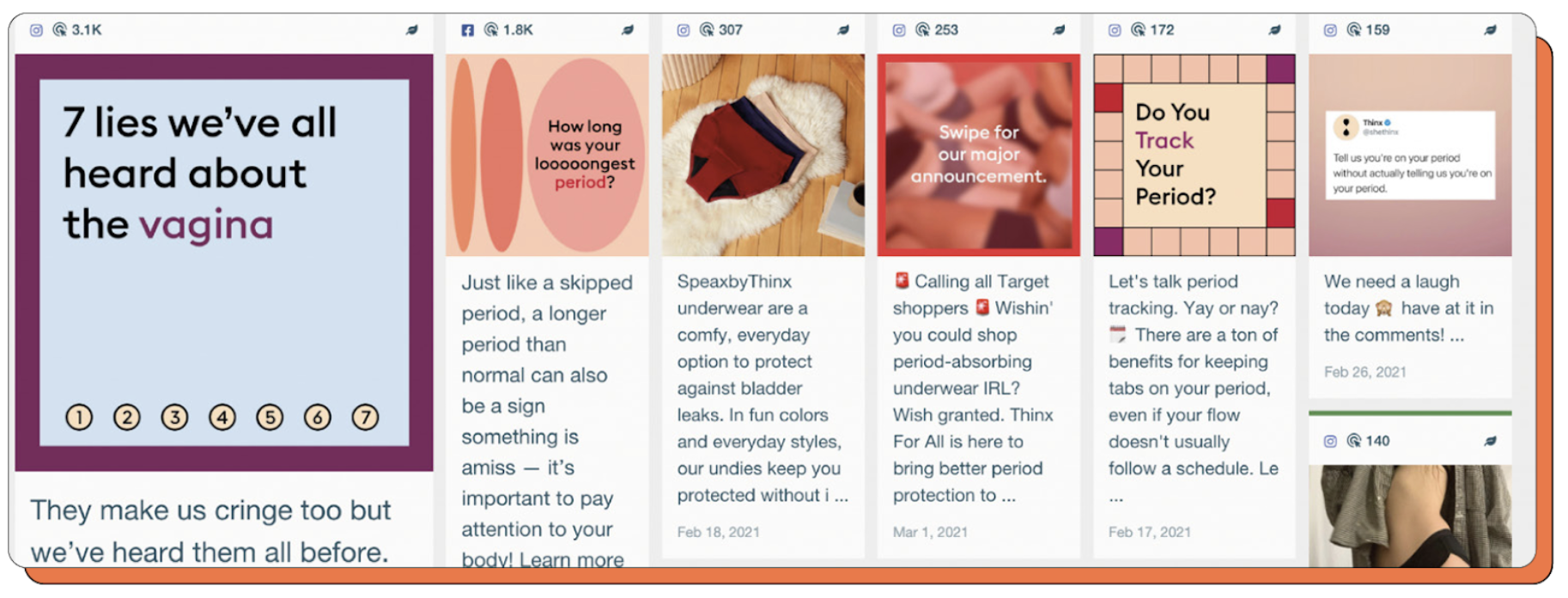
Thinx also leverages Pulsar’s social listening capabilities to gain competitive and creative insights. By analyzing how their competitors’ content is resonating with audiences and what visual trends are gaining traction, they can inform their own creative direction, particularly for user-generated content. The ability to compare their weekly content output against their competitors allows them to see how their efforts are performing in real-time and make informed decisions about future campaigns.
Deepening audience understanding & powering personalization
For a brand to truly resonate, it must move beyond analyzing simple demographics like age and gender. An audience’s core motivations, values, and psychological profiles - what they care about and why - are far more predictive of behavior. Our study on food delivery consumers exemplifies this perfectly. Instead of segmenting by age group, our analysis used Pulsar TRAC to segment audiences by affinity - shared likes, influencers and behaviours. This reveals a deeper, more profound truth about consumer behavior: a customer’s core interests are a more reliable indicator of their actions, behaviors and preferences than their demographic data.
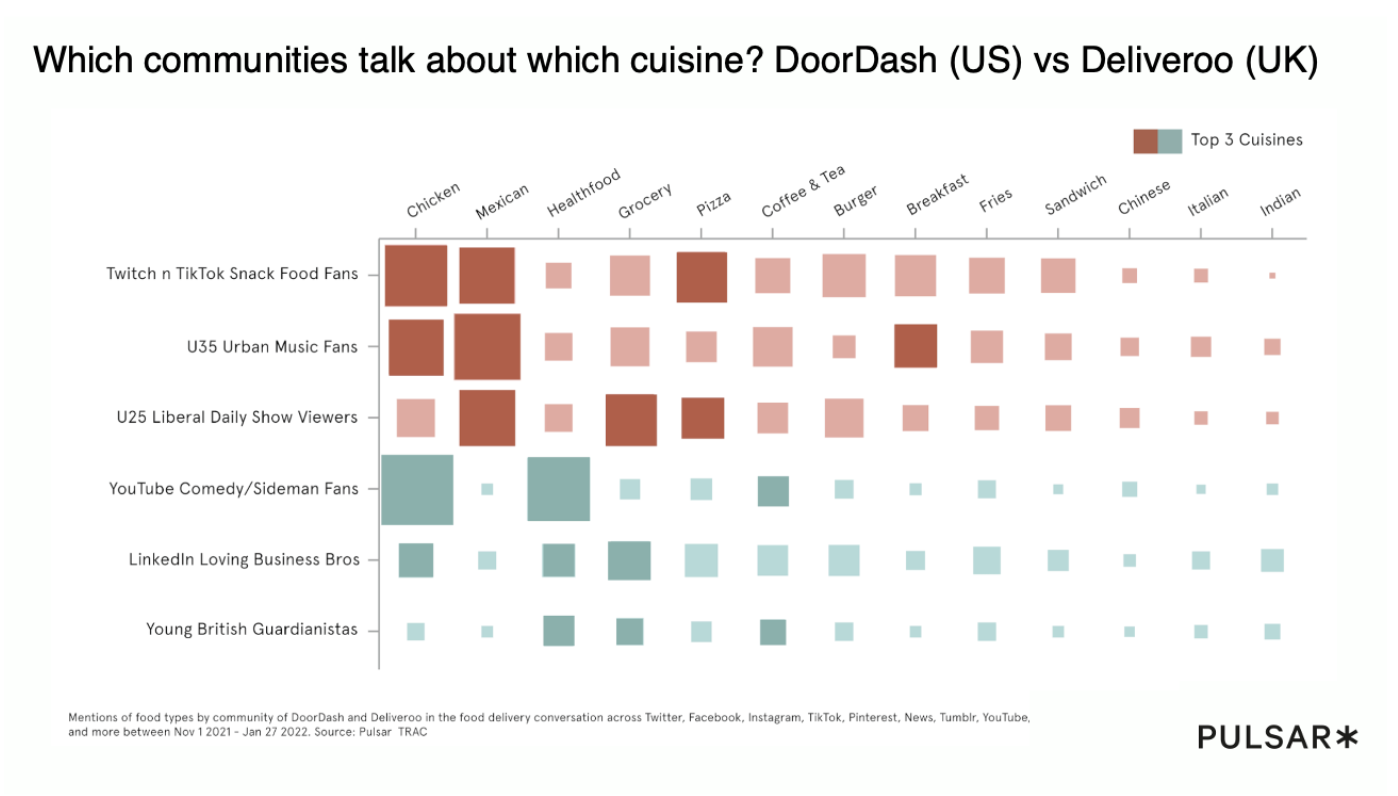
The study further provided specific community insights, such as Uber Eats and Just Eat dominating conversations around speed, while DoorDash and GrubHub are more closely associated with ease and rewards, respectively. The analysis even uncovered niche consumption behaviors, like DoorDash over-indexing for "drunk orders," which signals a unique and specific consumption pattern that can be leveraged for highly targeted marketing.
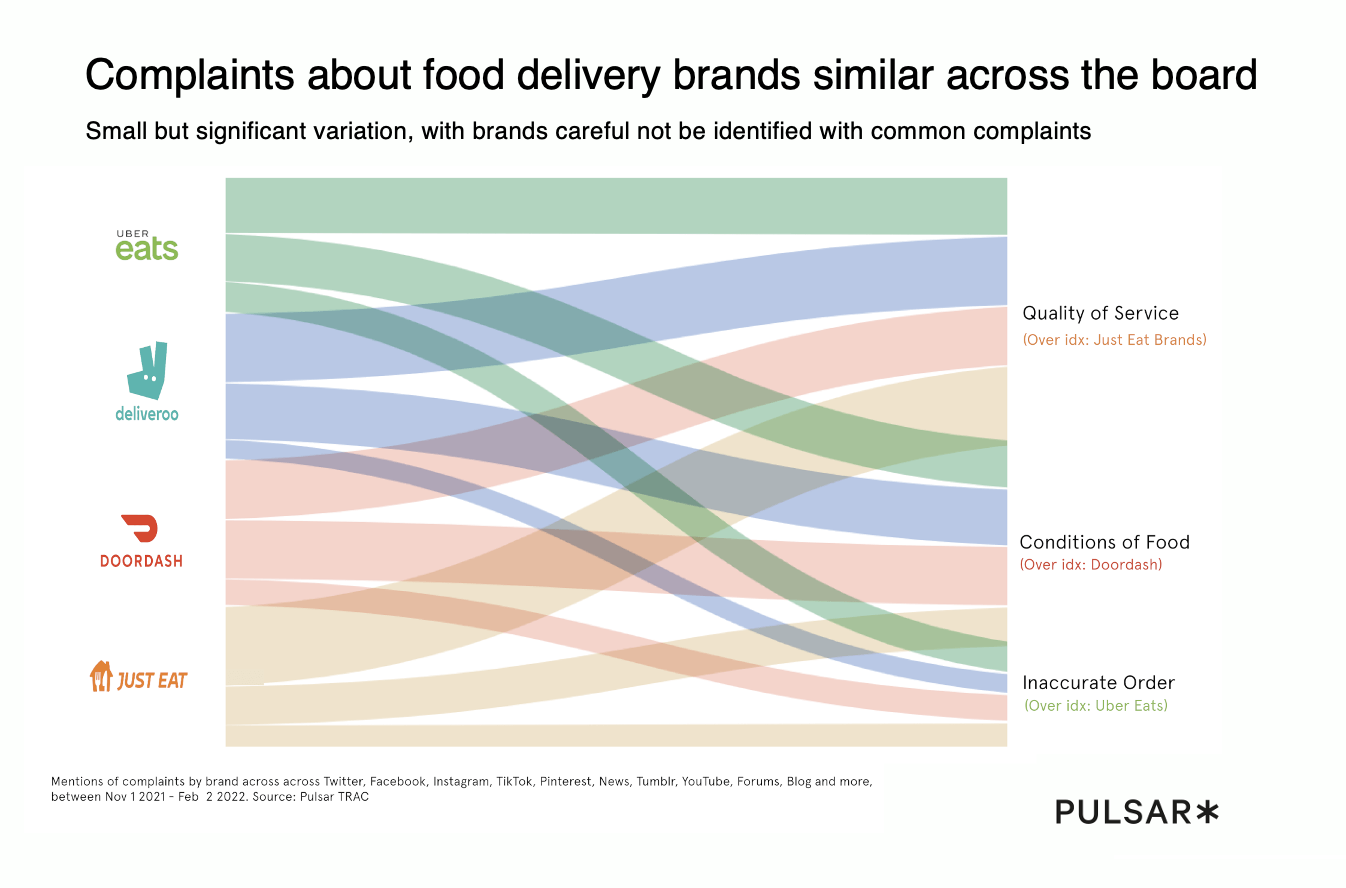
We also analysed data about complaints - with significant variation in complaint type among food delivery services providers. This kind of insight is extremely helpful to brands looking to improve their customer experience. Using social listening, not only can you find your brand or service’s weak points, but you can compare to that of your competitors. From here, you can adjust your products and services to fill in the weak spots, but you can also tailor your messaging to show customers where you excel that other services don’t. Take Apple Music’s recent 2025 move to include playlist migration from Spotify whilst emphasising their strong points - here, they’re exploiting the recent conversation around Spotify’s pain points whilst providing a simple and clear incentive to try out their service instead.
For brands looking to connect with a younger generation, analyzing the playbook of the UK YouTube group, The Sidemen, offers a powerful lesson. By exploring conversational data from platforms like forums, Instagram, and X, we uncovered how The Sidemen’s ecosystem builds loyalty through participation - creating an experience where fans feel part of the story, not just consumers of it.
For CX teams, this insight shows how audiences respond to experiences that blend entertainment, community and accessibility. Translating this into brand strategy might mean designing app experiences that reward repeat interactions, creating spaces for user-generated content, or tailoring customer communications to feel conversational and inside the culture. In other words, improving CX begins with understanding how audiences want to be part of the brand experience, and shaping touchpoints that make that inclusion feel real.
Identifying trends & mapping cultural movements
A brand's success can be intrinsically linked to its ability to understand and align with the cultural zeitgeist. Social listening provides the strategic capability to identify nascent trends and track their evolution before they become mainstream. This allows brands to shift from being trend followers to trendsetters.
Our research into subscription cancellations showed how cultural and economic forces shape customer experience in real time. By analysing audience conversations around cancelled subscriptions, we identified a clear pattern: the cost of living crisis has made affordability the leading cause of churn, overtaking dissatisfaction with the service itself. Mentions of cancellations peak during key moments of economic pressure — winter months, price rises, and content changes — showing how external context directly impacts perceived value.
For CX teams, this level of trend analysis provides a roadmap for retention. It highlights when and why customers reassess their spending, what types of messaging drive re-engagement, and which product features audiences consider essential. By mapping these behaviours across communities and categories — from streaming and meal kits to gyms and news outlets — brands can adapt pricing models, personalise retention campaigns, and improve communication strategies before customers walk away. Social listening can be an early-warning system for customer churn and a powerful driver of experience innovation.
Frameworks & practical steps: your social listening action plan for improving customer experience
Transitioning from a reactive to a proactive CX strategy requires a clear and repeatable framework. The Listen–Map–Activate model provides a strategic roadmap for turning raw social data into tangible business value.
Step 1: Listen – capturing the unfiltered voice of the customer
The first and most critical step is to establish a robust social listening infrastructure. This extends far beyond simply tracking branded mentions and hashtags. A successful strategy requires monitoring a diverse range of keywords and topics, including broader industry terms, competitor strategies, and cultural conversations relevant to the target audience. Advanced tools like Pulsar TRAC can be configured to track nuanced conversations and distinct audience segments, ensuring that the data captured is specific to the brand’s unique goals. This initial phase is about asking strategic questions and setting up the system to provide answers, whether it is gauging public reaction to a campaign launch or performing a regular brand health check.
Step 2: Map – synthesizing the data into meaningful narratives
Once the data is collected, the next step is to synthesize it into meaningful narratives. This is where the true strategic value of social listening is unlocked. This phase involves a deep analysis of the data, including sentiment analysis to understand the public tone towards the brand, and audience segmentation to identify distinct groups and their specific behaviors. The goal is to move beyond what is being said to understand why it is being said. Pulsar Narratives serves as a powerful tool for connecting seemingly random conversational data points to broader cultural beliefs and trends, allowing a brand to map the emotional and psychological landscape of its audience. This is the phase where a brand gains a deep understanding of its customer, moving beyond surface-level data to create a cohesive and compelling story.
Step 3: Activate – translating insights into tangible cx improvements
The final step is to apply the insights gained from the listening and mapping phases to the overall business strategy. This involves translating the data into actionable recommendations that can inform everything from real-time campaign adjustments to long-term product roadmaps. The application of these insights is what provides a tangible return on investment (ROI). The process for measuring this ROI is a five-step, repeatable model:
- Define Clear Goals: Start by identifying what the brand wants to achieve, whether it is boosting sales, increasing brand awareness, or improving customer service efficiency.
- Choose Relevant Metrics: Select the right metrics to align with those goals, such as volume of mentions, sentiment analysis, engagement rate, or share of voice.
- Use the Right Tools: Leverage tools with advanced analytics capabilities, such as Pulsar TRAC and Pulsar Narratives, to gather the specific data required for ROI measurement.
- Calculate ROI: Use your preferred formula to quantify the value generated and the costs saved by the social listening efforts.
- Evaluate and Improve: View any negative ROI not as a failure, but as an opportunity to refine the strategy. This includes adjusting goals, optimizing keywords, or enhancing audience segmentation to ensure the listening strategy remains fluid and effective
Key takeaways: customer experience through audience-centric strategy and social listening
The future of brand success lies not in the loudest voice, but in the most attentive ear. Social listening is not a peripheral marketing tool; it is a strategic mindset for any brand serious about its customer experience. It empowers brands to move from a reactive posture, where they simply respond to problems, to a proactive one, where they anticipate and shape the customer journey. This fundamental shift transforms a brand’s relationship with its audience, moving from a monologue of messaging to a dynamic, continuous dialogue. By listening intently, mapping cultural narratives, and activating insights, brands can build a competitive edge that is durable and deeply rooted in genuine customer understanding. They will not just survive the rapidly evolving market; they will lead it, creating experiences that foster unparalleled loyalty and drive sustainable growth.
A single moment of friction can undo years of goodwill, while a seamless interaction can spark trust and repeat engagement. The challenge is that much of this experience isn’t formally reported - it sits in the unspoken moments, the silent frustrations, and the subtle cues of discontent that never make it into a survey response or customer service ticket. Without a way of detecting these early signals, brands risk being blindsided by dissatisfaction that builds quietly in the background.
On the other hand, when experiences land well, the impact is far-reaching. Great CX creates loyalty that isn’t just transactional but deeply emotional. Customers return not simply because it’s convenient, but because they feel understood, valued, and aligned with what the brand represents. This is where social listening provides its biggest advantage: it doesn’t just capture what people say, it reveals the cultural undercurrents shaping how they feel. By tuning into these conversations, brands can bridge the gap between what they believe they’re delivering and what their audiences actually experience - transforming CX from a cost centre into a driver of growth and connection.
2026 Outlook
Ready to transform your customer experience strategy with deep audience insight?
Explore how tools like Pulsar TRAC can give you a granular understanding of audience behaviors and sentiment, and how Pulsar Narratives can reveal the storylines driving consumer opinion. Armed with those kinds of insights, you can confidently create the products that will define tomorrow. It’s time to unlock growth by listening to the world – your next big idea is out there, if you know where to listen.