What the internet knows about your next product: using social listening to drive product innovation
Use Case guide contents
In today’s hyper-connected market, consumer trends can rise and fizzle in a blink. A viral sensation this week might be forgotten the next. This breakneck pace puts huge pressure on product teams to innovate quickly and get it right- across all industries. Traditional market research using surveys, focus groups, and quarterly reports can be helpful - but can be time consuming, costly and miss the full picture. By the time a trend is identified through old-school methods, it may already be mainstream or fading, leaving brands reacting rather than leading. In short, listening to consumers in real time has moved from nice-to-have to must-have.
This is where social listening comes in - and yes, it’s much more than counting brand mentions. Social listening means digging into online conversations to understand the motivations and sentiments that drive consumer behavior. It’s about finding the “why” behind the “what” – who’s talking, what they care about, and why it matters. By transforming raw social media data into actionable intelligence, brands can catch early signals of change and act on them. Think of it as an early warning system for cultural shifts: a way to spot nascent trends, emerging needs, and budding consumer communities long before they hit the mainstream. This kind of proactive insight is gold for product innovation, because it lets you anticipate what customers will want, not just what they wanted yesterday. It’s the essence of cultural trend tracking for innovation - helping you design tomorrow’s winning product today.
In this guide, we’ll explore how social listening fuels product development at every stage, from uncovering new ideas to refining features and sharpening your launch strategy. You’ll see frameworks and real examples (from olive oil to food delivery) that show the power of listening to the online world. And we’ll highlight how Pulsar’s advanced tools – Pulsar TRAC and Pulsar Narratives – make it easier to navigate these insights. By the end, you’ll have a roadmap for turning the noise of social media into a strategic advantage in product innovation.
The Innovation Catalyst: How Social Listening Fuels Product Development
Social listening isn’t just a buzzword for marketers – it’s a strategic pillar of modern product development. By maintaining a continuous, unfiltered feedback loop with the consumer landscape, brands can infuse data-driven insights into every step of the product lifecycle. From the first brainstorming session to post-launch tweaks, social listening acts as a catalyst that keeps products aligned with what people actually want and need. Below, we break down the key ways social listening drives innovation.
Unearthing Early Trends and Shifting Behaviors
One of the most powerful uses of social listening is spotting emerging trends and subtle shifts in consumer behavior before they explode. Online chatter is often the first indicator that something is changing – a new preference, a budding concern, a niche hobby about to go mainstream. By analyzing subtle changes in language or spikes of interest in niche communities, brands can catch these weak signals that traditional research might miss. Being early to a trend means you can develop products proactively rather than play catch-up.
For example, Pulsar’s analysis of global conversations around olive oil revealed a dramatic narrative shift that no traditional survey would have caught so soon. In 2021, people talked about olive oil mainly as a healthy superfood and shared recipes. But by early 2022, the online focus had pivoted sharply to “sticker shock” – consumers lamenting skyrocketing prices. Why? Global events like the Russia-Ukraine war and climate-driven droughts had crimped supply, and suddenly olive oil was being seen as “liquid gold” in the literal sense.
I told this Italian shop owner that I prefer his olive oil because it’s under £5 and good quality unlike the one in Tesco that’s £8.
The next day his was £8. 🙂 https://t.co/WQcwsJ5dNs
— Yam (@NotYamYam) May 2, 2024
One viral post on X about a local shop raising its olive oil prices amassed 4.7 million views, underscoring how intensely this pricing issue resonated. In the span of months, olive oil went from kitchen staple to luxury item in the public psyche. Brands that were listening to that shift could respond – perhaps by introducing smaller affordable bottles, alternative oils, or messaging that acknowledges the price concerns. Brands that weren’t tuned in? They’d be blindsided, left wondering why their health-focused marketing suddenly wasn’t landing. This is the kind of trend insight that offers a direct blueprint for innovation, turning a potential threat into an opportunity.
Social listening doesn’t just spot trends; it also uncovers consumer pain points and unmet needs – the everyday frustrations or wishes that new products can solve. Consider the online conversation around food delivery services. One of our studies into food delivery found that across brands and regions, speed is the make-or-break factor for customers choosing a service. (In the UK, “fast delivery” was mentioned as often as all other factors combined.
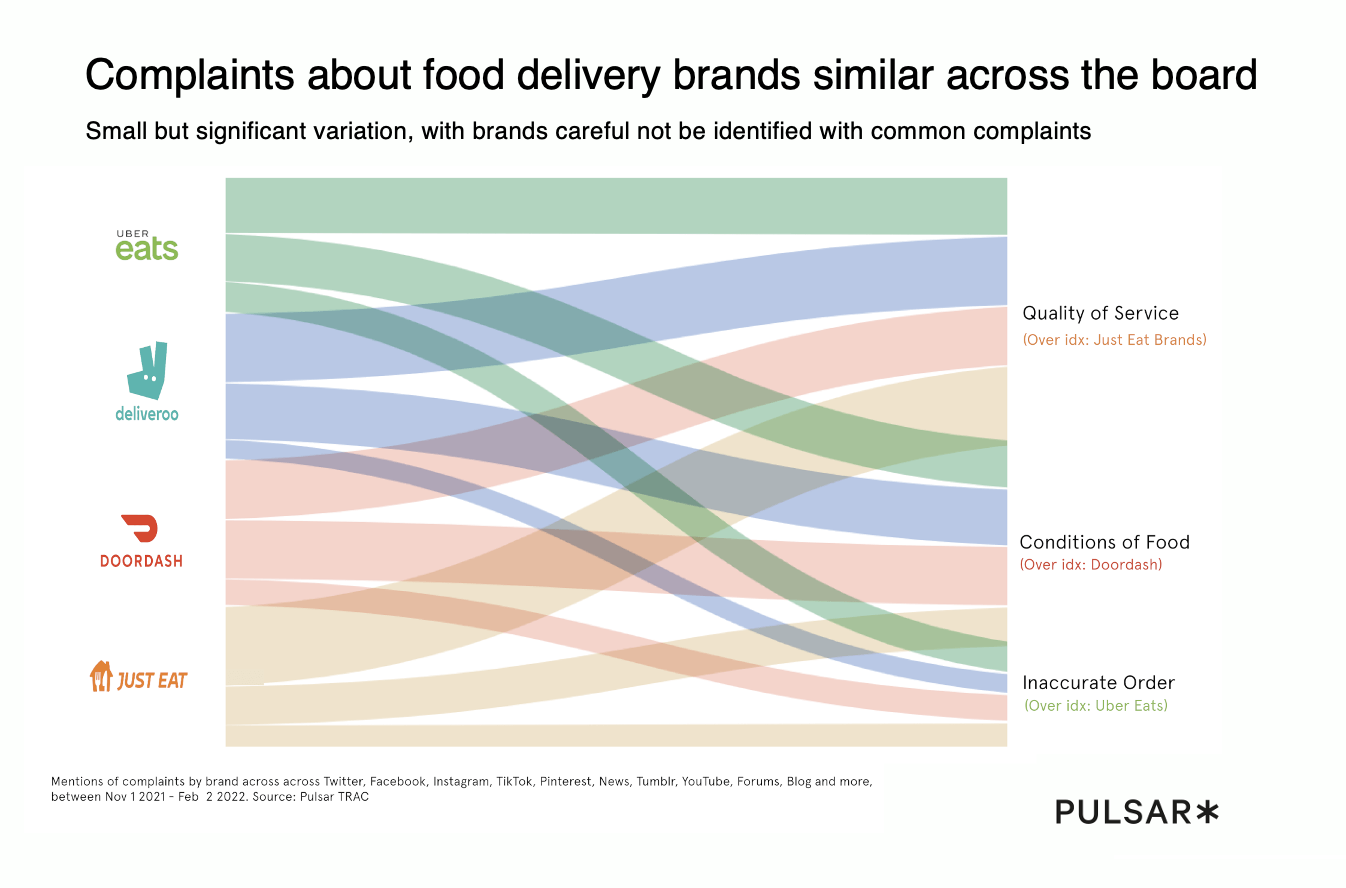
On the flip side, the most frequent complaints were about the quality of service (late deliveries, unhelpful couriers) and the condition of the food on arrival (cold, spilled, or wrong orders). These issues plague users of every delivery app.
For a product team, this insight is a roadmap. If deliveries are often late and food arrives cold, there’s clear demand for innovation: better insulation in packaging, real-time driver tracking, perhaps smaller delivery areas or new logistics models. And since “quick and convenient” is the top driver, any new feature or service that makes delivery faster (or frames it as faster) will win hearts. In short, by listening to what consumers celebrate or complain about, you discover exactly where to focus your innovation efforts.
Another strength of social listening is the ability to zoom in on specific audience segments to tailor products more precisely. Advanced platforms like Pulsar TRAC let you slice the data instantly, so you can understand different communities within the larger conversation.
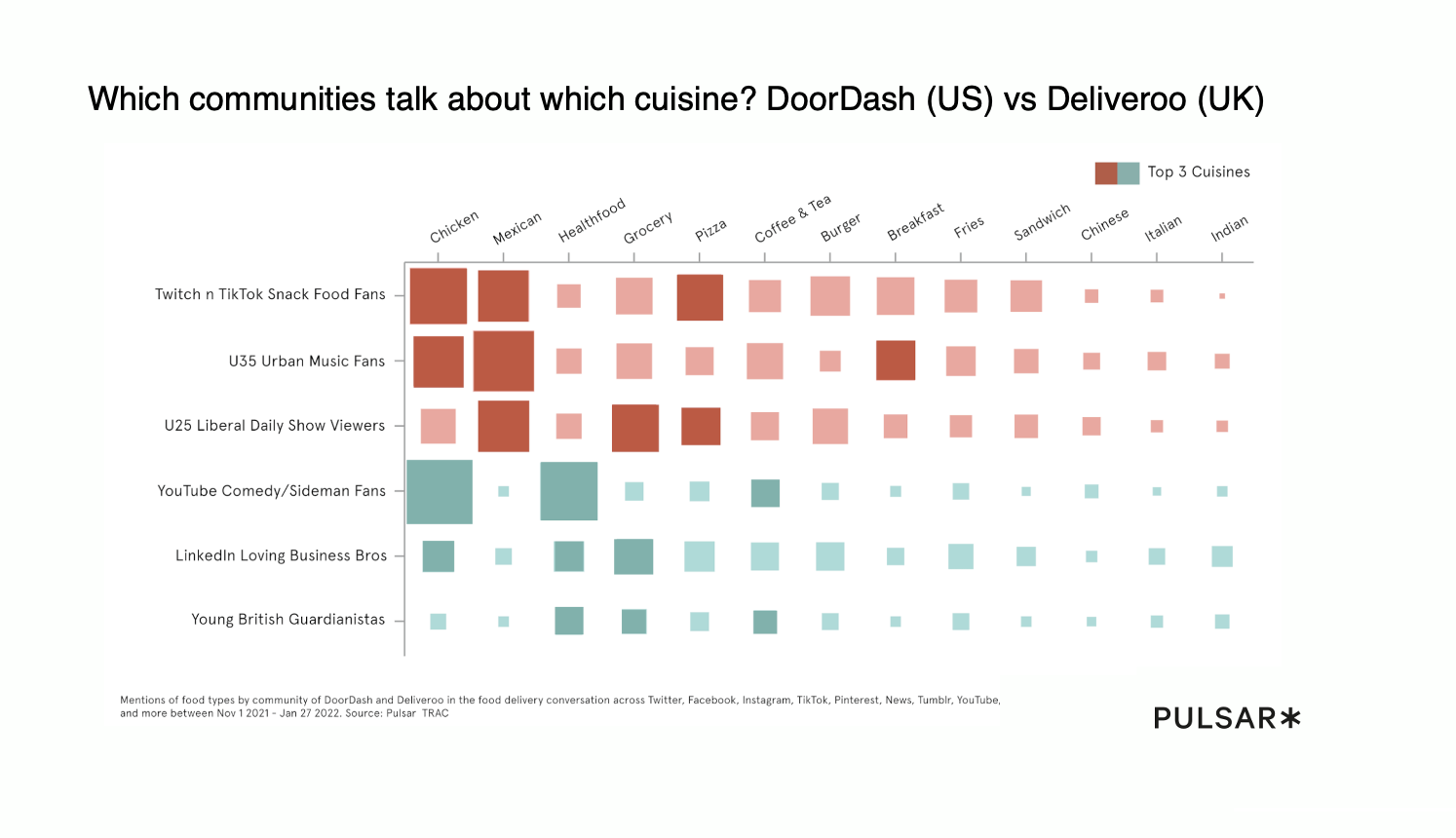
In the food delivery example, segmentation uncovered some striking niche behaviors. One segment of “Sidemen/YouTube Comedy Fans” in the UK couldn’t stop talking about chicken – wings and nuggets were practically their currency on food apps. Meanwhile, a segment of U25 liberal news viewers in the US, and their counterparts dubbed “LinkedIn Business Bros” in the UK, showed a big interest in grocery delivery services. These nuances are incredibly actionable. Instead of a one-size-fits-all offering, a food delivery brand might create a fried chicken lover’s special. They could partner with chicken establishments to create in-app chicken rewards that leverage their vernacular and cravings. Likewise, the app could create a time-saving grocery bundle builder for the professionals.
Social listening made it possible to identify these sub-audiences and their quirks, meaning product innovations can be hyper-targeted to what those groups care about. In essence, by knowing who is driving a conversation, you can better design what to build for them.
Informing Product Ideation and Concept Validation
Social listening is like an always-on focus group. It provides unfiltered, unsolicited feedback on what people want, what they dislike, and what they wish existed. This is invaluable for product ideation – generating ideas for new products or features. It's also essentialy for concept validation – checking if your great new idea will actually resonate before you invest heavily in it.
How does this work in practice? Imagine you’re brainstorming a new product feature. Traditionally you might gather a panel, ask questions, and get somewhat canned responses. With social listening, you can quietly observe real conversations related to that feature – maybe people hacking together a workaround, or complaining about a missing capability in all available products. Those discussions can highlight a market white space: a need that no current product fulfills. Now you have the spark of a truly innovative idea, grounded in real demand rather than guesswork.
Pulsar’s study into salmon trends revealed how different forms of salmon (smoked, gravlax, sashimi) are perceived and consumed by various audiences. We identified audience segments such as urban liberals, tech professionals, gamers, and British football fans.
Using Pulsar TRAC’s audience segmentation capabilities, a brand could use this type of insight for product innovation. A food brand specializing in seafood could use these insights to develop highly targeted product offerings. For instance, if social listening identifies a growing community of "foodie gamers" with a strong affinity for Japanese culture. Here, the brand could innovate new sashimi-grade salmon products, perhaps in convenient, ready-to-eat formats, or develop unique flavor profiles that cater to this specific cultural preference. Conversely, for audiences with European affinities, they might innovate new gravlax kits or smoked salmon varieties with regional seasonings.
Optimizing Features and User Experience
Your customers are constantly talking about the nitty-gritty of your product’s features out in the wild. Every praise, every gripe, every “I wish it did this.” Social listening gathers these scattered insights and turns them into a clear to-do list for making your product better. It’s like having a continuous UX workshop with thousands of participants.
Often, patterns emerge from these discussions. Maybe lots of users struggle with the same app navigation issue, or an accessory product is being used in a creative way you never intended. These insights help you optimize your product features and user experience in an evidence-based way. Instead of guessing what to improve in the next update, you know what will have the biggest impact because users have essentially told you.
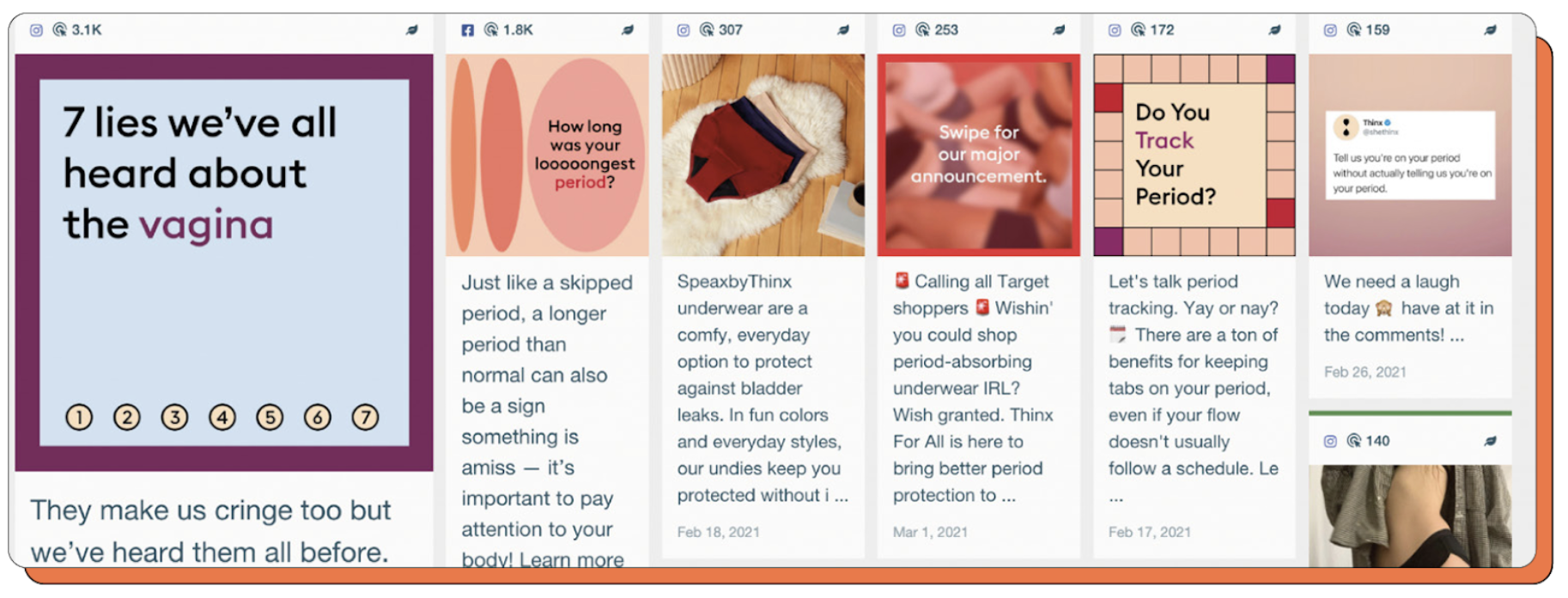
A great example comes from Thinx, a brand known for period-proof underwear. They faced some e-commerce challenges and knew that a smooth customer experience was part of their product’s success. Using Pulsar TRAC, Thinx proactively monitored conversations about potential issues so they could tackle problems before they blew up.
For instance, if customers started grumbling on social media about period underwear taking a long time to dry, Thinx could respond with material product updates or messaging about how to dry them quicker, showing customers they’re heard. This real-time feedback loop meant Thinx’s team could tweak logistics, products or customer comms on the fly to keep shoppers happy. What’s key here is that Thinx treated customer experience issues as part of the product itself. By listening closely, they validated the importance of those “features” (like on-time delivery) and ensured their offering met expectations. The takeaway: social listening helps you refine not just the core product, but everything around it – service, messaging, support – that makes up the whole product experience. And by catching skepticism or confusion early, you can adjust your concept or its rollout so that it truly lands with your audience.
Sometimes the insights point beyond tweaking a feature or service – they highlight a broader consumer movement that should inform your strategy. Take the current craze for product “dupes.” Our research into Dupes found that consumers (especially Gen Z) are hunting for cheaper alternatives to high-end products and proudly sharing their finds.
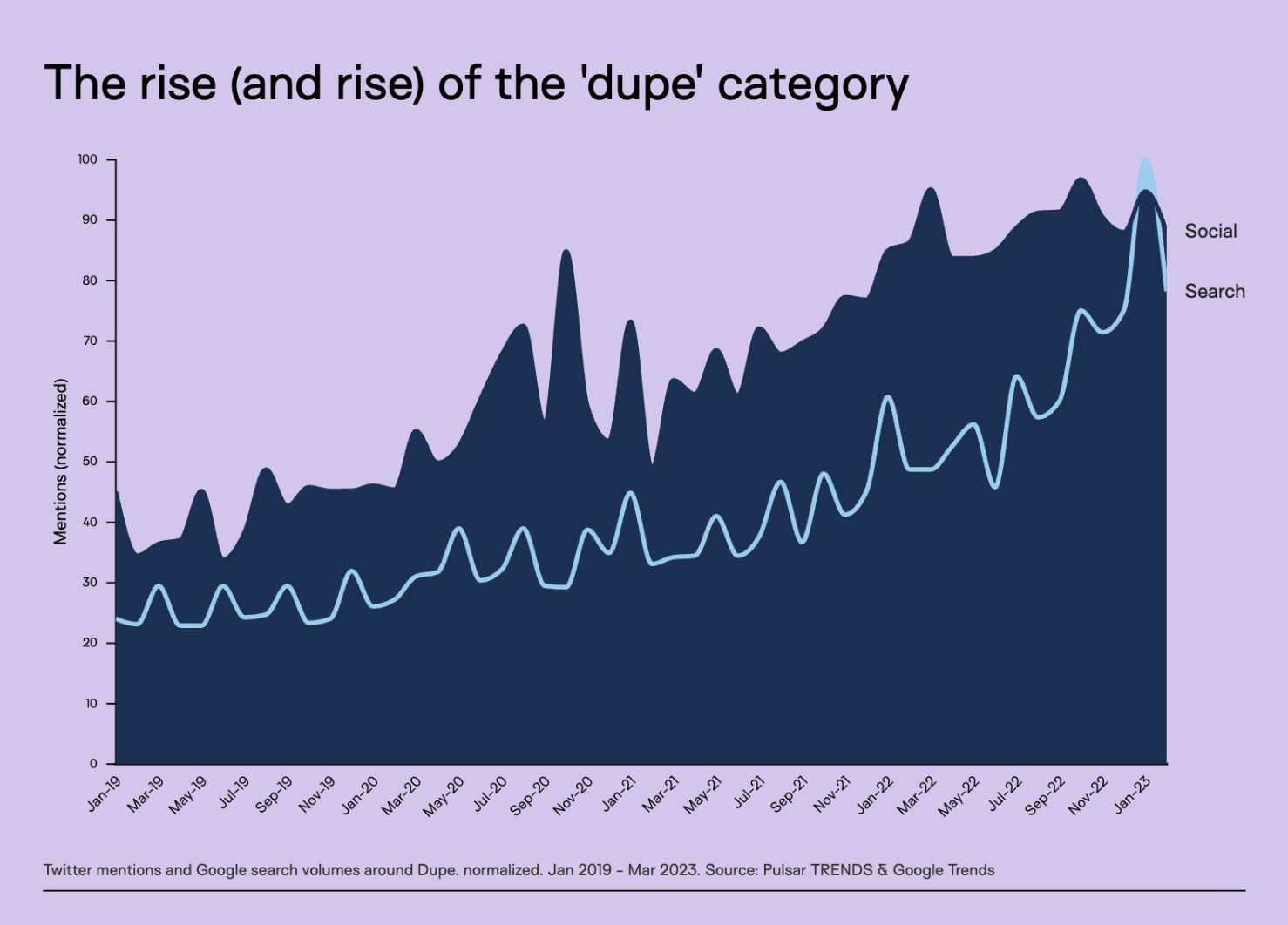
On the surface, that’s a trend about price sensitivity. But if you dig deeper with social listening, you might find deeper narratives: perhaps a growing anti-luxury sentiment or a desire for more inclusive access to quality products. Understanding why your audience is excited about dupes is crucial. Are they frustrated by luxury markups? Do they equate dupes with savvy shopping and community tips? These nuances could inspire you to innovate on value: maybe by launching a more affordable line that maintains quality, or by repositioning your product as an “accessible luxury”.
In essence, social listening can drive feature and product optimization not just on a usability level, but on a value proposition level. It pushes brands to ask: are we delivering what matters most to our audience right now? Whether that’s a specific new feature or a better price-to-quality ratio, the answers are in the conversations happening online.
Gaining Competitive Intelligence and a Market Edge
Social listening isn’t only about your customers’ relationship with your brand – it’s also a window into how they see your competitors. Every rave review of a competitor’s product, or rant about a competitor’s failings, is valuable competitive intelligence available in plain sight. Tapping into these conversations helps you position your own product strategically in the market.
How can this fuel innovation? Imagine you see a rival’s new gadget getting heat because the battery life is poor, and users are venting their anger. That’s an opportunity: if you’re developing a similar product, prioritize battery improvements or highlight your superior battery in marketing. Or maybe a competitor’s eco-friendly packaging is garnering love from consumers. That tells you sustainability could be a deciding factor for your audience, and perhaps your next product iteration should double down on green materials. By systematically monitoring public sentiment around competitors, you can identify the gaps and expectations in your category.
Pulsar TRAC, for instance, allows you to set up queries to track any brand or product, so you can compare sentiment and discussions side by side using custom-made dashboards. If you notice, say, that Brand X’s customers constantly complain about their customer service, while Brand Y is praised for durability - you have a clear map of where you can outshine each. In Pulsar TRAC dashboards, social listening data turns into easy-to-read analysis: what strengths to match, weaknesses to exploit, opportunities to differentiate, and external threats (like a new trend or tech) to prepare for.
Brands that integrate this competitive insight into their product development can leapfrog others by delivering something competitors aren’t. Whether it’s a more reliable product, a feature that fixes a known pain point, or simply a message that resonates better with shared customer values. In the race for innovation, knowing what not to do (because someone else failed at it) is just as valuable as knowing what to do.
Social listening for product innovation: applications and overview
| Application Area | How Social Listening Helps (Pulsar Capabilities) |
| Early Trend Detection | Identifies nascent micro-trends, emerging cultural narratives, and shifts in consumer vocabulary before they go mainstream. (Pulsar Narratives, Pulsar TRAC) |
| Needs & Pain Point Identification | Uncovers unmet consumer needs, frustrations with existing products, and desires for new features from unfiltered online conversations. (Pulsar TRAC) |
| Product Ideation & Validation | Provides authentic feedback on existing products and competitive offerings; allows for real-time sentiment testing of new concepts. (Pulsar TRAC) |
| Feature Optimization & UX | Pinpoints specific feature requests, highlights user journey pain points, and informs iterative product improvements based on continuous feedback. (Pulsar TRAC) |
| Competitive Intelligence | Analyzes competitor product launches, public reception, strengths, and weaknesses to identify differentiation opportunities. (Pulsar TRAC) |
| Targeted Product Development | Segments audiences to understand diverse consumption behaviors and tailor products for specific, high-value niches. (Pulsar TRAC) |
| Strategic Messaging for Launch | Informs product positioning and campaign messaging by aligning with prevailing cultural narratives and audience values. (Pulsar Narratives, Pulsar TRAC) |
| Post-Launch Optimization | Measures real-time public reaction to new products, enabling agile adjustments and informing future product iterations. (Pulsar TRAC) |
From Social Data to Strategy: A 3-Step Framework for Practical Product Innovation
To harness the full power of social listening for product innovation, you need a structured approach. It’s useful to think in three steps: Listen, Map, and Activate. This cycle repeats continuously, keeping your product strategy agile and informed by the latest intelligence. Here’s how to put it into practice:
Step 1: Listen – setting up the right social listening program
Define clear goals: Know what you’re listening for. Are you spotting emerging trends for new product ideas, gathering feedback on a feature launch, or tracking competitors? Clear objectives sharpen your focus — e.g. identifying the top three unmet needs in your category this quarter or comparing launch sentiment with a rival.
Cast a wide net with keywords: Go beyond brand or product names. Include industry terms, competitor names, slang, hashtags, and problem-phrases customers use. In food delivery, for instance, monitor “cold pizza,” “delivery took forever,” or “favourite takeaway.” Use misspellings, colloquial terms, and update regularly as new trends emerge.
Choose the right channels and sources: Customer conversations happen everywhere - TikTok, forums, news, blogs. Monitor where your audience actually talks. Pulsar TRAC aggregates from major networks, niche forums, and search queries, with multilingual coverage across 195 countries to surface trends from Seoul to São Paulo.
Leverage filters to focus in: A firehose of data is useless without refinement. Filter by date range, geography, sentiment, demographics, or audience segment. Pulsar TRAC offers 50+ filters so you can isolate voices that matter and focus on insights that drive product decisions.
Step 2: Map – analyzing the conversations to extract insights
Gauge sentiment and spot themes: Once data is in, assess how people feel and what they discuss most. Are mentions positive, or is discontent rising? Which topics spike alongside your product or category? Tracking sentiment over time can reveal narrative shifts - e.g. olive oil discussions moving from health benefits to price complaints - and highlight fast-growing niche topics that could inspire your next big idea.
Segment the audience: Who’s talking matters as much as what’s said. Break down chatter by demographics, interests, or location to uncover differences in needs and perceptions. Pulsar TRAC’s instant segmentation can group audiences into personas - from DIY hobbyists to budget-conscious parents - so you can design innovations that meet the needs of real, distinct segments, not a generic “average” user.
Uncover underlying narratives: Go beyond trends to find the “why.” Pulsar Narratives AI detects and maps the storylines behind the data — such as “consumer guilt” fuelling sustainable packaging conversations or “rebellion against luxury” driving dupe culture. Understanding these narratives gives you a predictive edge, letting you align product development with the values and emotions shaping demand.
Analyse the competitive landscape: Use social listening to map how competitors are perceived. Identify where rivals excel or fall short, then spot gaps you can own — whether that’s affordable quality, eco-friendly design, or untapped niche features. Competitive mapping ensures your product strategy responds directly to market expectations and frustrations.
Step 3: Activate – turning insights into product innovation strategy
Feed insights into your roadmap: Let social listening guide your product decisions. If data shows customers dislike a material, plan an upgrade. If price is a sticking point, explore new models or value versions. Prioritising based on evidence makes your roadmap both customer-centric and market-driven.
Spark new product ideas: Use unmet needs and micro-trends to inspire innovations beyond your current range. A shift to cheaper alternatives in olive oil might suggest blended products; a boom in at-home fitness could spark accessories or apps. Insights from real conversations keep brainstorming grounded in genuine demand.
Refine launch and marketing plans: Build messaging around the language and values that resonate online. Test variations pre-launch to see which angle wins engagement, then adapt fast during rollout. If a feature is unexpectedly loved — or a pain point emerges — pivot content, ads, or support to match audience sentiment in real time.
Proactively manage reputation: Set alerts for your product plus problem-related keywords to spot issues early. Address negative narratives while they’re still small with fixes, clarifications, or apologies. Real-time monitoring acts as a safety net, protecting launches from spiralling into PR crises.
Keep iterating: Make social listening an ongoing cycle — Listen → Map → Activate. Trends and preferences shift fast; continuous adaptation ensures your product stays relevant, minimises flops, and builds a reputation as a brand that “just gets” its audience.
Key takeaways: Gaining a competitive edge for your product through social listening
In an era of rapid change and empowered consumers, the brands that lead in product innovation are those that stop guessing and start listening. Traditional research methods still have their place, but they cannot match the speed, authenticity, and nuance of insights from real-time public discourse. Social listening has become an indispensable strategic asset, transforming how companies understand their market and develop new offerings.
Its core advantage is the ability to uncover cultural and behavioural trends early, before they hit the mainstream. By tapping into unfiltered conversations across diverse communities, you gain a window into emerging desires, unspoken frustrations, and shifting narratives. This makes product ideas truly forward-looking - shaped by where the market is going, not just where it has been. In the olive oil and food delivery examples, recognising shifts early gave brands a clear blueprint for innovation, enabling them to adapt products or positioning to meet the moment rather than playing catch-up.
Integrating social listening into product development delivers a level of precision and relevance once hard to achieve. With tools like Pulsar TRAC, you can segment audiences and pinpoint exactly which groups care about which issues, tailoring innovations to urban millennials, rural Gen Xers, or niche hobbyist communities. AI-driven Pulsar Narratives uncovers the “why” behind these patterns at scale, acting like a cultural analyst embedded in your product team and ensuring every move aligns with deeper consumer values and stories.
Done well, social listening creates a continuous feedback loop, making innovation agile and iterative. Instead of long cycles where a product is developed in isolation and only adjusted post-launch, you move in shorter, responsive phases: inform, develop, launch, gather feedback, refine. This agility produces better products and signals to customers that you are attentive and responsive. Brands that do this consistently earn a reputation for truly understanding their audience - a serious competitive edge.
The message is clear: innovators who listen lead. By embedding social listening into your roadmap, you turn the unpredictability of consumer chatter into a strategic advantage. You can meet needs before competitors realise they exist and shape the future of your market.
2026 Outlook
Ready to transform your product innovation strategy with deep audience insight?
Explore the power of Pulsar TRAC, Pulsar CORE and Pulsar Narratives to start uncovering the insights that matter most. Our Pulsar newsletter for more expert guides and industry insights.
To learn more, sign up to our newsletter below: