Social listening for trend analysis: how audience intelligence identifies emerging cultural trends on social media
Use Case guide contents
What Is Social Listening for Trend Analysis?
Social listening for trend analysis is the use of social listening and audience intelligence to identify emerging cultural, behavioural, and consumer trends by analysing how people naturally talk, share, search, and create content online.
Unlike traditional market research methods such as surveys, focus groups, or historical sales analysis, social listening trend analysis is real-time, unsolicited, and behaviour-led. It captures organic conversation across platforms including TikTok, Instagram, forums, blogs, and news media, allowing organisations to detect early signals of change before they reach mainstream awareness.
As digital culture fragments into niche communities and short-lived micro-trends, organisations in retail, FMCG, luxury, technology, media, and healthcare increasingly compete on their ability to anticipate cultural shifts rather than react to them. Social listening enables this shift by surfacing emerging narratives, evolving language, and behavioural signals at the point where trends are forming, often months before they appear in traditional reporting or consumer research.
Platforms such as Pulsar TRAC and Pulsar Narratives support this approach by moving beyond volume metrics and sentiment scores to explain why a trend is emerging, who is driving it, and how it is likely to evolve.
Why Social Listening Is Critical for Trend Analysis
Social listening plays a central role in trend analysis because it captures the leading indicators of cultural change rather than its outcomes. These indicators often appear as subtle shifts in language, imagery, sentiment, or behaviour within small communities before spreading more widely.
Through social listening for trend analysis, brands are able to detect weak signals before mass adoption occurs, identify trends forming within niche or marginal communities, track language shifts that precede behavioural change, connect social conversation to later search behaviour and purchase intent, and understand the emotional and cultural drivers behind emerging demand.
Traditional research methods remain valuable for validating trends once they are established. Social listening, however, identifies them while they are still forming.
Social Listening for Trend Analysis vs Traditional Market Research
The key difference between social listening for trend analysis and traditional market research lies in speed, scale, and predictive capability.
Social listening draws on unsolicited, organic digital conversations, whereas traditional research relies on solicited and structured responses that are shaped by survey design and research conditions. Insight generation through social listening is continuous and real-time, while traditional research requires long collection cycles that often stretch across weeks or months. Social listening operates at global scale, analysing millions of data points, while traditional research works with comparatively small samples.
Critically, social listening offers greater predictive value, as it surfaces emerging signals and behavioural shifts, whereas traditional research is largely retrospective or confirmatory. Finally, social listening trend analysis captures emotional nuance and lived context through behaviour, while traditional methods rely on stated preferences that may not reflect actual decision-making.
Detecting Weak Signals and Micro-Trends
Effective trend analysis depends on the ability to detect weak signals—small but meaningful deviations from established patterns that indicate something new is forming.
These signals frequently emerge within subcultures, fandoms, creator-led communities, platform-specific niches, and regional or identity-based groups. Social listening enables brands to monitor how language, imagery, and sentiment evolve over time within these spaces. AI-assisted analysis supports this process by identifying micro-trends, such as sudden increases in attention toward specific aesthetics, ingredients, activities, or anxieties that sit outside dominant narratives.
By identifying these signals early, organisations can move from reacting to trends toward actively anticipating them.
Case Study: The Dupe Economy and Linguistic Shift
The evolution of dupe culture demonstrates how social listening for trend analysis identifies behavioural change through language.
Historically, the term “dupe” carried negative connotations, often associated with deception or low-quality imitation. Social listening data shows a clear shift in usage, with “dupe” increasingly framed as a positive marker of consumer savvy, value-seeking behaviour, and financial awareness.
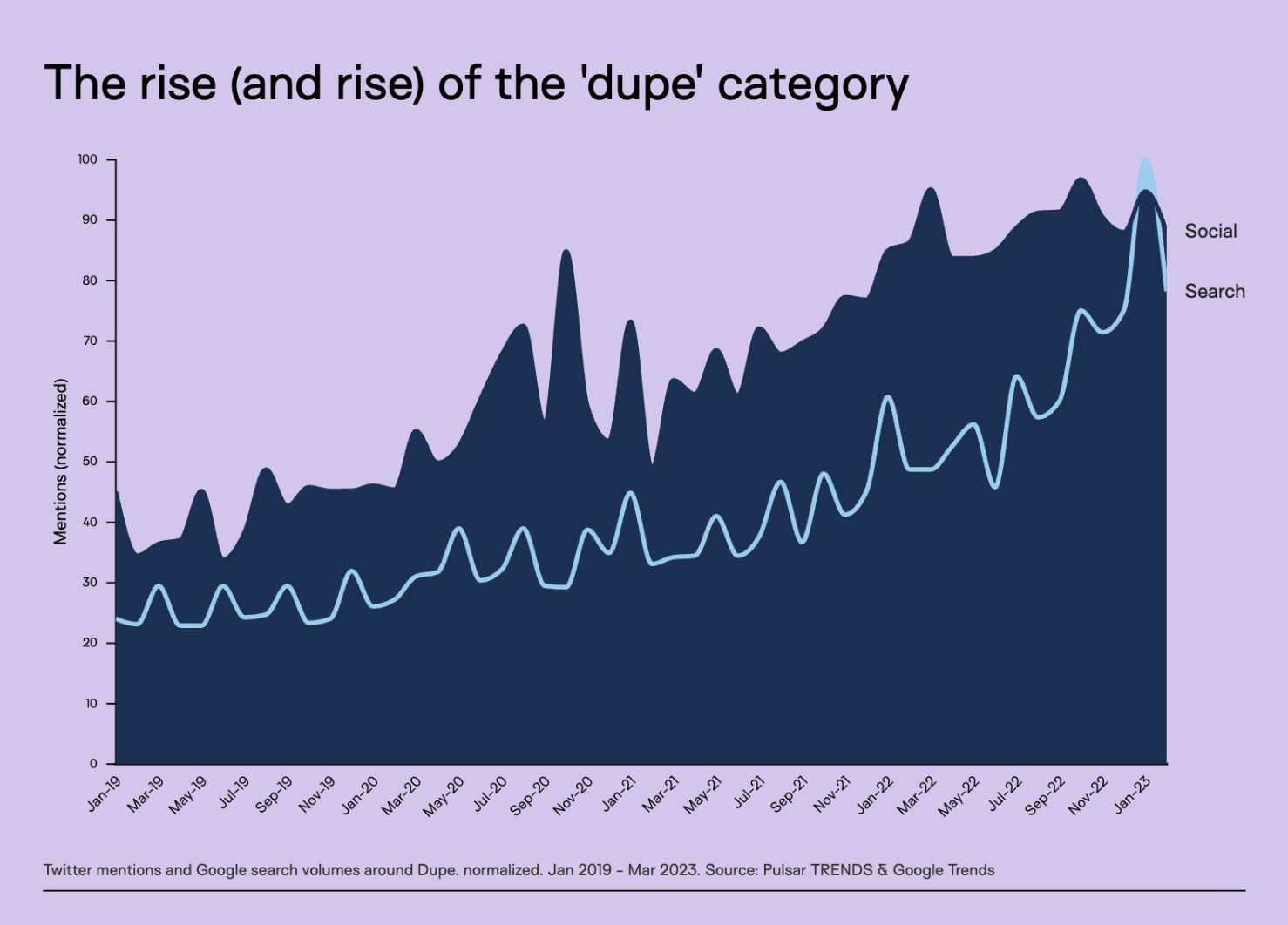
Analysis revealed a consistent social-to-search pattern in which spikes in social conversation were followed by increases in search interest. This indicates that social platforms function as intent-shaping environments, where cultural conversation precedes active consumer decision-making. This shift is closely linked to cost-of-living pressures, a desire to maintain status signalling without premium pricing, and platform-native humour that reframes affordability as intelligence rather than compromise.
While dupe culture first gained traction in beauty and fashion, social listening trend analysis shows clear expansion into food and dining through copycat recipes, as well as technology accessories, where visual style increasingly outweighs brand-name loyalty. Retail platforms act as discovery hubs within this economy, reinforcing the role of accessibility and aesthetic participation.
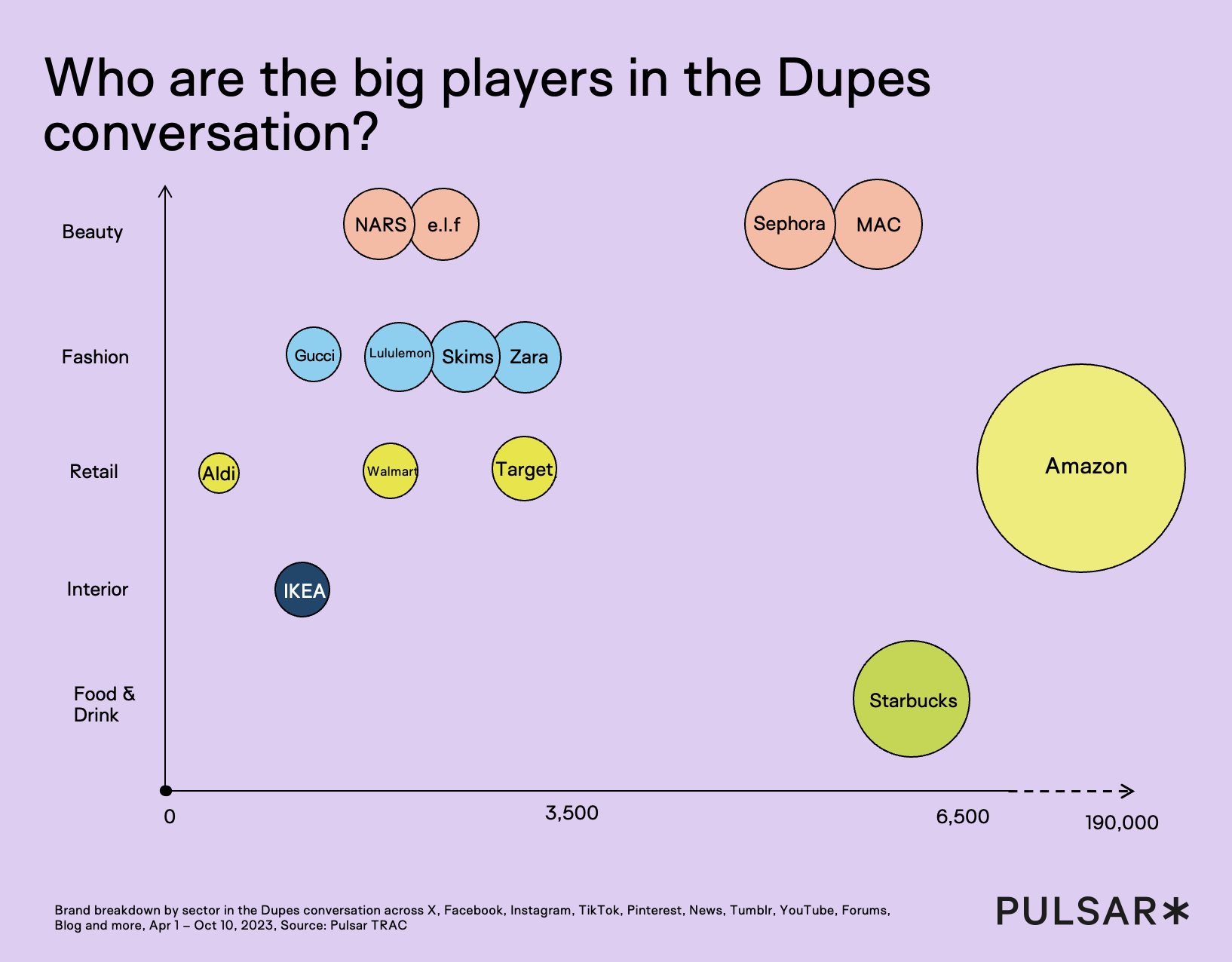
For brands, this marks a transition from being undermined by dupes to actively engaging with a cultural logic centred on value, creativity, and inclusion.
Visual Social Listening and the Aesthetics of Coziness
Text-based analysis alone is insufficient for understanding many contemporary trends, particularly on visual-first platforms such as Instagram and Pinterest. Image-based social listening enables brands to analyse how aesthetics shape behaviour and emotional resonance.
Large-scale image analysis shows that coziness is not a single design style but a cross-category lifestyle aesthetic spanning interiors, fashion, and food. Visual markers commonly associated with coziness include warm, earthy colour palettes, enclosed domestic spaces, and low visual noise. Outdoor environments and expansive landscapes appear far less frequently, reinforcing the idea that coziness centres on containment, comfort, and control.
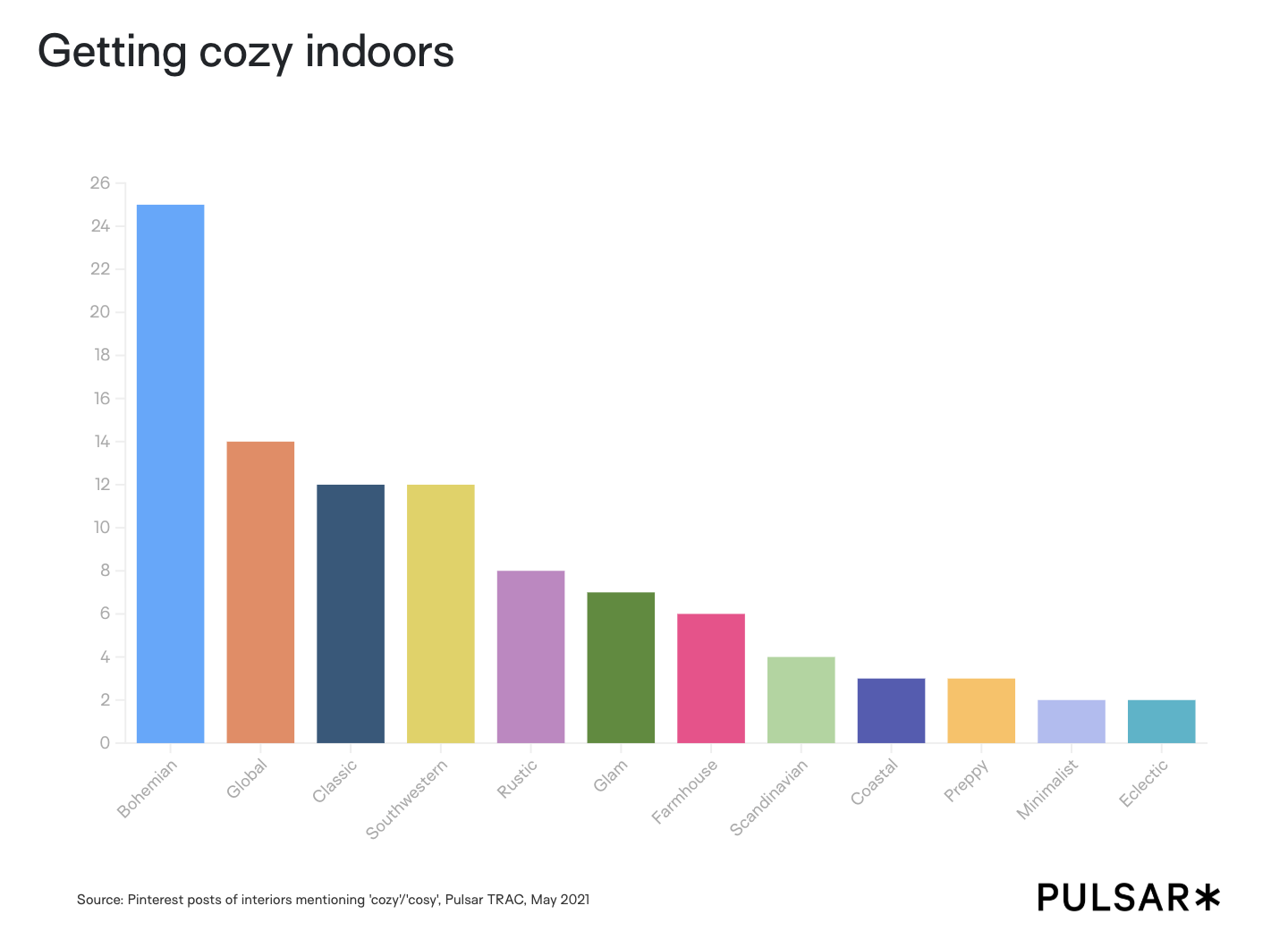
Social data also reveals a meaningful distinction between coziness and cottagecore. Cottagecore draws on rural nostalgia and agrarian ideals, spanning both indoor and outdoor settings and carrying lower cultural sensitivity risk. Coziness, by contrast, is rooted in global bohemianism, focuses primarily on domestic interiors, and carries higher risk of cultural appropriation if global influences are used without context.
For product innovation and brand positioning, this distinction is critical. Brands targeting cozy audiences must prioritise interior-led storytelling and culturally informed design, particularly as home-working and domestic self-styling become long-term behaviours.
Anti-Consumption Trends and De-Influencing
Social listening for trend analysis also reveals moments where audiences actively resist consumption.
De-influencing and no-buy movements represent a clear break from aspirational haul culture and algorithm-driven shopping narratives. Social listening shows these trends are driven by a combination of economic pressure, environmental concern, and fatigue with influencer marketing.

Paradoxically, de-influencers often gain credibility precisely because they recommend against purchasing. Their perceived authenticity reshapes trust dynamics, particularly among younger audiences.
A key driver of this shift is an audience often described as Progressive Creatives—socially conscious consumers who prioritise frugality, sustainability, and psychological wellbeing. Their behaviours include participating in no-buy challenges, repeating outfits, embracing repair culture, and intentionally reducing digital exposure through unfollowing and decluttering.
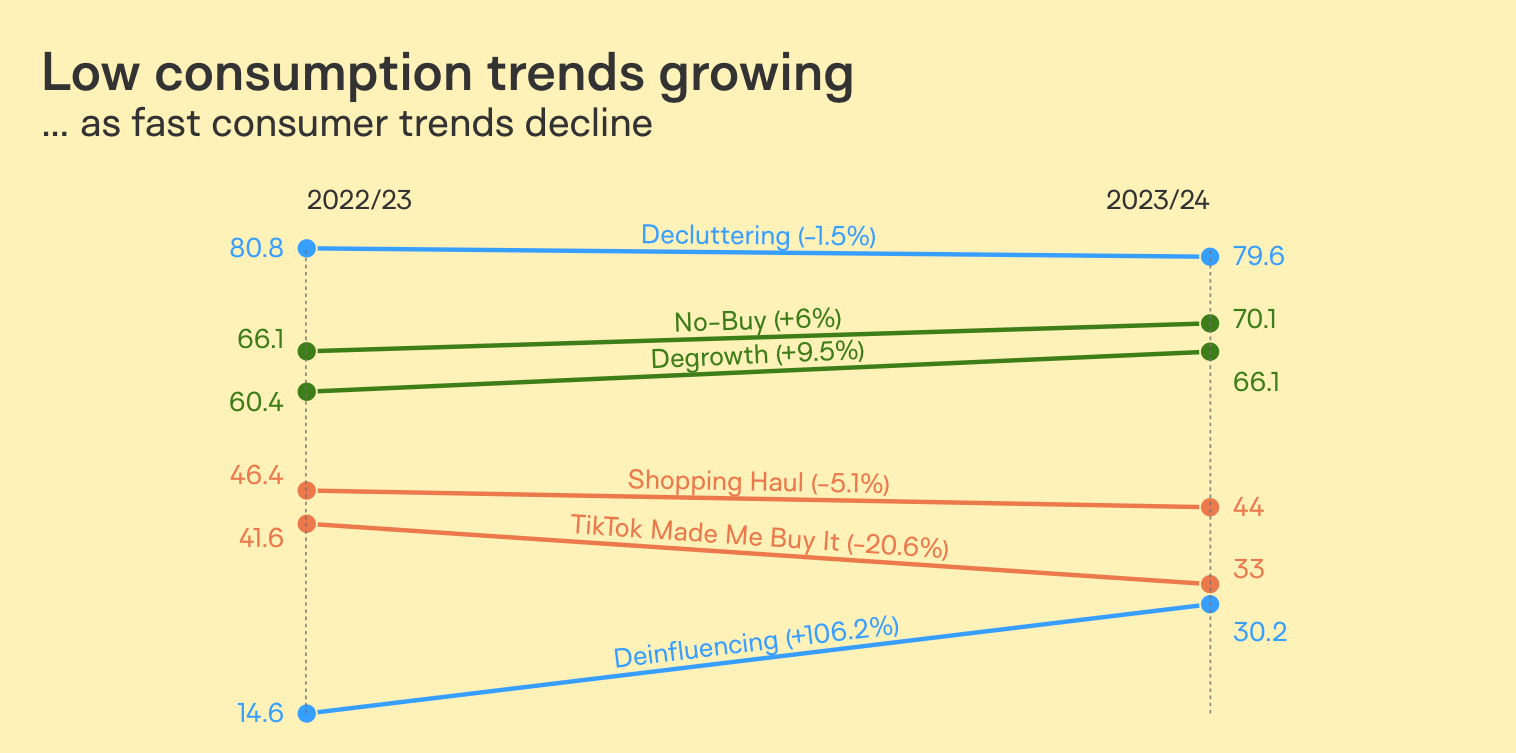
For brands, this shift introduces both risk and opportunity. Non-essential products face higher churn risk, while services focused on repair, resale, flexibility, and value-based positioning gain relevance.
Tracking Narrative Shifts Around Artificial Intelligence
Public discourse around artificial intelligence illustrates how rapidly narratives can evolve and fragment.
Early social conversation focused on novelty and humour, often expressed through memes and playful experimentation. This quickly transitioned into existential anxiety, spiritual framing, and ethical concern. Social listening reveals a widening gap between media narratives driven by industry commentary and public discourse focused on risk, meaning, and loss of control.
Language associated with spirituality, mysticism, and apocalypse increasingly features in AI-related conversation, particularly within niche communities. This demonstrates how social listening trend analysis can surface emotional and psychological responses that are not captured by technical or economic assessments alone.
A Framework for social listening Trend Analysis: Listen, Map, Activate
To translate social listening into strategic value, organisations require a repeatable framework that moves from observation to action.
The listening phase focuses on capturing unfiltered conversation beyond branded mentions. This includes monitoring category language, competitor positioning, platform-native discourse, and broader cultural conversations relevant to innovation goals.
The mapping phase synthesises this data to uncover meaning. This involves segmenting audiences, analysing emotional drivers, and detecting narratives that connect individual data points into broader belief systems. Narrative mapping reveals which stories are gaining momentum and which values underpin emerging trends.
The activation phase applies these insights across business functions. Trend intelligence informs product development, campaign planning, messaging, and customer experience strategy, ensuring decisions are grounded in cultural reality rather than assumption.
Measuring the ROI of social listening for Trend Analysis
The value of social listening extends beyond insight generation. When embedded into marketing and innovation workflows, social listening trend analysis contributes to improved campaign performance, reduced customer service costs, and stronger cultural relevance.
Return on investment is typically measured by linking insight to outcomes such as engagement uplift, retention improvement, reduced churn, or increased efficiency in marketing execution. Social listening also enables real-time optimisation, allowing brands to adjust creative, messaging, or partnerships while campaigns are live.
Conclusion: Staying Ahead Through Listening
In a rapidly shifting cultural environment, social listening for trend analysis is essential for maintaining relevance.
By identifying emerging trends at their earliest stages, social listening enables brands to move from reaction to anticipation, shaping products, narratives, and strategies that align with how audiences actually think and behave.
Audience intelligence platforms such as Pulsar TRAC, Pulsar Narratives, and Pulsar CORE provide the scale, speed, and contextual depth required to navigate fragmented digital culture. For organisations focused on innovation, the strategic imperative is clear: to lead cultural change, one must first listen to it.
Frequently Asked Questions About Social Listening for Trend Analysis
What is social media for trend analysis?
Social media for trend analysis uses social listening to identify emerging cultural and consumer trends from real-time online conversation.
How does social listening support trend analysis?
Social listening surfaces early signals in language, sentiment, and behaviour before trends reach the mainstream.
What are weak signals in trend analysis?
Weak signals are small but meaningful changes in conversation or imagery that indicate a trend is forming.
Can social media trend analysis predict consumer behaviour?
It improves foresight by revealing early indicators of intent ahead of search and purchasing behaviour.
Which platforms matter most for trend analysis?
Trends usually emerge first in creator-led and community-driven digital spaces.
How are visual trends analysed on social media?
Visual trends are analysed through image-based social listening that identifies recurring aesthetic patterns.
How do brands avoid mistaking a fad for a trend?
Brands look for sustained growth, cross-community spread, and connection to underlying cultural drivers.
How is social media trend analysis used by organisations?
Insights inform product development, messaging, and strategic decision-making.
Ready to transform your trend analysis strategy with deep audience insight?
Explore the power of Pulsar TRAC, Pulsar CORE and Pulsar Narratives to start uncovering the insights that matter most. Our Pulsar newsletter for more expert guides and industry insights.
To learn more, sign up to our newsletter below: