Forecasting trust: how social listening for reputation intelligence keeps brands resilient
Use Case guide contents
Press coverage is weather; reputation is climate. A single story might cause a sudden downpour, but the real conditions shaping brand trust are built over time. You don’t plan a harvest by glancing out the window - and you can’t safeguard enterprise value by reacting to headlines. Reputation tracking today demands long-range observation, constant recalibration, and a clear understanding of the cultural systems that sustain or erode public trust.
That’s where advanced social listening comes in. It’s the climate science of brand credibility, drawing from millions of data points across social media, news, forums, and search to model how narratives form, spread, and transform. Rather than counting mentions or measuring sentiment in isolation, it maps the flows of influence and emotion that determine whether a company is seen as trustworthy, competent, or responsible. The goal isn’t just to track storms, it’s to forecast consequences.
By moving from reactive monitoring to predictive reputation intelligence, organisations can anticipate narrative pressure before it escalates, quantify the financial impact of public perception, and reinforce the pillars of trust that underpin long-term resilience. Reputation is no longer a soft metric; it’s the unseen balance sheet of the earned-trust economy. Social listening is the instrument that keeps it in equilibrium.
In the contemporary digital landscape, corporate reputation has transformed from a soft metric handled solely by PR into a quantifiable asset that determines long-term enterprise value. For mid-to- senior-level marketers, reputation professionals, and strategic communicators, merely reacting to negative press is no longer sufficient. This guide provides a comprehensive framework for understanding how audience consumption behaviours and insights from social data are harnessed to monitor public trust, manage severe reputation risk, and actively build a favorable earned reputation.
Navigating the earned trust economy: why social listening is non-negotiable for reputation tracking
Is reputation more important than profit? Reputation functions as corporate goodwill, an intangible yet highly measurable asset that inevitably appears on the balance sheet. This goodwill represents the market’s belief in a company’s consistent ability to meet expectations and operate ethically. When this value is damaged, the financial consequences are immediate and severe. Reputation crises can lead to rapid financial deterioration, with companies losing large chunks of their revenue within months. Moreover, the perceived online image holds immense weight: negative search results or a tirade of forum posts against your brand can compromise key potential business prospects.
The foundation of robust reputation rests upon two interconnected pillars: Credibility and Trustworthiness.
- Credibility refers to the quality of your brand being believed, encompassing integrity, reliability, and demonstrable expertise in communication and information sharing
- Trustworthiness is the audience’s perception of a brand or source as reliable and honest
These pillars are cemented by transparent and ethical communication practices - when these qualities are strongly established, messages are received more positively, and relationships with critical stakeholders can thrive.
Shifting from reactive monitoring to predictive reputation intelligence
Advanced social listening for reputation tracking is fundamentally different from basic social media monitoring (which often focuses on campaign performance, product performance or customer service). Listening is a proactive strategy focused on analyzing the ambient conversation surrounding a brand, industry, or key executive. By tracking mentions related to the brand, products, competitors, and key industry challenges, reputation professionals gain a vital early warning system. Is your brand being mentioned in fake news narratives? Is your reputation in a particular area, such as sustainability, suffering from negativity? Finding the weak spots in your reputation is key to being able to build robust reputation intelligence. This function aligns more closely with PR and Corporate Communications goals than traditional marketing objectives, particularly in two key areas: crisis prediction and earned narrative construction.
The nature of the modern crisis, unfolding in complex, networked, and unpredictable ways, demands that communications professionals possess access to real-time data. An established, pre-existing foundation of credibility is the organization’s most valuable tool for crisis recovery. Organizations perceived as highly credible can absorb reputational shocks and recover more easily because the established trust grants them greater understanding from the public during moments of failure. Social listening platforms, therefore, are not just tracking damage; they are measuring the dynamic level of this essential resilience capital in real-time.
For large corporations operating across global markets and facing persistent scrutiny, reputation monitoring cannot be intermittent. The complexity and speed of narrative contagion necessitate an always-on vigilance model to ensure continuous monitoring of brand health, immediate identification of emerging crises, and comprehensive competitor benchmarking. While smaller organizations might activate monitoring only when a need arises—for example, during a product launch or in response to a sudden spike in negative reviews—the strategic imperative remains the same: the necessity for immediate and comprehensive social intelligence to manage perception.
Crisis identification and mitigation: mastering the velocity challenge
Modern reputation crises are characterized by velocity and unpredictable narrative evolution. A platform capable of analyzing audience consumption behaviours and insights from social data is vital for understanding how a crisis jumps from one topic or entity to another. Understanding where your brand sits in the field and its perceived reputation is key to navigating a crisis.
When the Boeing crisis unfolded, this dynamic was on full display. An incident involving an Alaska Airlines flight triggered a wave of commentary that swiftly shifted accountability from the operator to the manufacturer. We analysed the conversation and saw that within hours, audience perception reframed the story—not because of new facts, but because of Boeing’s pre-existing reputation for safety and transparency. That reputational context shaped every subsequent headline. Reputation intelligence allows communicators to see these shifts as they happen, mapping how public trust or skepticism magnifies the stakes of a crisis in real time.
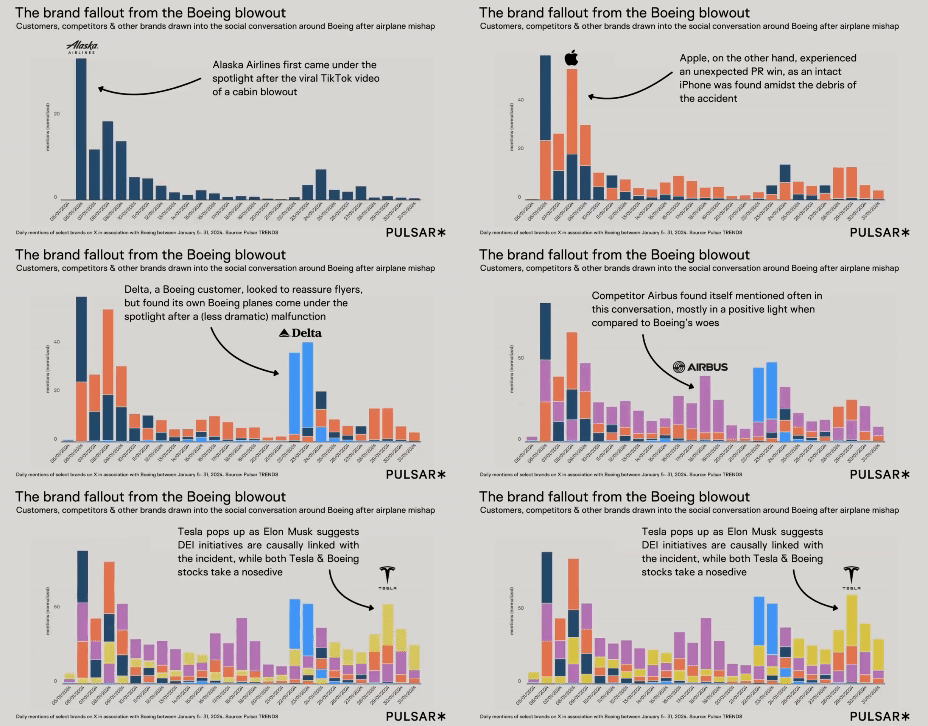
Ongoing reputation intelligence adds the missing context that most brands lack once a crisis hits. It gives communications teams a living baseline of how their organisation is already perceived—what strengths they can lean on, and where latent distrust is likely to surface. For Boeing, consistent tracking of conversations around engineering quality, corporate culture, and past safety concerns could have revealed early warning signals long before the incident.
It might also have shown that “safety” as a reputational pillar had eroded across certain audience segments, while political framings around “corporate values” were already gaining traction in online discourse. Armed with that context, Boeing could have adjusted its communications strategy, emphasising transparency over defensiveness, engaging directly with technical experts to rebuild credibility, and separating operational accountability from broader cultural narratives before they fused.
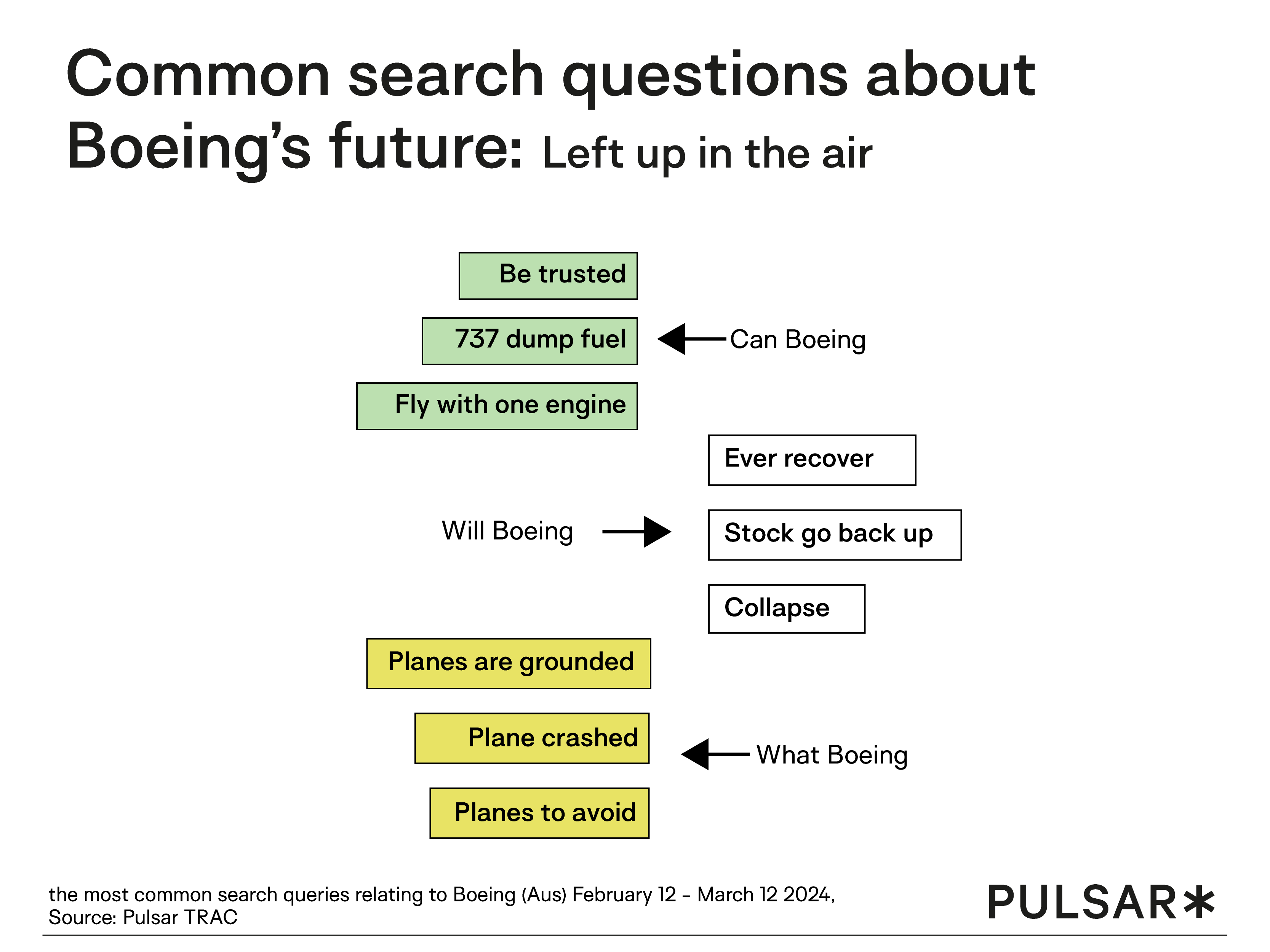
As the story evolved, reputation intelligence would also have helped prioritise interventions. By identifying which audiences were driving politicised interpretations of the event, Boeing could have issued segmented responses—using data-driven briefings for aviation professionals, reassurance messaging for consumers, and a clear ethical stance to neutralise the “culture war” framing before it dominated. Beyond mitigation, this intelligence offers a path to recovery: connecting the company’s ongoing actions to quantifiable shifts in public confidence, and demonstrating to stakeholders that reputational repair is measurable, not abstract.
In short, ongoing reputation intelligence gives brands context, not just alerts. It shows how a crisis fits into the long arc of perception—where the pressure points are, which values need reinforcing, and how trust can be rebuilt over time. For organisations facing complex scrutiny, that context is what turns reactive crisis management into reputational resilience.
Mitigating misinformation and exposure risk
Misinformation represents a core reputational risk, as falsehoods undermine credibility and erode public trust. Advanced social listening integrates specialized tools to quantify and mitigate this threat.
Pulsar’s integration with NewsGuard provides communications professionals with a sophisticated mechanism to counter misinformation by layering trusted journalistic criteria onto data trackers. This integration allows for the analysis of narratives shared around a brand and helps identify which news sites and blogs are actively spreading or originating unreliable information.
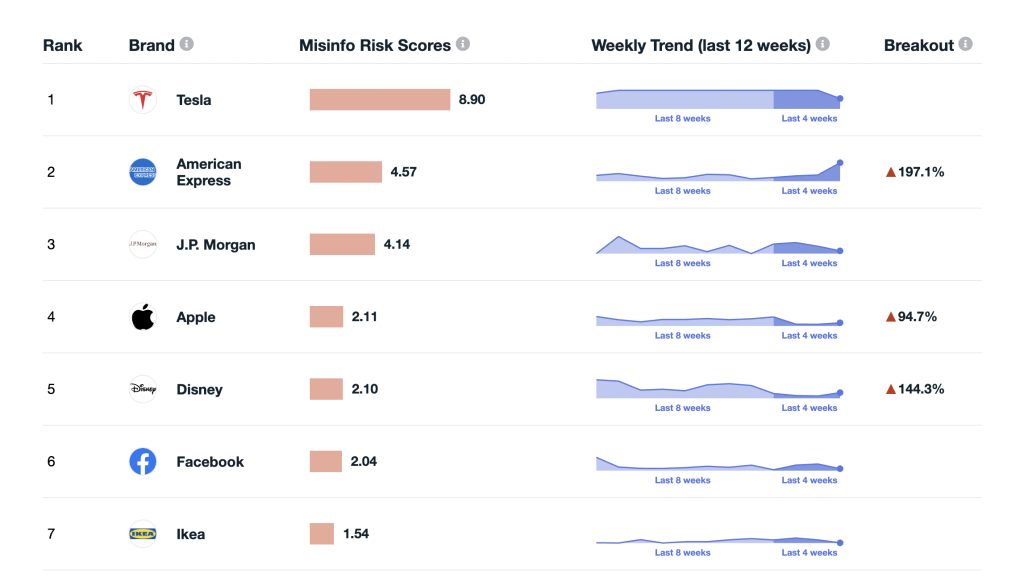
Using our NewsGuard integration, we created the Misinformation Risk Index: Brands, which tracks which prominent global brands are garnering attention from untrustworthy news publishers. This index is not merely a measure of negative sentiment; rather, it quantifies the reputation risk associated with a brand appearing adjacent to unreliable content.
The index calculates a relative score (0 to 10) by combining two crucial metrics:
- NewsGuard’s Reliability Rating: Based on nine standards of credibility and transparency, assessing whether a publisher corrects errors, discloses ownership, and avoids publishing false content.
- Pulsar’s Visibility Score: A proprietary metric calculating the reach and impact of content by factoring in audience size, engagement, and content format.
This sophisticated methodology allows organizations to assess potential exposure to unreliable information and track how this exposure evolves over time. For example, the Misinformation Risk Index revealed that brands such as Tesla (scoring 10.00) and Disney (scoring 6.94) experienced high levels of quantifiable exposure risk on unreliable news sites. This intelligence allows brand managers to proactively adjust their media buying or communications strategies to minimize the possibility of their brand being associated with untrustworthy content online.
Financial and systemic risk: monitoring stakeholder communities
The Silicon Valley Bank collapse showed how fast financial instability can turn reputational. Using Pulsar TRAC, we saw the conversation shift within hours - from finance insiders discussing liquidity to political communities reframing the story around governance, ethics and “culture-war” narratives. In networked crises like this, perception spreads faster than facts.
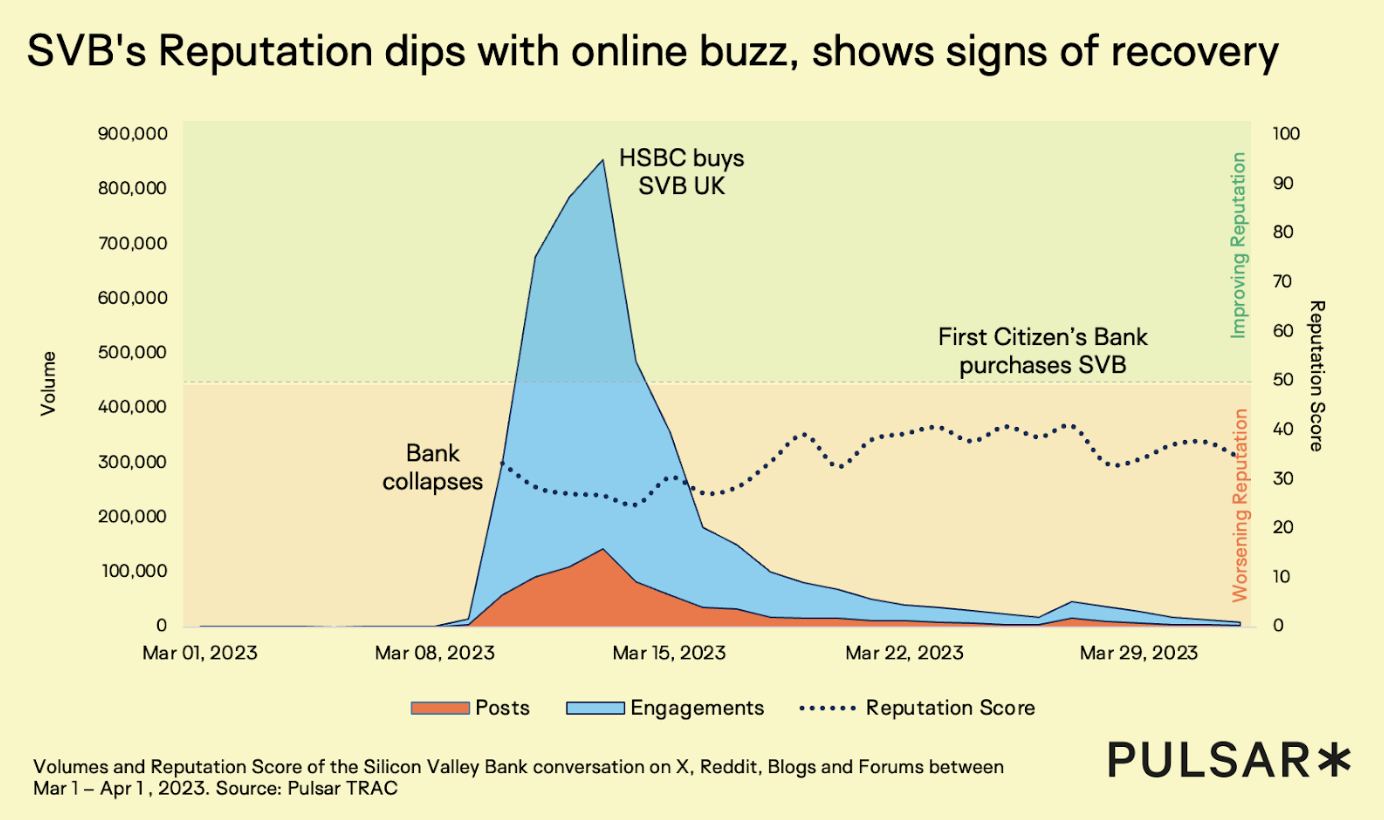
Reputation intelligence gives brands the context to act before panic compounds. Continuous tracking of stakeholder groups - VCs, analysts, regulators and startup founders - reveals where confidence is weakening and which narratives are accelerating risk. Had SVB maintained that baseline view, early warning signs around governance and leadership trust could have prompted direct communication with the audiences most capable of fuelling a run.
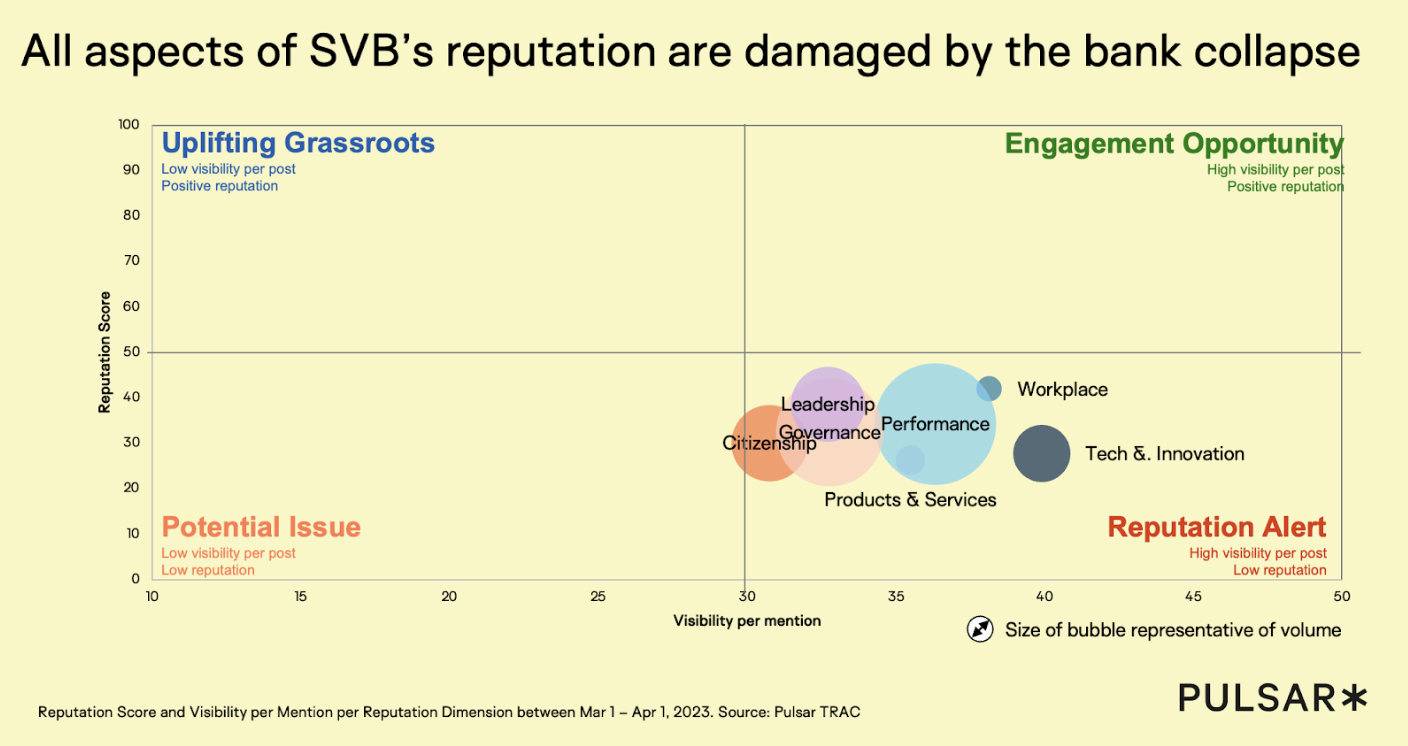
When volatility hits, this context becomes a stabiliser. Real-time reputation scores and audience segmentation help communicators prioritise responses, align tone by community, and rebuild credibility as events evolve. In short, reputation intelligence doesn’t just monitor crises - it maps the networks and narratives that decide how far they spread.
Frameworks and practical steps: implementing advanced reputation intelligence
Effective reputation tracking requires a disciplined methodology and a technical infrastructure capable of processing global, multi-source data streams.
Identifying reputation white spaces: proactive narrative building
Advanced social listening is not solely defensive; it is a vital tool for proactive reputation building. By spotting white spaces—areas of expertise or ethical behavior where the brand has an innate right to play but lacks conversational volume—brands can build valuable reputational capital.
A core strategy for occupying these white spaces is structured thought leadership. Analyzing competitor narratives and audience interests reveals where leadership themes are underdeveloped. Pushing the CEO or key executives as subject matter experts:
- Builds trust by delivering valuable, accessible insights
- Establishes authority and technical expertise
- Creates engaging content designed for multiple angles and storylines, ensuring maximum reach across diverse media platforms
These positive, proactive stories are essential for establishing a "positive review buffer". This buffer of positive earned reputation is critical in daily management, helping to offset the inevitable occasional negative comment. Furthermore, during a major crisis, this pre-established positive narrative becomes a powerful strategic asset that can be mobilized to actively dilute or "drown out the negative narrative" or to sustain audiences who will defend the brand regardless of the crisis. By using social listening to bolster reputation in key areas of risk, brands can add a layer of defense that can protect the company overall.
The Operational Model: always-on sophistication
For complex, large organizations, constant vigilance is a mandatory requirement. The scale and speed of global digital conversation mean that large corporate entities must rely on an always-on infrastructure, leveraging tools like Pulsar CORE and Pulsar TRAC to maintain a holistic, 360-degree view of their environment. This infrastructure collects historical and real-time data across all critical digital channels, including social media platforms, blogs, web pages, news articles, reviews, and forums worldwide.
Smaller organizations, while potentially adopting a strategy that toggles on and off with need—activating monitoring only during periods of heightened risk or activity—must ensure that their setup is robust enough to perform rapid, retrospective analysis the moment a crisis begins to surface.
Reputation tracking: Listen–Map–Activate framework
A structured framework ensures that the torrent of social data and reputation intelligence is transformed into strategic communication actions.
1. LISTEN: Comprehensive data collection and audience segmentation
The first stage involves comprehensive data collection tailored specifically for reputation tracking. This means establishing precise monitors not just for the brand, but for executive leaders, key products, competitors, industry trends, and sensitive keywords (e.g., 'scandal,' 'ethics,' 'layoffs').
The critical next step in modern reputation listening, enabled by tools like Pulsar TRAC, is sophisticated audience segmentation. Not all mentions carry equal weight. Conversations must be isolated and analyzed by stakeholder group—journalists, employees, regulators, investors, and specific consumer segments—to accurately gauge the influence and proximity of the threat to the company’s License to Operate. For example, negative sentiment shared within a community of industry journalists commands a far more immediate and strategic response than high-volume but low-impact chatter on an isolated forum.
2. MAP: Structured analysis and narrative identification
Mapping transforms raw data into strategic context. This phase mandates moving beyond simple sentiment scores to deeply analyze the structure and flow of public stories.
- Advanced AI Analysis: Platforms employing narrative intelligence, such as Pulsar Narratives, use AI models to cluster unstructured text data, automatically identifying core narratives and emergent stories in the data. This bottom-up clustering reveals thematic connections and semantic usage that human analysts might miss.
- Reputation Mapping: The identified narratives must be mapped directly onto the organization’s core reputation pillars (Trustworthiness, Expertise, Responsibility). This links the qualitative nature of public discourse to fixed corporate objectives.
- Risk Layering: Crucially, this stage involves overlaying external measures of credibility, such as NewsGuard’s reliability ratings integrated into Pulsar TRAC. This enables reputation professionals to assess narratives not just by volume or tone, but by the credibility of their sources, identifying high-risk information adjacency immediately.
3. ACTIVATE: Strategic intervention and response
The final stage ties it all together, linking mapping outcomes to concrete communication interventions.
- Tiered Response: Based on the risk assessment (volume, source credibility, proximity to core reputation pillars), communication teams execute predefined tiered responses. A low-risk, green conversation may require simple monitoring, while a high-risk, red scenario (e.g., an ethical accusation gaining traction among reliable journalists) may necessitate immediate executive-level public statements, or whatever fits your brand as a response.
- Targeted Communications: Insights gleaned from audience segmentation dictate the most effective channels and language to use. For example, addressing the highly specialized #Fintwit community during a financial crisis requires technical language and data-driven proof points far removed from the emotional appeals used to address mass consumer anxiety about product safety.
- Buffer Deployment: During periods of sustained negative discussion, proactive reputation assets—such as leadership content detailing technical expertise or ethical responsibility reports—are strategically deployed to dilute the negative narrative stream.
Quantifying perception: connecting social signals to boardroom metrics
The power of advanced social listening lies in turning perception into proof. The intangibility of trust, credibility, sentiment can now be tracked, measured, and mapped against the metrics that matter most to senior stakeholders. By aligning real-time audience conversation with the organisation’s core reputation pillars, communicators can translate cultural signals into data that speaks the language of the board: measurable shifts in trust, authority, and resilience.
| Reputation Pillar | Key Definition & Measurement Goal | Social Listening Metric/Analysis | Strategic Outcome | |
| Trustworthiness | The degree to which the public perceives the brand as honest and reliable. Goal: Minimal integrity-related criticism. | Tracking volume and velocity around scandal/ethics topics; sentiment shifts related to integrity keywords (‘ethical,’ ‘transparent,’ ‘accountability’). | Crisis Mitigation; Stakeholder Confidence Index. | |
| Credibility/Expertise | The perception of competence and authority in a specific domain. Goal: Achieve narrative dominance in core industry topics. | Share of Voice (SOV) of CEO/Thought Leaders vs. competitors in key industry discussions; analysis of content depth and format for technical validation. | White Space Identification; Establishing Reputational Buffer. | |
| Reputation Risk | The probability of exposure to negative content or untrustworthy sources. Goal: Minimize adjacency to low-credibility publishers. | Misinformation Risk Score (exposure index on unreliable news sites); peak velocity detection during crisis moments. | Proactive Adjacency Defense; Regulatory Compliance Confidence. | |
| Responsibility (ESG/CSR) | Public perception of the organization’s commitment to social and environmental pledges (License to Operate). Goal: Alignment of corporate actions with audience expectations. | Audience call-outs and semantic clustering around claims (e.g., Greenwashing, circular economy terms); dialogue quality and transparency tracking. | Ethical Compliance; Protecting License to Operate. |
Key takeaways: Reputation resilience through social listening
In an environment where perception moves faster than truth, brands can no longer afford to treat reputation as an afterthought. Social listening provides the context to navigate that volatility—revealing how audiences interpret brand behaviour, which narratives are gaining ground, and how trust evolves across different communities. As explored throughout this guide, reputation intelligence equips organisations to move beyond reaction: using data to identify crisis velocity, mitigate misinformation exposure, and track the confidence of stakeholder groups before a small narrative becomes systemic risk.
Building true resilience requires a structured approach. The Listen, Map, Activate framework ensures that social data becomes actionable, turning mentions into insights, and insights into timely interventions. By pairing continuous monitoring with clear narrative mapping and targeted communication, brands can respond with precision during moments of scrutiny and build a proactive “positive review buffer” through thought leadership and white-space storytelling. These strategies don’t just protect reputation; they compound it.
Ultimately, the brands that thrive in the earned-trust economy are those that listen hardest. By combining always-on reputation tracking with transparent communication and ethical leadership, organisations can quantify perception, predict pressure points, and reinforce the credibility that drives enterprise value. In a world where press coverage is weather, reputation intelligence is the climate model that keeps brands steady through every storm.
2026 Outlook
Ready to transform your reputation intelligence with deep audience insight?
Explore how tools like Pulsar TRAC can give you a granular understanding of audience behaviors and sentiment, and how Pulsar Narratives can reveal the storylines driving consumer opinion. Armed with those kinds of insights, you can confidently create the products that will define tomorrow. It’s time to unlock growth by listening to the world – your next big idea is out there, if you know where to listen.