Who’s out there? Using social listening for audience discovery
Use Case guide contents
Consumers are not a static, monolithic block defined by age or geography. They are fluid, dynamic, and fragmented into countless micro-communities, each with its own language, values, and behavioral norms. For brands, relying on traditional proxies like demographics and past purchasing habits is a strategy of diminishing returns. This approach only captures a brand's existing market and fails to reveal the emerging opportunities and nascent conversations that will shape tomorrow's consumer base.
Audience discovery has become a critical challenge for modern marketers. With culture shifting in real time and consumer behaviour splintering across countless platforms, brands need more than demographics to keep pace. They need to understand who their audiences really are, what they care about, and how those interests evolve.
This is where social listening for audience discovery becomes essential. By analysing online conversations, cultural signals, and behavioural patterns, social listening uncovers the audiences that matter most—often before they’re visible through traditional research. Instead of waiting for surveys or campaign reports, brands can identify new communities, detect early-stage trends, and reveal untapped niches in real time.
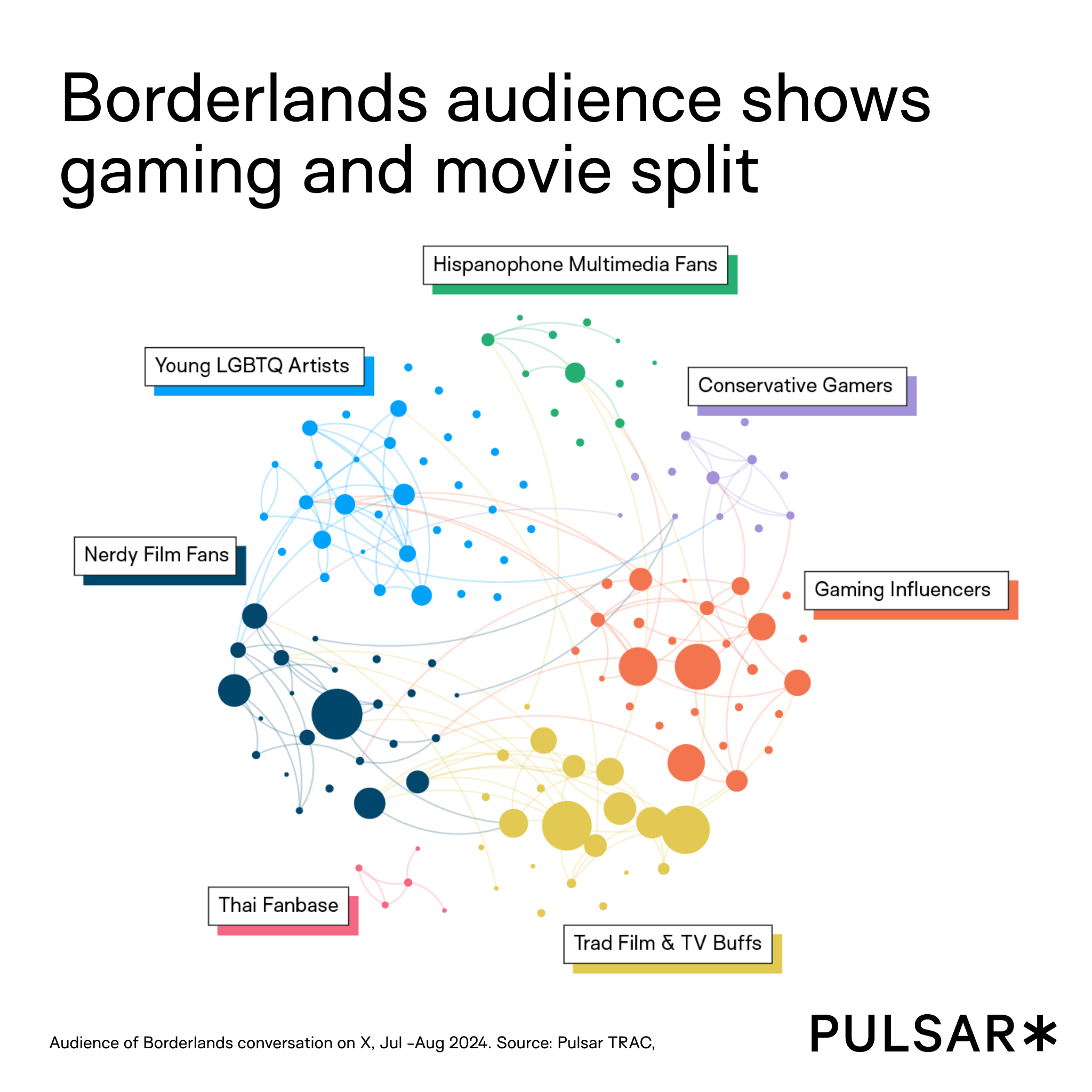
The applications are wide-ranging:
- Launching a product? Use social listening to spot early adopters and align messaging with their motivations.
- Running a campaign? Discover hidden subcultures that can amplify reach.
- Non-profits? Identify untapped donor groups and new communities ready to engage.
Audience discovery isn’t about finding the biggest market - it’s about relevance. By connecting signals to strategy, brands can map cultural movements, optimise campaigns, and ensure their message lands with the people most likely to respond. This guide explores how marketers, social media managers, and insights professionals can use social listening to unlock audience discovery - turning fragmented conversations into actionable strategies for growth.
Uncovering audiences by mapping cultural insights
The true power of social listening is not in the volume of data it collects, but in its ability to translate that data into a deeper comprehension of audience motivation and cultural dynamics. This process moves a brand beyond basic information gathering and into the realm of full audience intelligence.
A narrative unfolds: discovering audiences through context shifts
Audience discovery often begins in places brands don’t expect. Pulsar’s analysis of the MGMT song "Little Dark Age" demonstrates this perfectly. When MGMT’s Little Dark Age resurfaced in 2020, it wasn’t radio play or music press driving its revival, but anime and gaming communities who repurposed the track for fan-made videos. Social listening revealed that this momentum was particularly strong in regions like Brazil, Germany, and Iran - audiences far removed from a traditional U.S. or U.K. indie music base. For marketers, this demonstrates how real-time listening can uncover unexpected but highly engaged communities that may never surface in standard segmentation reports.
Have been listening to Little Dark Age today… possible allusions?
byu/THROWAWAYBlTCH inmgmt
But audience discovery doesn’t stop at the “where.” It also requires attention to the “why.” As Little Dark Age spread, the context around the song shifted. Progressive fan communities that had used it for creative expression were gradually replaced by right-leaning groups reframing the song as a symbol of cultural decline. What began as a soundtrack for fictional narratives became a political statement. This evolution shows that the same cultural artifact can attract very different audiences over time, each bringing new interpretations that reshape its meaning. Without continuous listening, these shifts in audience ownership - and their strategic implications - would remain invisible.
The lesson for brands is that discovery is a moving target. Identifying an audience once is no longer enough; communities evolve, meanings change, and cultural signals are re-appropriated. By using social listening to track these dynamics, marketers can continuously refine who their audiences are, understand the motivations behind their engagement, and anticipate when new communities are entering the conversation. In practice, this means discovering not just untapped audiences but also how those audiences might transform a campaign’s narrative - whether amplifying it in unexpected markets or re-framing it in ways that challenge brand values.
Uncovering the untapped niche audience
Social listening provides an unprecedented ability to identify and understand audiences that a brand may not even know exist. The "gorpcore" fashion trend - audiences wearing technical outdoor gear as fashion and streetwear - serves as a compelling example. Our analysis of the gorpcore trend not only helped to segment fashion enthusiasts by their preference for specific outdoor brands and apparel but also uncovered a surprising new opportunity.
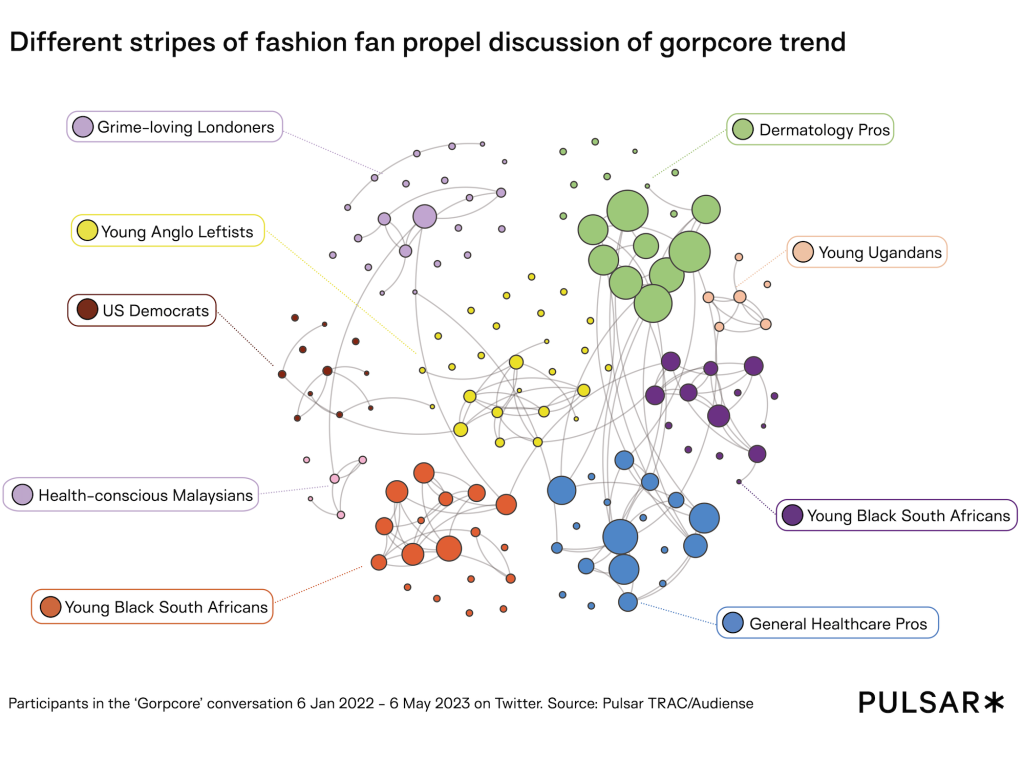
Social listening using Pulsar TRAC identified communities within the gorpcore trend who were posting about the trend through lenses such as NFTs or stanning celebrities - but without mentioning purchasing themselves. This shows a clear strategic opening for brands to position gorpcore as a new fashion frontier for these groups and craft campaigns to bring new, niche demographics into the conversation.
Similarly, Pulsar’s study on salmon consumption moved beyond the expected audience segments of urban liberals and tech professionals to reveal an unconventional, untapped community: sports fans. This finding showed that a brand could create targeted campaigns that introduce new groups to their product by connecting it to an existing passion, rather than relying on a broad, untargeted approach.
These examples demonstrate that the most effective marketing strategy moves beyond traditional demographic targeting. Rather than asking, "who are my customers?" a brand can use social listening to ask, "what communities have a passion that aligns with my brand, even if they've never heard of us?" The audience is not defined by what they buy, but by their shared affinities and interests. This redefines market expansion and enables brands to discover new entry points and create more resonant, authentic campaigns.
Understanding the "why" behind the behavior
Effective social listening goes beyond surface-level sentiment to uncover the motivations behind consumer behavior. A Pulsar report on the audiences of sustainability provides a clear illustration of this. The analysis mapped the conversation across four key narrative territories - Ecology, Society, Product, and Business - and identified distinct audience communities such as "Climate Nerds”, “Tech Enthusiasts” and “Farming Science Buffs”. The motivations of these groups were found to be complex and evolving.
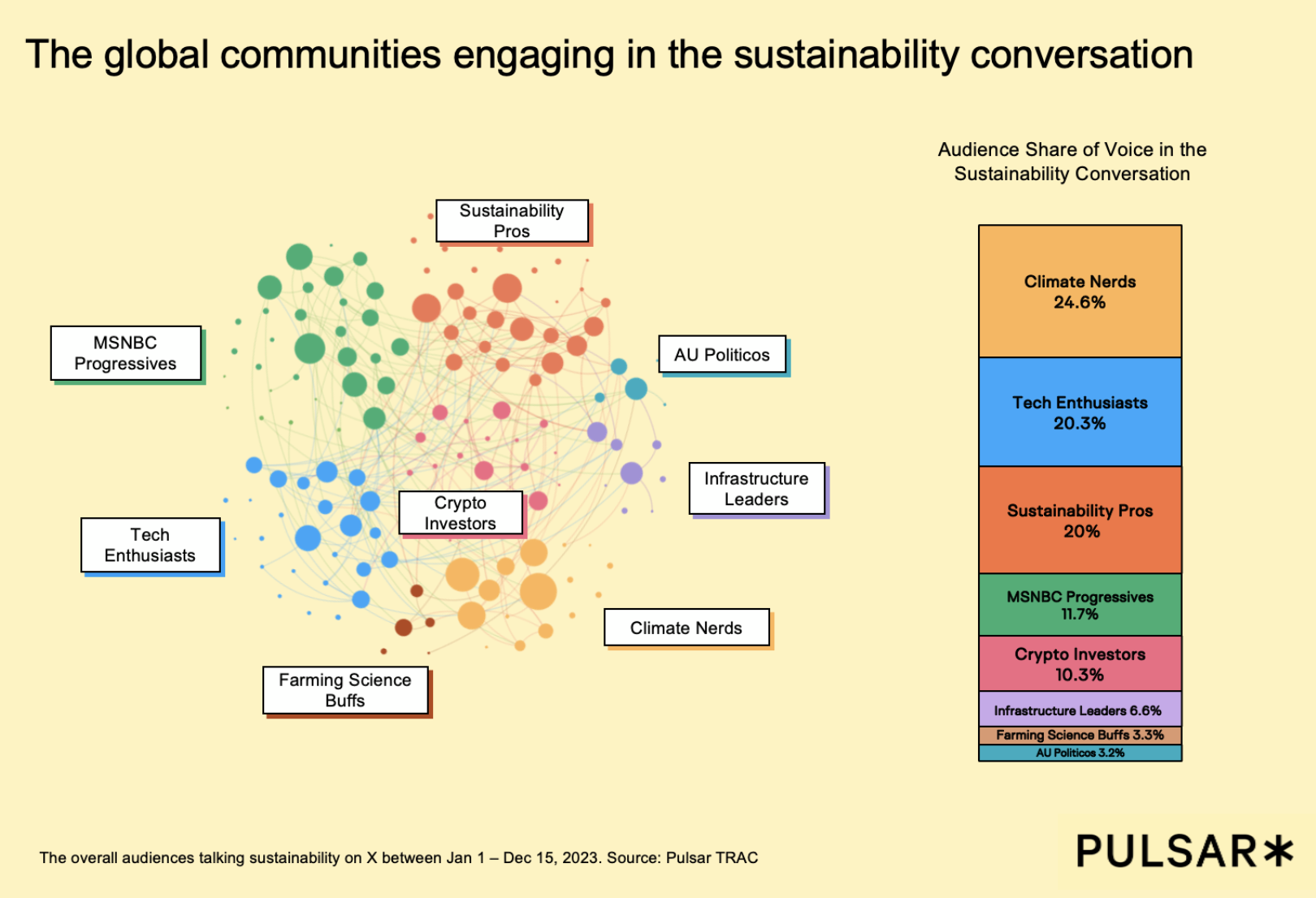
A crucial finding was a shift in consumer drivers for sustainable behavior. Since 2021, the primary motivators have transitioned away from abstract concepts like "duty" and "guilt" toward more practical, tangible concerns like "money-saving" and "habit". This evolution of the conversation from aspirational to actionable suggests that audiences are aware of trade-offs and are seeking real-world solutions. This is further evidenced in a Pulsar case study with Colart who found within their audiences artists who, despite being socially conscious, compromise their values by choosing unsustainable acrylic paints for the sake of long-lasting quality and their passion for their art.
For marketers, this presents a significant challenge and opportunity. A brand cannot simply use generic, top-down messaging and expect it to resonate. It must understand the specific narratives and motivations of each audience segment. A campaign targeting low-buy consumers should emphasize community and re-use, while a campaign for a broader audience might focus on cost-savings and the long-term durability of a product. Social listening provides the granular data to tailor these messages precisely, ensuring they connect with the audience's real-world concerns and motivations.
Finding the perfect messenger: collaborations and sponsorships
In the era of the creator economy, a brand's message is only as strong as the messenger. New and engaged audiences can be reached through the use of calibrated collaborations and partnerships. Social listening provides a data-driven approach to selecting the right partners by analyzing the symbiotic relationship between a brand's audience, a content creator, and their community. Our study on podcast sponsorships demonstrates this perfectly. The analysis of podcasts like Huberman Lab and Call Her Daddy went beyond simple audience size to uncover the emotional connection between the host and their audience.
The audience of Huberman Lab, for instance, regards Andrew Huberman as an authoritative and trusted voice, which translates to a high conversion rate for his sponsored products. The analysis also found a near-perfect match in demographics, interests, and influencer crossover between the Huberman Lab audience and the Whoop audience. This is not a coincidence; it shows that the audience's deep trust in the host is a transferable asset. When a host peddles a product, the audience's emotional connection and sense of agency are transferred to the brand, maximizing campaign effectiveness.
This type of analysis redefines how brands should approach partnerships. It demonstrates that the true value of an influencer or host lies in the unique brand equity and reputation they have built with their audience. Social listening provides a brand with the intelligence to conduct a thorough analysis of a potential partner’s audience, uncovering crucial details like shared affinities and potential contradictions. This process mitigates risk and ensures that a campaign is authentically received, building deeper trust and a clear return on investment. Here, brands can find new audiences and brand partners using audience-first social listening.
Deconstructing the secrets of existing communities
Building a large audience is a well-established marketing goal, but converting that audience into loyal customers is the true measure of success. The rise of content creators and communities, such UK YouTuber Collective The Sidemen, offers a blueprint for how this can be achieved. We explored their success on our blog. Social listening can deconstruct the layered narrative behind their success, revealing a meticulous strategy that goes beyond mere entertainment. The data showed how they captivated a Gen Z audience by resonating with their interests on a deeper level, revealing underlying affinities like engagement with football or commercial ventures.
This demonstrates that a large following is not the same as a loyal community. The "secret sauce" lies not in the content itself but in the shared behaviors and layered narratives that hold the community together. By analyzing these conversations and behaviors, a brand can go beyond mimicking surface-level content and instead apply the underlying principles to its own content strategy. This enables a brand to create a universe of content that speaks to these layered interests, fostering genuine "fandom" and converting an audience into loyal customers. The ultimate lesson is not to just build an audience but to understand and effectively engage with them to create a relationship that transcends a transactional exchange.
A practical roadmap to audience discovery (Listen–Map–Activate)
To move from strategic theory to practical application, brands can follow a clear, three-phase framework. This process transforms social listening from an academic exercise into a repeatable engine for audience discovery and growth.
Phase 1: Listen – setting the foundation
The first and most critical step is to set a robust, goal-oriented listening strategy. This involves moving beyond simple brand mentions to monitor the broader conversations happening across the entire industry. A brand must listen for key phrases that indicate consumer pain points, emerging trends, and competitor activities. A continuous review and adjustment of keywords and topics is essential to stay current with ever-evolving audience behaviors and market dynamics.
Tools are paramount in this phase. The effectiveness of a listening strategy depends on the features and capabilities of the tools used. Advanced tools like Pulsar TRAC offer a comprehensive, cross-platform view of conversations, collecting data from social media platforms, news, and even blogs and forums. For marketers who need to quickly grasp a broad cultural movement, Pulsar Narratives provides a solution. It is described as the world's first search engine for public opinion, providing "full narrative briefings in seconds" and eliminating the need for complex, traditional Boolean queries. This capability is a game-changer for mid-to-senior level professionals who need to understand broad trends and public opinion without extensive data wrangling.
Phase 2: Map – reveal the story in the data
Once the data is collected, the next step is to organize it and make sense of the chaos. This is where social listening truly becomes audience intelligence. This phase is about segmenting the audience not just by demographics, but by their shared interests, online behaviors, and the distinct ways different communities talk about the same topics. By dissecting conversations, a brand can go granular and delve into the nuances of the insights to inform strategic business decisions.
The following table provides a clear illustration of how diverse audience segments can be mapped, based on an analysis of real-world Pulsar studies.
| Audience Segment | Audience Core Belief/Motivation | Conversational Style/Narrative |
| Climate Progressives | Connect sustainability to identity and lifestyle. | Urgency, activism, and digital culture. |
| Buy Nothing Sharers | Value mutual aid, low-buy lifestyles, and a circular economy. | Practical, frugal, and community-oriented. |
| Irreverent Nerd Moms | Interest in pop culture and true crime. | Irreverent and meme-fluent, with a sense of humor. |
| US Sportsfans | Connect a love of sports to other passions like music and food. | Passionate, competitive, and highly engaged. |
| Gaming Microcultures | Fluent in surreal internet language and game-based lore. | Uses niche jokes and terminology to create a "true fandom." |
This table visually represents a core idea: audiences are not monolithic. A brand must find and understand these distinct communities to create messaging that resonates. Social listening provides the data to create a map of the consumer landscape, moving from a broad view to a detailed, actionable understanding of an audience's passions and motivations.
Phase 3: Activate – translating insight to action
The final phase is about translating the mapped audience intelligence into strategic action. This is where a brand can create an action point such as piggyback on a trend or craft the perfect message to resonate with your discovered audience. The goal is to move from passive listening to proactive, informed engagement that drives measurable business results.
The success of brands that have a distinct style like Nutter Butter and Duolingo, for example, is not random. It is a direct result of their ability to create messaging that taps into an emerging cultural conversation. Social listening revealed a mammoth 25-fold increase in discussions around "unhinged marketing" among chronically online Gen Z users, LGBTQ communities, and gaming microcultures. These audiences respond to content that feels visceral, human, and - despite its surreality - real. By adopting an "underdog" persona and being so embedded in internet language that it comes from instinct from knowing your audience’s taste rather than corporate guidelines, these brands built a true fandom around their content. This demonstrates that activation is about adapting to the audience's cultural fluency, not forcing them to adapt to your brand's voice.
To prove the value of these strategic actions, a brand must measure the return on investment (ROI) of its social listening efforts. The ROI of social listening is not just about revenue; it is about the value generated in cost savings, enhanced brand reputation, and improved customer loyalty. The process for measuring this ROI involves a five-step framework: defining clear goals, choosing the right metrics (e.g. sentiment analysis, share of voice), using the right tools, calculating the net profit, and continuously evaluating and improving the strategy.
Key takeaways: Gaining a competitive edge through proactive listening
Audience discovery is not a one-off project but a continuous practice. Culture moves quickly, and the audiences that shape it move even faster - adopting new languages, reframing old symbols, and shifting their priorities in real time. By embedding social listening into their strategy, brands can stay close to these changes, spotting opportunities as they arise and adjusting campaigns before they lose relevance. What emerges is not just a clearer picture of “who’s out there,” but a living map of how communities are formed, fractured, and re-formed across the cultural landscape.
For marketers, this reframing of audience discovery has significant implications. Instead of pursuing mass appeal or relying on outdated demographic proxies, brands can build resonance with the communities that matter most to their growth. Whether that means uncovering an unexpected subculture, understanding the motivations behind sustainable behaviours, or finding the perfect partner to carry a message forward, the common thread is precision. Social listening doesn’t just show what audiences are doing; it explains why - and it’s in that “why” that meaningful connections are forged.
Ultimately, the brands that will thrive are those that treat audience discovery as an ongoing dialogue rather than a static report. Social listening enables this dialogue by revealing signals, mapping affinities, and guiding activation with intelligence rooted in culture itself. The result is a strategy that is both audience-first and future-ready: one that sees consumers not as data points or market segments, but as evolving communities of people whose passions, behaviours, and values can shape the future of any brand willing to listen.
To begin your own journey of audience discovery and unlock unconventional growth, a brand must commit to a culture of proactive listening. Explore the advanced capabilities of Pulsar TRAC for comprehensive data collection and the effortless narrative intelligence of Pulsar Narratives for deeper understanding.
2026 Outlook
Ready to transform your product innovation strategy with deep audience insight?
Explore the power of Pulsar TRAC, Pulsar CORE and Pulsar Narratives to start uncovering the insights that matter most. Our Pulsar newsletter for more expert guides and industry insights.
To learn more, sign up to our newsletter below: