Winning the market: why social listening is the best advantage in competitive intelligence
Use Case guide contents
Competitive intelligence is a lot like MarioKart. It’s a live, ongoing process of outmanoeuvring rivals. You’re dodging bananas, drifting corners, and watching out for a blue shell from nowhere. Slipstreaming behind competitors lets you catch their momentum - rivals might look ahead for a moment, but one well-timed red shell (or… smarter campaign) sends them spinning.
In this fast-paced environment, traditional competitor market research - built on quarterly surveys and focus groups - is just too slow. Social listening is your magical item box - the thing that gives you the insight to boost past the pack, dodge hazards, and turn chaos into advantage. In the race for market share, it’s not the biggest kart that wins, but the one with the sharpest handling. The brands that win out over the rest are not the ones with the largest paid media budgets, but those with the deepest, most agile understanding of the cultural currents that shape consumer behavior - and their place within that landscape. This is the new competitive imperative, and it’s powered by social listening - moving beyond mere data collection to uncover the shifts in consumer behavior and cultural trends before they reach the mainstream, providing a strategic edge.
Social listening is the systematic process of tracking specific topics, keywords, hashtags, or brand names across various social channels to gather real-time data on every mention. Unlike social monitoring, which is often a reactive exercise of tracking brand mentions and sentiment, social listening is a proactive method that transforms digital conversations into actionable intelligence. It acts as a brand's "ears" across the social landscape, systematically tracking, analyzing, and deriving insights from ongoing discussions and trends. This process provides a comprehensive understanding of consumer behavior, sentiments, and perceptions, giving a brand a clear view of its audience's opinions and behaviors, as well as those related to its competitors and the wider industry. The true value lies not in knowing what is being said, but in understanding the underlying reasons and emotional drivers behind those conversations, which can be leveraged to refine strategic processes and marketing efforts.
Social media conversations serve as leading indicators of cultural and behavioral change - and understanding how your brand and competitor brands sit in that landscape. By analyzing these patterns, a brand can uncover the underlying beliefs, values, and emotional drivers that truly motivate its target audience. When a brand understands these core narratives, it can craft messaging and product strategies that resonate at a deeper level than its competitors, moving beyond simply selling a product to becoming a culturally relevant brand.
Use cases and real-world examples
Social listening transforms a brand's competitive intelligence efforts from a broad, general overview into a hyper-specific, actionable discipline. The following examples demonstrate how this approach provides a tangible advantage across various business functions.
Benchmarking against competition and industry
Effective competitive intelligence extends beyond a simple comparison of brand mentions or engagement rates. It requires a qualitative and quantitative analysis of how a brand is perceived relative to its rivals, informed by the specific context of its industry. A luxury fashion brand, for example, will have a vastly different benchmark for engagement and positive sentiment than an oil company. For the fashion brand, a high engagement rate signals a healthy community and brand loyalty, while for the utility company, a spike in engagement may signal a crisis or widespread customer complaints.
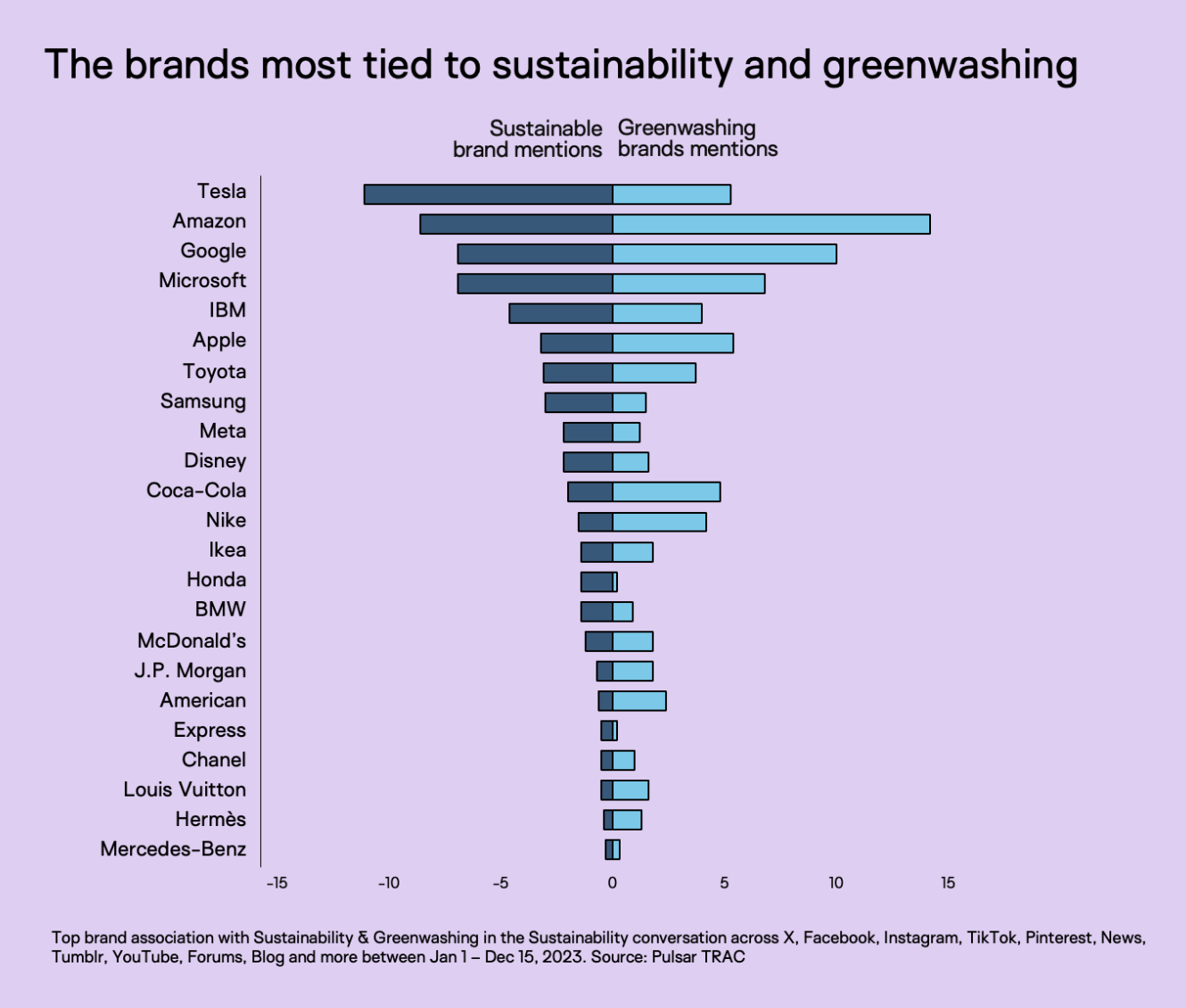
This is particularly crucial in sensitive areas that act as an entire issue, rather than an industry-level insight - such as corporate sustainability. As highlighted in our research into Greenwashing, brands face heightened scrutiny from online audiences who are quick to call out inauthentic environmental claims. The article identifies Apple, Coca-Cola, Nike, and J.P. Morgan as brands that have been called out for greenwashing, often as a result of conversations around their sustainability claims. Apple, in particular, saw a lot of discussion regarding its 2023 carbon-neutral Apple Watch. In contrast, Tesla is presented as an outlier because its core business is based on electric vehicles, which audiences generally perceive as a sustainable activity, making it less vulnerable to these kinds of criticisms.
This information is valuable for competitive intelligence because it allows companies to analyze the specific vulnerabilities of their competitors. By understanding the types of sustainability claims that are facing backlash (e.g., vague statements vs. concrete actions), a company can refine its own messaging to be more transparent and authentic. Furthermore, studying how a brand like Tesla maintains a positive perception can provide a benchmark for how to align a company's core mission with its sustainability narrative, ultimately helping to proactively manage reputation and differentiate itself in the market.
Unearthing audience emotional connections to brands
Competitive intelligence, when driven by social listening, moves beyond simple market share analysis to uncover the deeper, often-unspoken emotional connections audiences have with brands. Our study with Pandora demonstrates this shift, revealing that brand "love" isn't a single metric but a complex interplay of shared values, authentic identity, and a brand's ability to seamlessly integrate into consumers' lives. Social data acts as a dynamic barometer, allowing brands to measure this intimate bond and understand how their performance compares to competitors. For example, the study highlights that for a brand to be truly loved, it must align with a customer's values, a sentiment that over half of the surveyed marketers agreed with, while a significant portion felt a loved brand must be "part of their life." This nuanced understanding is a critical competitive advantage, helping brands identify where their relationships are strongest and where competitors might be more successful in fostering brand intimacy.
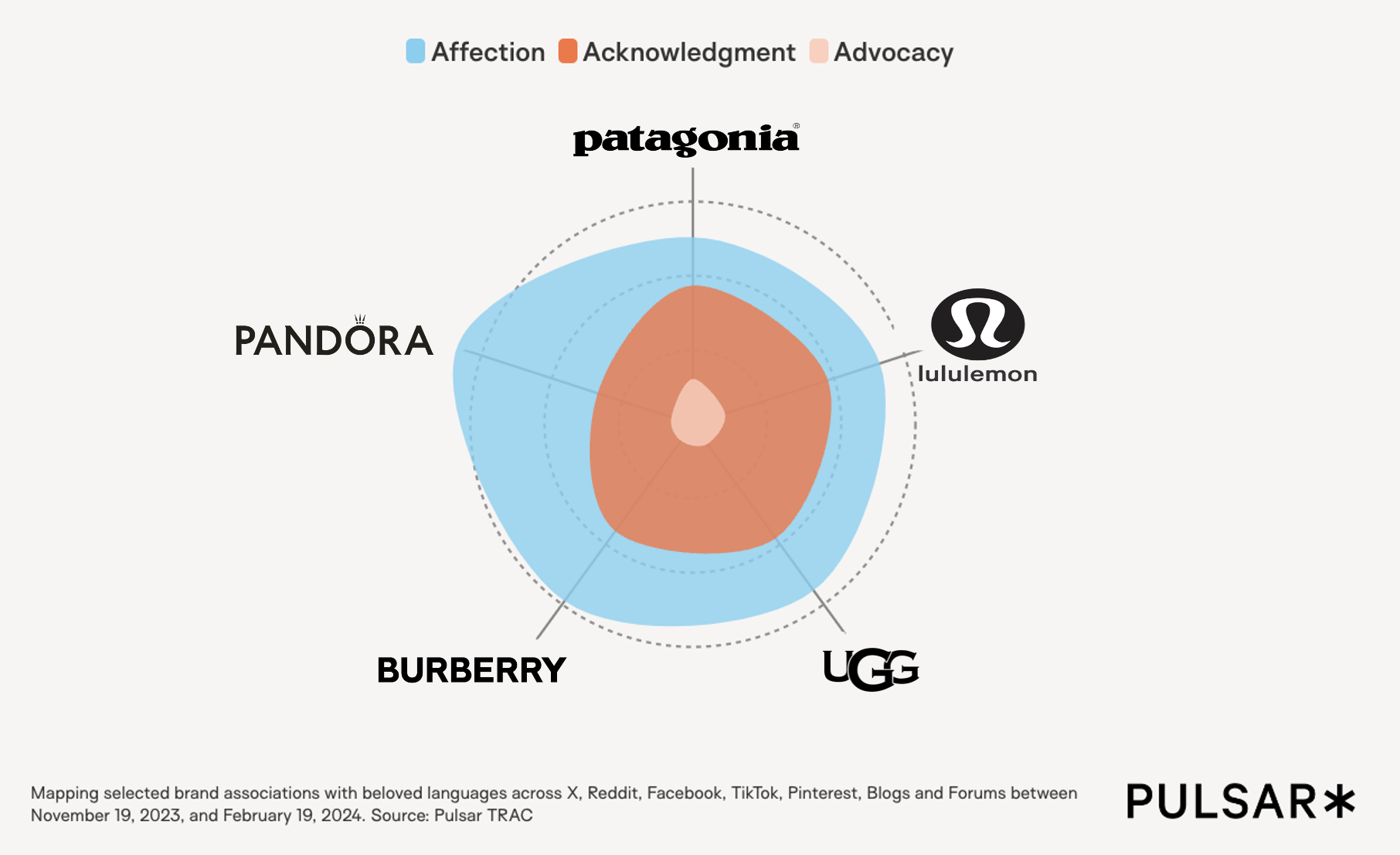
This deep dive into audience emotion provides actionable insights for competitive strategy. The study identified common mistakes that erode brand love, such as neglecting the feelings of existing customers and failing to maintain consistent messaging. By using social listening to benchmark against top-performing "loved brands" Apple, Nike, and Adidas, in their category, a brand can identify its own weaknesses and opportunities. It allows marketers to understand not only what their audience says about them, but also what they say about their rivals. This intel can reveal a competitor's strategic misstep or a cultural trend they've failed to capitalize on, giving a brand the foresight to optimize its own campaigns and build a more resilient, beloved presence in the market.
Mapping brand personality and brand perception
Case study: university brand personalities
Brand personality is not a static marketing asset; it is a dynamic, living entity that is constantly shaped by external events and internal decisions. Social listening offers a powerful way to quantify this otherwise intangible attribute. The Social Brand Personality Index, a methodology developed by the research team at Pulsar, uses Jennifer Aaker's brand dimensions and Jungian archetypes to map social conversations to specific personality traits and archetypes. This methodology was used in a study to analyze the brand reputation of Ivy League schools, measuring pre- and post-pandemic mentions of Harvard, Princeton, and Columbia.
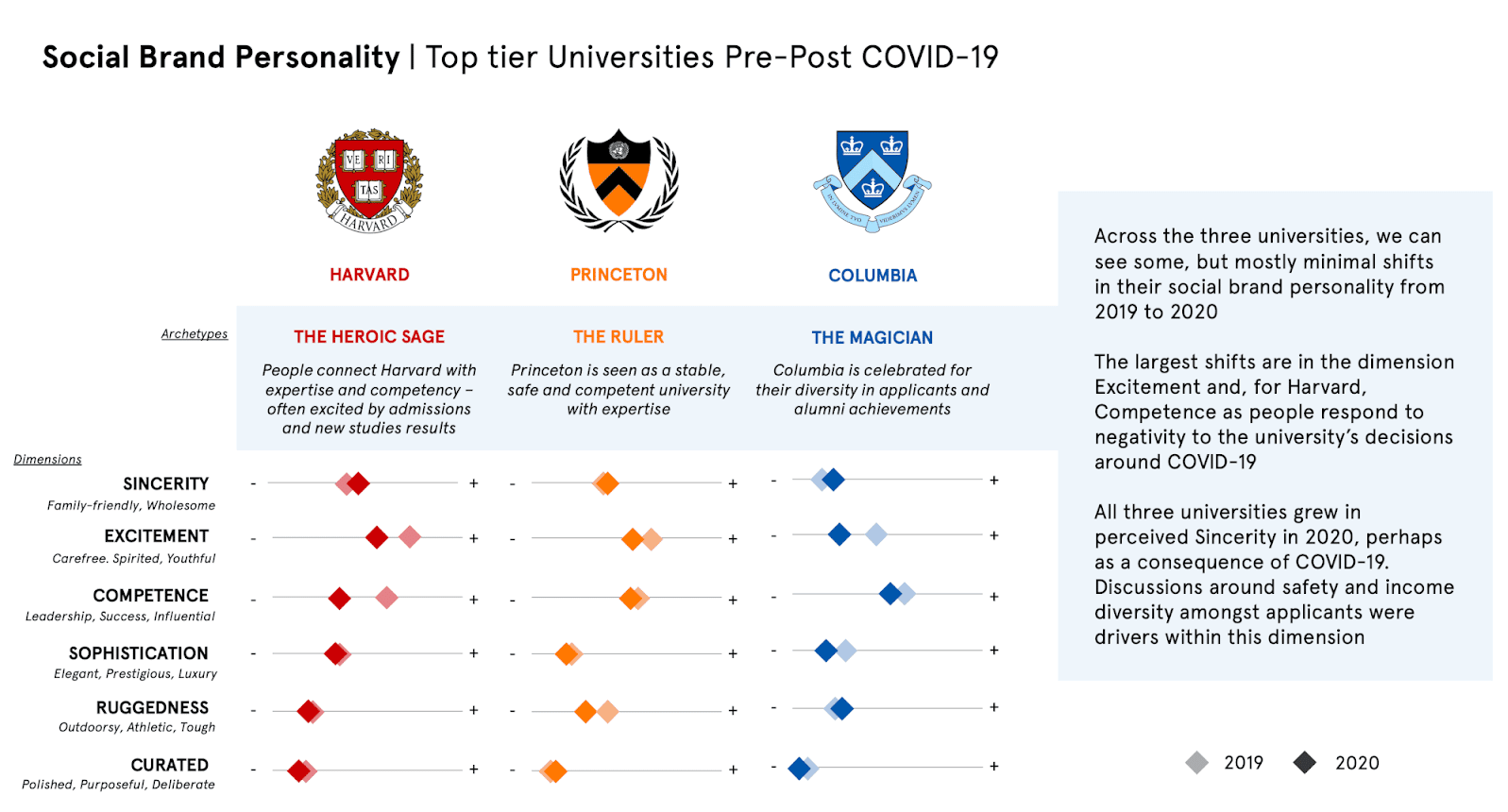
The study revealed direct causal links between a brand's actions and public perception:
- Harvard: The university's brand pillar of "competence" was negatively affected by its decision not to reduce tuition fees despite moving classes online. This demonstrates that a business decision can directly and negatively impact brand perception in the public sphere.
- Princeton: The university, being the smallest of the three, showed the least amount of change in public perception, which was consistent with its "ruler" archetype.5 This illustrates the resilience of a strong, consistent brand personality.
- Columbia: The perception of the university's "sincerity" increased as a result of its work on COVID-related measures and its embrace of diversity. This highlights how a brand can proactively build positive associations through its actions.
This analysis shows that competitive intelligence isn't just about watching a competitor's advertisements; it is about monitoring how every public action, from a CEO's statement to a pricing strategy, shapes its brand personality.
Case study: AI brand personalities
In the fast-moving tech sector, the same methodology has been applied to a Social Brand Personality Index for AI chatbots, providing a framework for competitive analysis in a new market. A chatbot with a defined persona doesn’t sound mechanical; it communicates in a way that is natural, relatable, and aligned with the brand's identity, enhancing brand recognition across different touchpoints.
Pulsar's Social Brand Personality Index analyzes the public perception of three major AI chatbots: ChatGPT, Claude, and Gemini, based on social media conversations from August 2023 to July 2024. The study assigns each brand a unique archetype and personality dimensions, revealing how they are perceived by the public. For example, ChatGPT is seen as "The Ruler" and an incumbent, which has led to a massive drop in its perceived functionality as user expectations have accelerated. Claude, categorized as "The Explorer," has seen a surprising decrease in its Sincerity rating, influenced by negative associations from conservative audiences regarding its ethical principles. Meanwhile, Gemini, "The Creator," experienced a dip in its Excitement rating after its rebrand from Bard, with users finding it "uncool" and "boring".
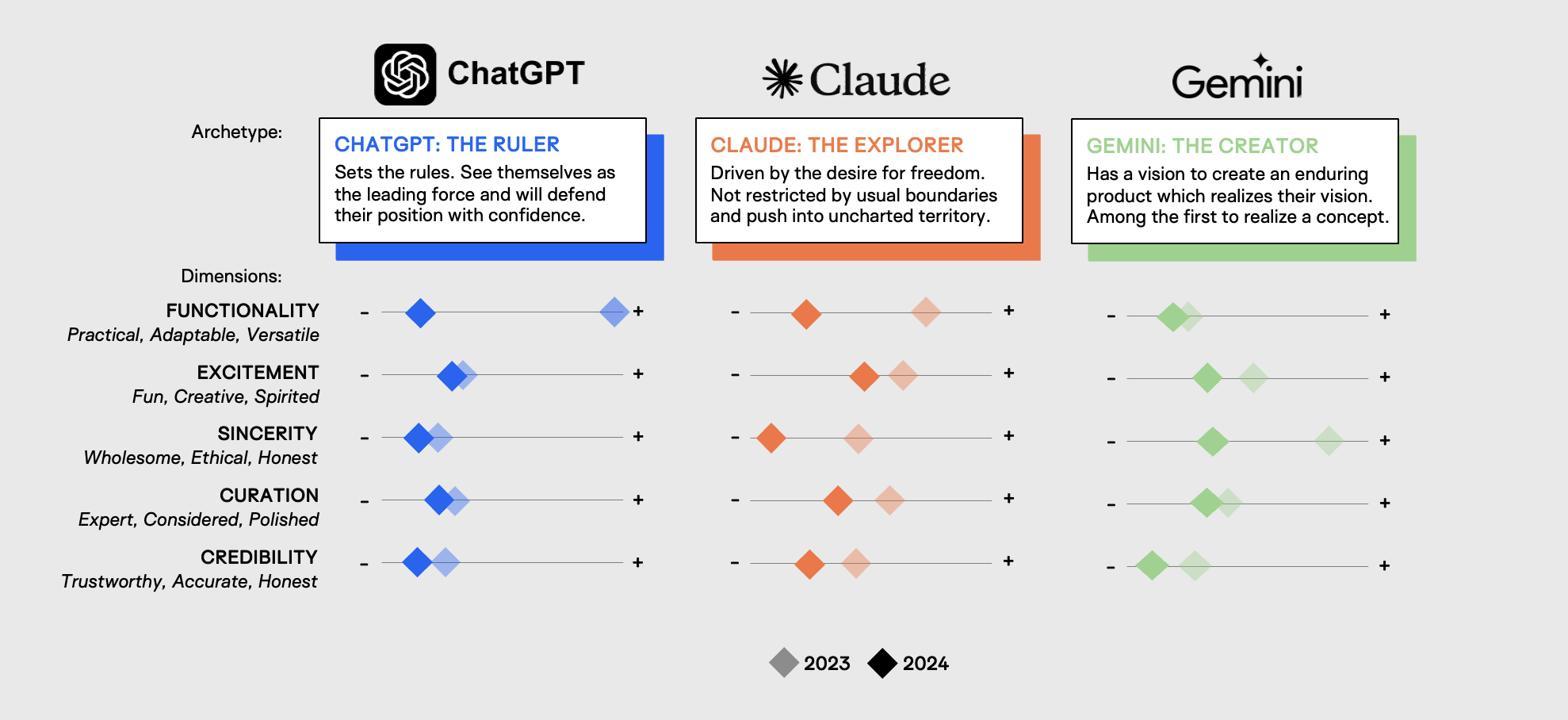
This analysis provides a rich source of competitive intelligence by moving beyond simple volume metrics to explore the nuanced public sentiment and brand perception of AI chatbots. By understanding the specific personality dimensions and archetypes assigned to each competitor—like ChatGPT's functionality challenges, Claude's sincerity backlash, or Gemini's struggles with excitement—companies can gain actionable insights into their own brand positioning relative to rivals. This data allows brands to identify gaps in the market, refine their communication strategies to address public concerns, and differentiate their product based on perceived strengths, whether that be in functionality, sincerity, or creativity. Ultimately, this type of brand personality analysis serves as a powerful tool for strategic decision-making in a rapidly evolving market, allowing companies to understand not just what people are saying, but how they feel about the brands.
Actioning social brand personality indexing
The Social Brand Personality Index offers a strategic methodology for competitive intelligence by analyzing public perception of brands, going beyond simple conversation volume to uncover nuanced sentiment. The methodology, based on Aaker's Brand Personality Dimensions and Jung's 12 Universal Archetypes, provides a framework to track how brands like ChatGPT, Claude, and Gemini are perceived on dimensions such as Functionality, Excitement, Sincerity, Curation, and Credibility. This approach allows companies to understand their position in the market relative to rivals and identify key areas for improvement or differentiation. Applying this to competitive intelligence, a company can use these insights to pinpoint specific competitor weaknesses and capitalize on them.
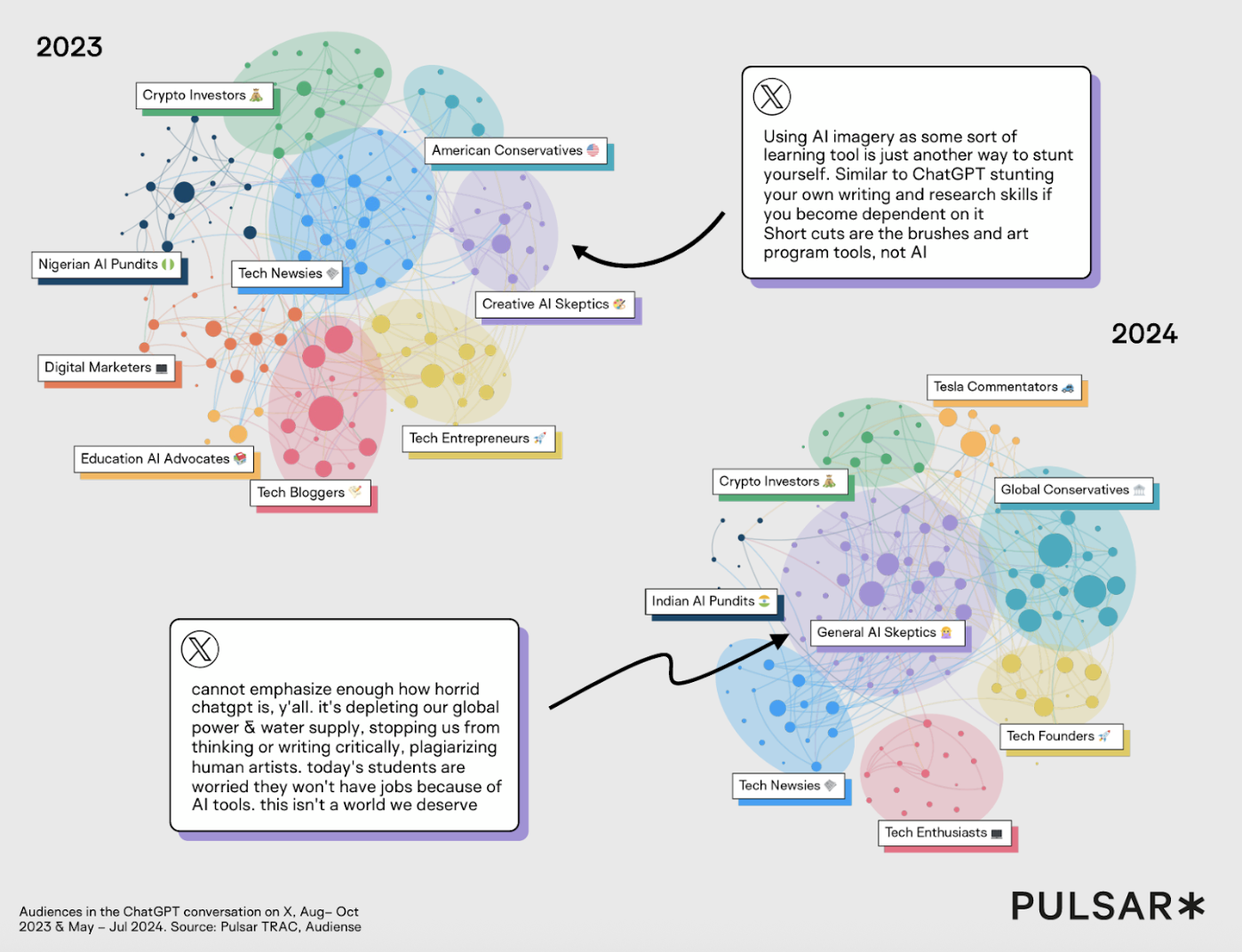
For example, the study revealed a significant drop in ChatGPT's perceived Functionality. This intelligence can be used by a competitor to market their own AI as more reliable and effective, directly addressing the public's concerns about the market leader. Similarly, the insight into Claude's reduced Sincerity rating and Gemini's lack of Excitement gives competing brands a clear path to differentiate themselves by emphasizing their ethical principles or more engaging user experience. This type of research, often seen in university and AI studies, provides a granular view of the brand landscape, transforming general data into actionable competitive intelligence.
A framework for competitive intelligence: the listen–map–activate cycle
To consistently convert intelligence into advantage, brands need a repeatable, strategic cycle. The Listen–Map–Activate framework provides exactly that: a practical, step-by-step approach for turning social listening into competitive edge.
1. Listen: Expose competitor moves in real time
The first step is systematic listening—tracking not just your own brand mentions but every conversation about your competitors, their products, and your wider industry. This is where competitive intelligence begins: surfacing signals from hashtags, forums, and communities that reveal what’s working—or failing—for your rivals. Tools like Pulsar TRAC give you the ability to detect these shifts as they happen, before competitors even realise they’re unfolding.
2. Map: Turn competitor data into exploitable insight
Raw mentions mean little without context. Mapping is the phase where intelligence becomes actionable. By decoding sentiment, emotional drivers, and audience behaviours, brands can see where competitors are strong and where they’re vulnerable. For example, a spike in competitor mentions may look impressive at first glance, but mapping might reveal it’s driven by a short-lived viral moment in a niche audience. That insight stops you from overreacting—and instead helps you choose whether to neutralise, exploit, or ignore the competitor’s move. Mapping also highlights unmet audience needs, giving you the foresight to position your brand before rivals catch up.
3. Activate: Seize the advantage
Intelligence without action is wasted. Activation is about closing the loop and using competitor insights to sharpen strategy and execution. This might mean refining your messaging to highlight strengths where rivals are weak, using competitor CX failures to showcase your reliability, or accelerating product development to meet needs your competitors have missed. By doing so, you not only anticipate market shifts—you actively shape them, ensuring your brand sets the pace while competitors scramble to follow.
| Phase | Core Activities | Pulsar Tools |
| Listen | Monitor competitor and industry conversations; Track rival campaigns, sentiment, and audience reactions | Pulsar TRAC, Pulsar Narratives |
| Map | Analyse competitor weaknesses; Decode audience drivers; Reveal exploitable cultural and emotional trends | Pulsar Narratives, Pulsar CORE |
| Activate | Turn competitor missteps into your wins; Refine positioning; Launch ahead of rivals with data-backed confidence | Pulsar CORE, Pulsar TRAC |
Key takeaways: Gaining the competitive advantage
In today’s market, standing still is the fastest way to fall behind. Competitors are making moves constantly, and cultural shifts can turn overnight. Social listening gives brands the chance to keep their foot on the accelerator, scanning the whole track while others are still glancing in the rear-view mirror. By tuning into the narratives, emotions, and signals that shape consumer behaviour, it transforms competitive intelligence into knowing what your rivals are doing, spotting what they’ll miss, and being ready to take that corner before they even realise it’s there.
Like a MarioKart gold trophy: you don’t just get to the top by luck - you have to string together the right moves at the right moments. Social listening is what lets you line those moves up - reading the track, anticipating what’s ahead, and keeping just enough distance to stay out of trouble when the chaos hits. In a race where market share, reputation, and cultural relevance are always in play, it’s the difference between scrambling to catch up and cruising out in front.
By adopting a framework like the Listen–Map–Activate cycle, a brand can ensure that every piece of data is systematically transformed into a strategic advantage. It is this ability to listen deeply, map the meaning behind the noise, and activate those insights in real-time that forms the ultimate competitive moat. This is the difference between simply reacting to the market and actively shaping it.
2026 Outlook
Ready to transform your competitive intelligence with deep audience insight?
Explore the power of Pulsar TRAC, Pulsar CORE and Pulsar Narratives to start uncovering the insights that matter most. Our Pulsar newsletter for more expert guides and industry insights.
To learn more, sign up to our newsletter below: