
World Cup 2026: Which Brands Are Winning? (Jul 7-13, 2026)
- Media & Entertainment

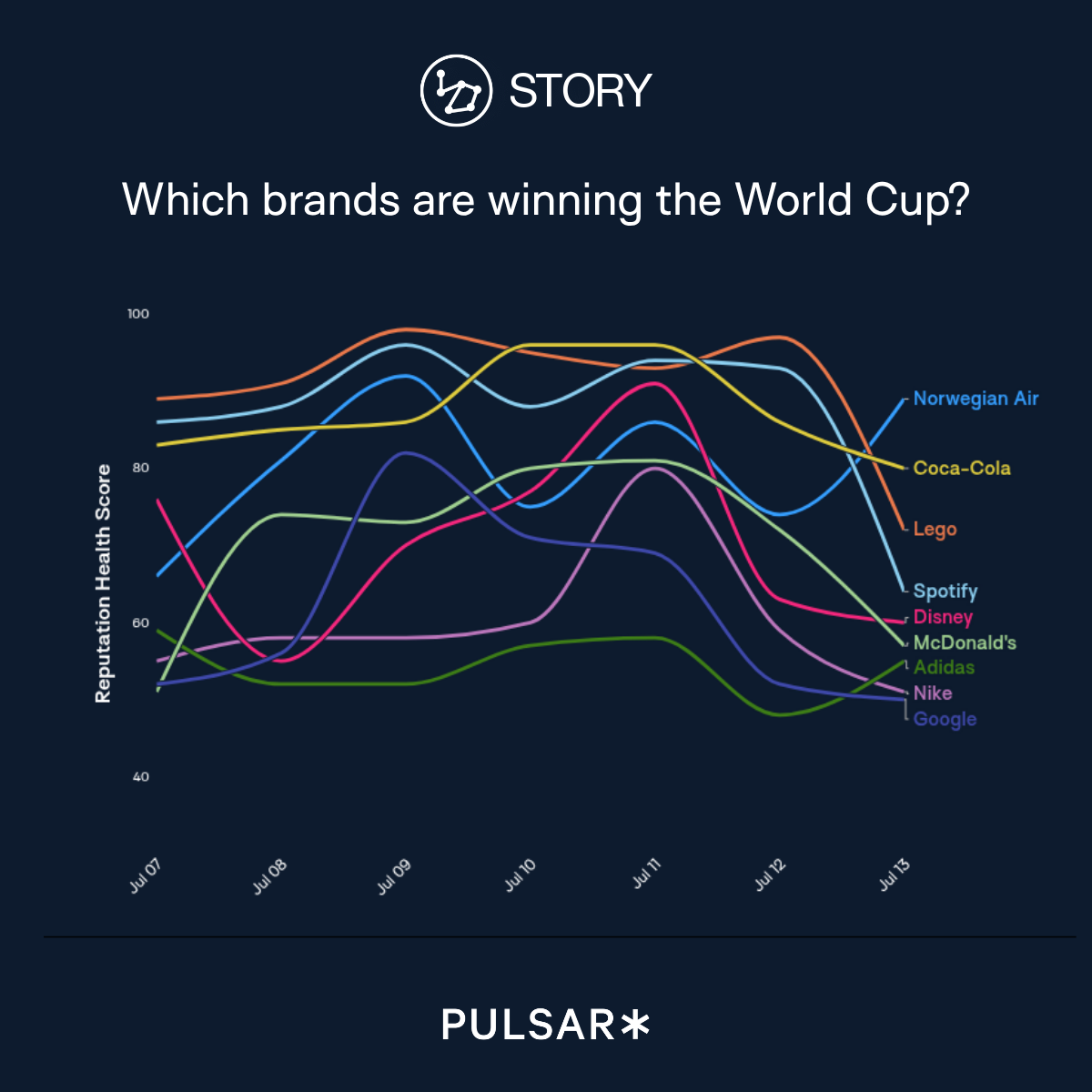
Between July 7 and July 13, some of the strongest reputation gains came from brands that found ways to participate in fan behavior. Norwegian Air turned an international football rivalry into a shared social moment. LEGO became part of the tournament's creative culture as fans used AI-generated content to reinterpret football stories. Spotify benefited as player narratives expanded into music conversations. Nike gained momentum through athlete-driven moments that moved across sport, entertainment and creator communities.
We asked Story, Pulsar's autonomous research agent, to surface the brands gaining the most reputation momentum across the World Cup conversation from 7-13 July 2026.
Story's ranking is based on Pulsar's Reputation Health Score, which combines sentiment, conversation volume, share of voice and narrative reach into a single live measure of brand perception.
The brands that emerged offer a glimpse into how reputation is being shaped in real time, as fans, creators and communities influence which moments gain momentum. Let's look closer at the brands behind this week's biggest shifts and the cultural moments that drove them.
Key Takeaways
- ▸Participation created the strongest reputation gains. Norwegian Air generated momentum by giving supporters a role in the story.
- ▸Recognizable creative assets allow audiences to build with brands. LEGO benefited as fans adapted its visual identity into World Cup content.
- ▸Football conversations increasingly move across categories. Spotify gained relevance as player stories connected with music discovery.
- ▸Sponsorship creates reputation opportunities and risks. adidas showed how brands can become connected to wider institutional narratives.
- ▸Athletes increasingly shape brand meaning. Nike benefited from moments distributed through athlete and creator networks.
In This Article
Norwegian Air: when brands create moments audiences want to join
Norwegian Air recorded the strongest reputation increase among the brands tracked during the week, with its Reputation Health Score rising approximately 31%.
The momentum began on July 9, 2026, when Norwegian Air responded to the upcoming England versus Norway quarter-final by challenging British Airways to a playful wager. The airline proposed that the losing country should temporarily swap logos with the winning side.
View this post on Instagram
The idea was simple, but the timing gave it strength. The match had already generated significant attention from supporters in both countries. Norwegian Air entered the conversation during a period when fans were actively looking for ways to express national pride, humor and rivalry.
The activation worked because audiences could immediately understand the concept. Supporters could choose a side, debate the outcome, share reactions and follow the result of the match. The brand created a storyline that continued through fan participation.
After the initial post, discussion expanded beyond aviation audiences. Football supporters engaged with the idea because it reflected a familiar part of tournament culture: friendly competition between nations.
The reputation movement came from several factors.
- Cultural alignment. Norwegian Air understood the tone of the football conversation. The activation matched the humor and competitive energy already present among supporters.
- Audience involvement. The campaign gave fans a role within the story. Supporters were able to contribute opinions and reactions, creating additional conversation around the brand.
- Brand personality. The moment helped communicate a more human side of the airline. Norwegian Air appeared confident, playful and comfortable participating in football culture.
- Earned amplification. The idea was easy to understand and share, allowing supporters to distribute the story through their own networks.
LEGO: when audiences turn a brand into a creative language
LEGO's reputation growth came from a different source: audience creativity.
The brand's Reputation Health Score increased approximately 11% at its peak, reaching almost 98 points during the period.
The conversation accelerated during the week as AI-generated LEGO-style football edits and player recreations spread across social platforms. Fans used LEGO's recognizable visual identity to create humorous interpretations of matches, players and tournament moments.
🇺🇸🇮🇷 PersiaBoi's back with his Lego AI videos, this time mocking Trump after the U.S was knocked out of the World Cup
Brutal 😂
Writer: Ianpic.twitter.com/FNuXozUkTj
— Mario Nawfal (@MarioNawfal) July 7, 2026
During July 2026, AI-generated content had become one of the fastest-moving formats within World Cup conversations. Fans were using generative tools to transform football moments into new creative expressions.
LEGO benefited because its visual identity already functioned as a storytelling system. Audiences understood the connection between LEGO's creative world and the imaginative possibilities of AI-generated football content.
The reputation impact developed through three key drivers.
- Existing cultural recognition. LEGO has built decades of associations around creativity, imagination and play. These associations allowed audiences to immediately understand and adopt the format.
- Fan-created storytelling. The content gained attention because supporters used LEGO as a way to express their own reactions. They created jokes, player recreations and alternative versions of tournament moments.
- Community participation. The brand became connected to a shared creative activity. Audiences were interacting with the brand through their own content creation.
However, the same factors that create viral momentum can also create challenges. Cultural attention can shift quickly, and brands need to continue creating reasons for audiences to engage after the initial moment.
For marketers, LEGO demonstrates the value of building brand assets that audiences can recognize and adapt. When people understand how to use a brand within their own expression, reputation can grow through community participation.
Spotify: when football stories travel into music culture
Spotify's World Cup momentum developed as football conversations expanded beyond sport.
The platform's Reputation Health Score increased approximately 10%, reaching the mid-90s at its strongest point.
The main driver emerged on July 10, 2026, when renewed attention around Erling Haaland's teenage rap track gained traction during the tournament. The conversation expanded further after the track was remixed by Kygo and reached number one on Spotify Norway.
The moment connected several audiences at once: football supporters, music listeners, Norwegian communities and online creators.
Spotify benefited because the platform became part of the cultural journey surrounding the player. The conversation began with football performance and moved into music discovery.
The moment demonstrates how modern athletes influence categories beyond sport. Players increasingly shape conversations around entertainment, lifestyle and digital culture.
Spotify's advantage came from understanding that football fandom includes many different behaviors. Supporters do not only follow matches. They discover music, create content, follow personalities and participate in online communities.
adidas: the reputational risk of owning the spotlight
adidas demonstrated the more complex side of major tournament sponsorship during the week.
The brand's Reputation Health Score declined approximately 5%, ending the period around 55.
The movement followed renewed attention around football governance and corruption allegations during the tournament. The discussion increased scrutiny around the institutions connected to global football and influenced how audiences perceived the brands associated with them.
For adidas, the challenge came from the strength of its connection to football. The brand has spent decades building an association with the sport through teams, players and major competitions. That relationship creates significant advantages, including visibility, recognition and emotional connection with fans.
It also means the brand becomes connected to the broader environment surrounding football.
The conversation around governance issues highlighted an important aspect of sponsorship reputation. Brands inherit part of the reputation landscape of the properties they support. Positive moments can strengthen brand perception, while negative narratives surrounding a sporting institution can create pressure for associated partners.
The reputation decline reflected three factors.
- Institutional association. adidas was closely connected to the tournament environment, meaning wider discussions around football governance influenced perceptions of the brand relationship.
- Sponsor visibility. High-profile partnerships increase awareness, which means brands are more likely to appear in conversations during both positive and negative moments.
- Audience expectations. Modern audiences increasingly evaluate brands based on the organizations and values they support. Sponsorship decisions can influence perceptions beyond product performance.
Major sporting events create powerful platforms for brands. They also require companies to monitor the wider cultural conversations surrounding those platforms.
Nike: how athlete ecosystems shape modern brand influence
Nike's World Cup momentum came from the growing influence of athletes as cultural connectors.
The brand's Reputation Health Score increased approximately 30% at its peak, driven by athlete-related moments that spread across sport, entertainment and creator communities.
One key moment occurred on July 11, 2026, when Cristiano Ronaldo gifted creator IShowSpeed his match-worn Mercurials. The interaction quickly gained attention online because it connected one of football's most recognizable athletes with one of the internet's most visible creators.
The moment reflected a broader change in how sports influence travels. Athletes now operate across multiple communities. Their actions reach traditional football audiences alongside gaming communities, entertainment audiences and social media networks.
Nike benefited because the brand already occupied a strong position within those cultural spaces. The Mercurial boot is associated with elite performance, athlete identity and football culture, making it naturally relevant within the conversation.
The reputation movement came through several drivers.
- Athlete credibility. Athletes carry established relationships with fans. When products appear through genuine athlete moments, those associations can feel more immediate and meaningful.
- Creator amplification. The connection between Ronaldo and IShowSpeed extended the conversation beyond traditional sports media. Creator networks helped distribute the moment to additional audiences.
- Product symbolism. Nike products often represent more than function. Football boots and apparel can become symbols of performance, ambition and identity.
The opportunity for brands is understanding athletes as ongoing cultural channels. Their influence continues through communities, conversations and personal platforms.
The challenge is maintaining that value after individual moments fade. Athlete-driven attention can create rapid reputation movement, while long-term impact depends on building deeper associations between the athlete, the audience and the brand.
See how Story works like a senior researcher on your team: brief it once, and it continuously delivers analysis across your live data.
To stay up to date with our latest insights and releases, sign up to our newsletter below:
This article was created using data from TRAC