Social Listening for the Health Sector: A Practical Guide to Audience and Narrative Intelligence
Social Listening (SL) for the health sector is defined as the multi-channel process of capturing, analyzing, and synthesizing digital conversations to uncover the underlying attitudes, behaviors, and unmet needs of patients, caregivers, and healthcare providers. In the modern healthcare landscape, this discipline has evolved from simple keyword monitoring into a sophisticated form of audience and narrative intelligence. It moves beyond counting brand mentions to understanding the "lived experience" of individuals as they navigate complex medical journeys, lifestyle shifts, and wellness transitions. By leveraging advanced platforms like Pulsar TRAC, organizations can decode the cultural context of health conversations, identifying not just what is being said, but why specific narratives gain traction within distinct audience segments.
Critical Insights for Health
The digital health ecosystem is characterized by rapid shifts in consumer agency and the democratization of medical knowledge. The following high-impact insights reflect the current state of audience behavior and the implications for health brands:
- The Mainstreamization of Science: Medical topics previously confined to peer-reviewed journals are now primary drivers of lifestyle trends. In our Gut Health research, we found that "gut health" has transitioned from a niche scientific topic to a mainstream concern, frequently overtaking established health benchmarks like "antioxidants" in search and social interest.
- The Narrative of Digital Agency: Consumers are increasingly viewing their mental and physical well-being as a series of currencies to be managed. Narratives AI identifies the "Dopamine Detox" trend as a significant cultural movement where users view dopamine as a limited resource, seeking "peace and control" by disconnecting from digital stimuli to regain cognitive autonomy.4
- The Accountability Crisis: Social platforms have become the primary venue for consumer-led brand accountability. Our Sugar Report highlights how audiences use social media to expose hidden ingredients and share complex "nutritional strategies" for chronic conditions such as migraines.
- Segmented Wellness Priorities: Wellness is no longer a monolith. According to McKinsey, approximately 30% of Gen Z and Millennial consumers in the U.S. report prioritizing wellness "a lot more" compared to a year ago, with a specific focus on cognitive health, mindfulness, and gut health—needs that many feel remain unmet by current market offerings.
Why Social Listening Is Now Essential for Health Brands
The health sector is undergoing a structural transformation where the "patient" is being replaced by the "health prosumer." This individual is highly informed, skeptical of traditional institutional authority, and deeply embedded in digital peer-support networks. Traditional market research methods, such as surveys and focus groups, often suffer from "recall bias" and fail to capture the real-time, unfiltered emotional drivers that dictate health decisions.
The democratization of health information through social media means that a condition is no longer just a medical diagnosis; it is a social identity. Platforms like Reddit and TikTok have become digital "waiting rooms" where patients validate clinical advice against the lived experiences of their peers. For brands, this means that clinical efficacy is only one part of the value proposition. Understanding the narrative context—the language patients use, the "miracle cures" they experiment with, and the fears they harbor—is essential for building trust and relevance.
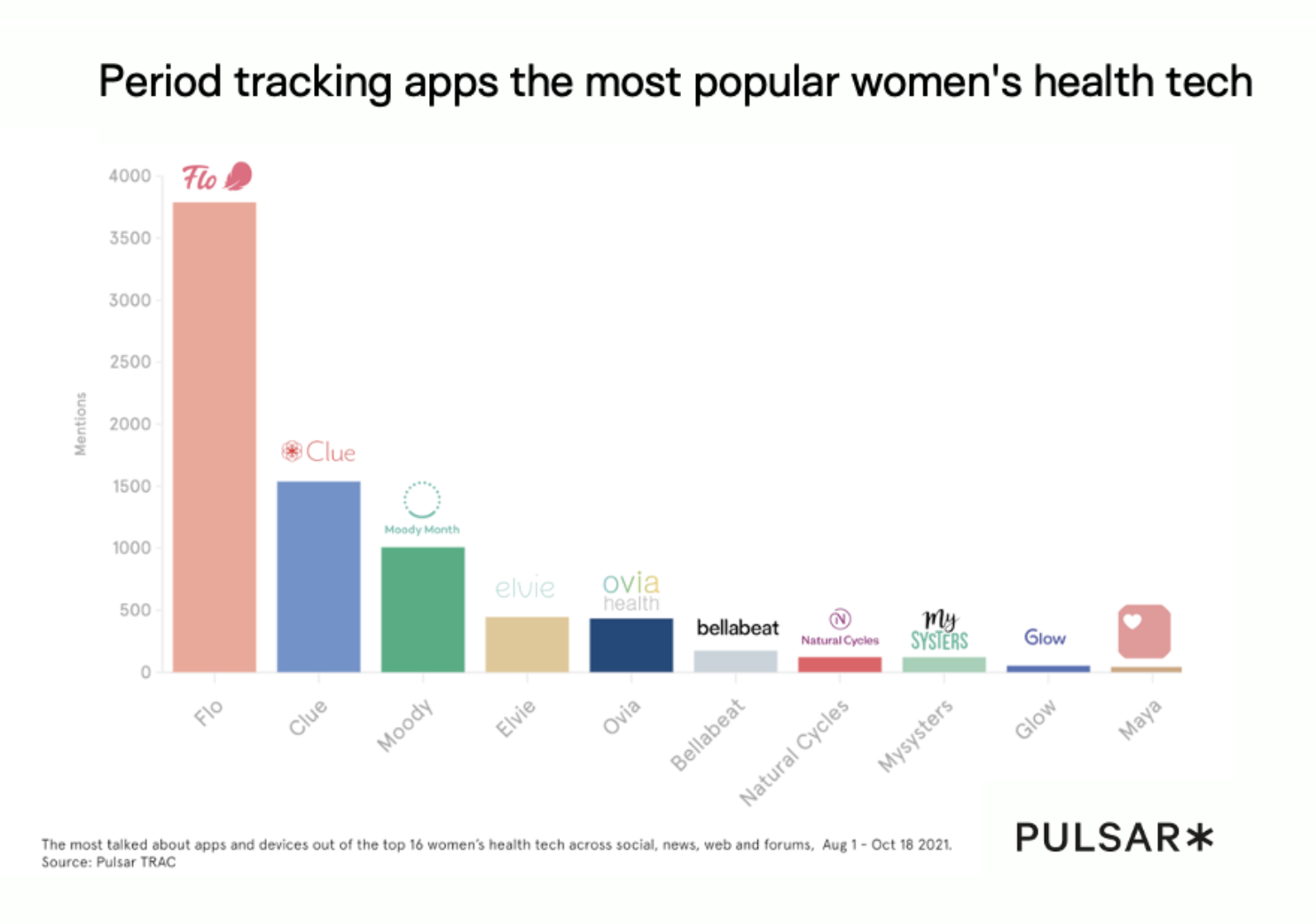
Furthermore, the rise of "Femtech" and the increasing openness regarding taboo health topics (such as menopause and PMS) demonstrate that audiences are no longer waiting for healthcare brands to lead the conversation. In our research into Femtech, we observed how younger audiences balance their health goals with their broader personal values, using apps not just as tools, but as communities for empowerment. Brands that fail to engage with these digital communities risk becoming obsolete as consumers turn to peer-led solutions.
Core Use Cases and Health-Specific Examples
The application of audience and narrative intelligence provides health brands with a strategic advantage in product innovation, positioning, and reputation management. By analyzing the data within Pulsar's framework, brands can move from reactive monitoring to proactive market shaping.
Product Innovation: Tracking the Microbiome Shift
In our Gut Health research, we tracked the evolution of the microbiome from a technical biological concept to a lifestyle phenomenon. The data revealed a critical inflection point where "gut health" began to overshadow "antioxidants" in public discourse. This shift signifies a move from "reactive" health (fixing a problem) to "systemic" health (optimizing a complex internal ecosystem).
Social listening allowed for the identification of specific audience segments driving this trend. "Healthy-Eating Nutrition Buffs" engaged with the topic through the lens of fermentation and probiotic-rich diets, while "Conservative Finance Followers" viewed it as a component of peak performance and longevity. For a brand in the supplement or functional food space, this insight suggests two distinct product innovation pathways: one focused on the "culinary/natural" aspect of gut health and another focused on "biohacking" and cognitive optimization.
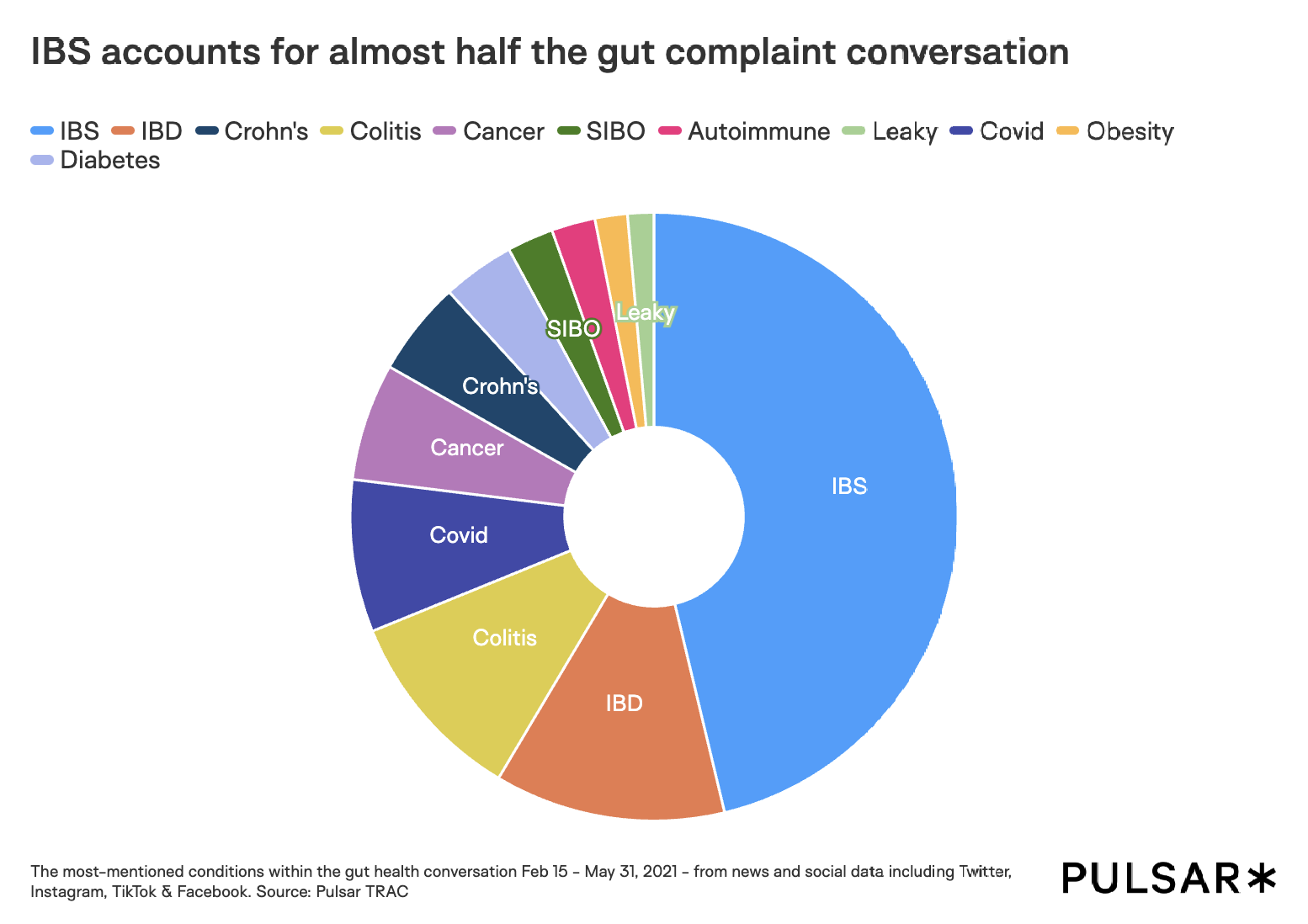
For health, nutrition, and life sciences brands, this microbiome shift illustrates how social listening and audience intelligence directly inform product innovation and portfolio strategy. By monitoring how concepts like “gut health” overtake legacy health narratives such as “antioxidants” across social media, forums, and digital health conversations, organisations can identify where consumer understanding is becoming more systems-led and preventative. Narrative intelligence enables health-sector teams to distinguish between audience segments driving these conversations—such as food-first wellness communities and performance-oriented longevity audiences—supporting evidence-based decisions around formulation, positioning, and innovation pipelines. This ensures new health products align with how audiences already conceptualise wellbeing, rather than relying on outdated functional claims.
Brand Positioning: Accountability and Nutritional Strategies
The Pulsar Sugar Report serves as a benchmark for how consumer behavior is dictated by shared digital knowledge. The conversation has moved beyond simple calorie counting to a sophisticated analysis of how specific sugars impact metabolic health and chronic conditions.
One of the most profound findings was the community-led discovery of "nutritional strategies" for managing migraines. Users on social media were sharing detailed logs of how sugar-free, Keto, or Paleo diets reduced the frequency of their attacks. This represents a "bottom-up" medical insight that brands can use to position their products. Instead of general "low-sugar" messaging, a brand could specifically target the migraine-sufferer segment by highlighting the glycemic stability of their products, backed by the very language these users employ in their digital communities.
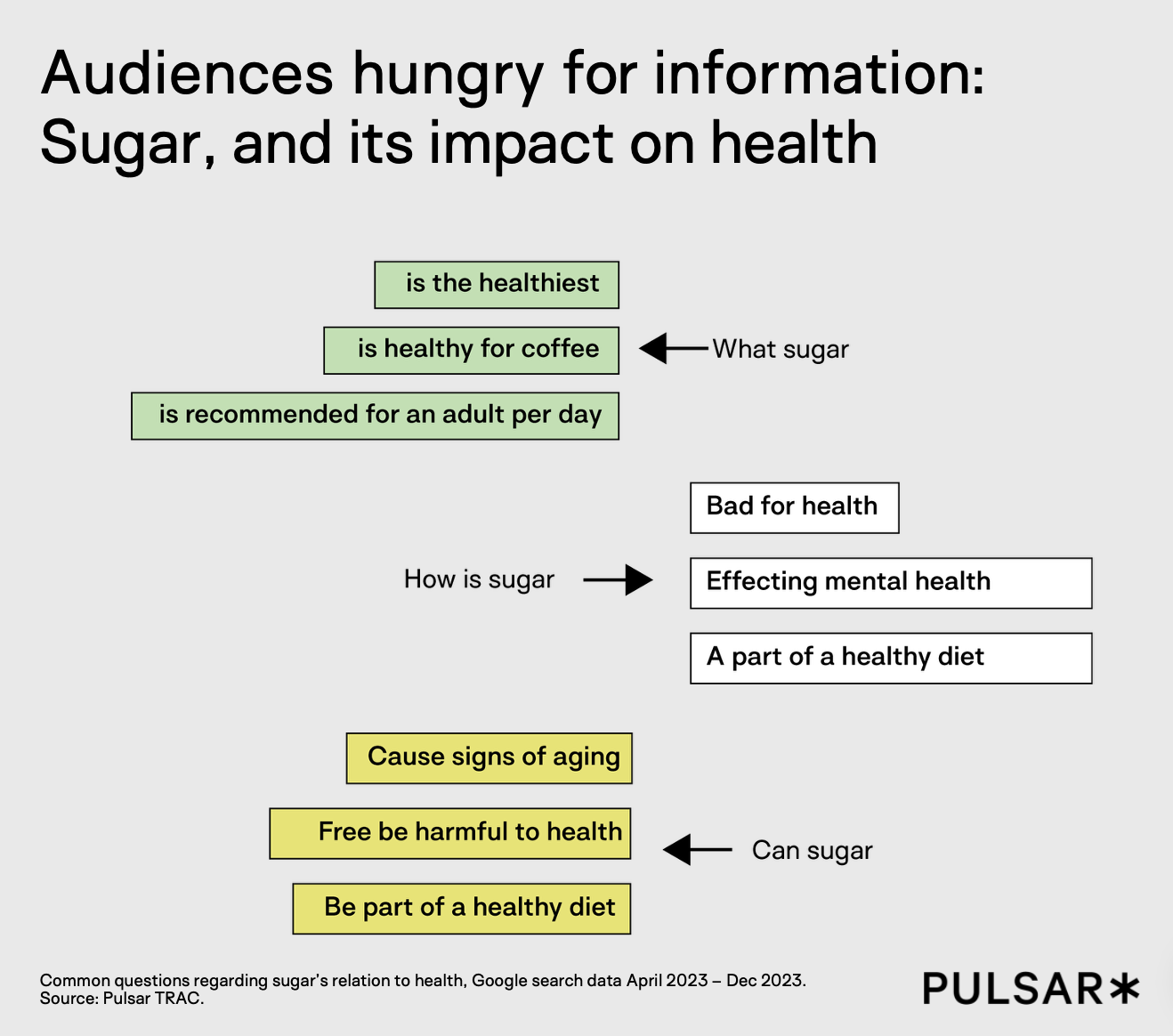
For health brands operating in regulated and trust-sensitive environments, this type of audience-led insight reframes brand positioning around accountability and lived experience. Social listening makes it possible to observe how peer-to-peer health knowledge forms in public digital spaces, revealing condition-specific needs and self-directed management strategies that sit outside formal clinical guidance. Narrative intelligence allows organisations to translate this emergent language into precise, compliant positioning—grounded in stability, control, and symptom management—while demonstrating attentiveness to how people actually navigate chronic health challenges in everyday life.
Reputation and Risk: The Dermatologist vs. Patient Gap
In our Dermatitis research report, we identified a significant narrative gap between medical professionals and patients. While dermatologists focused on clinical terminology and pharmaceutical treatments (such as topical steroids), patients were more likely to discuss "miracle ingredients" like honey and DIY oatmeal baths.
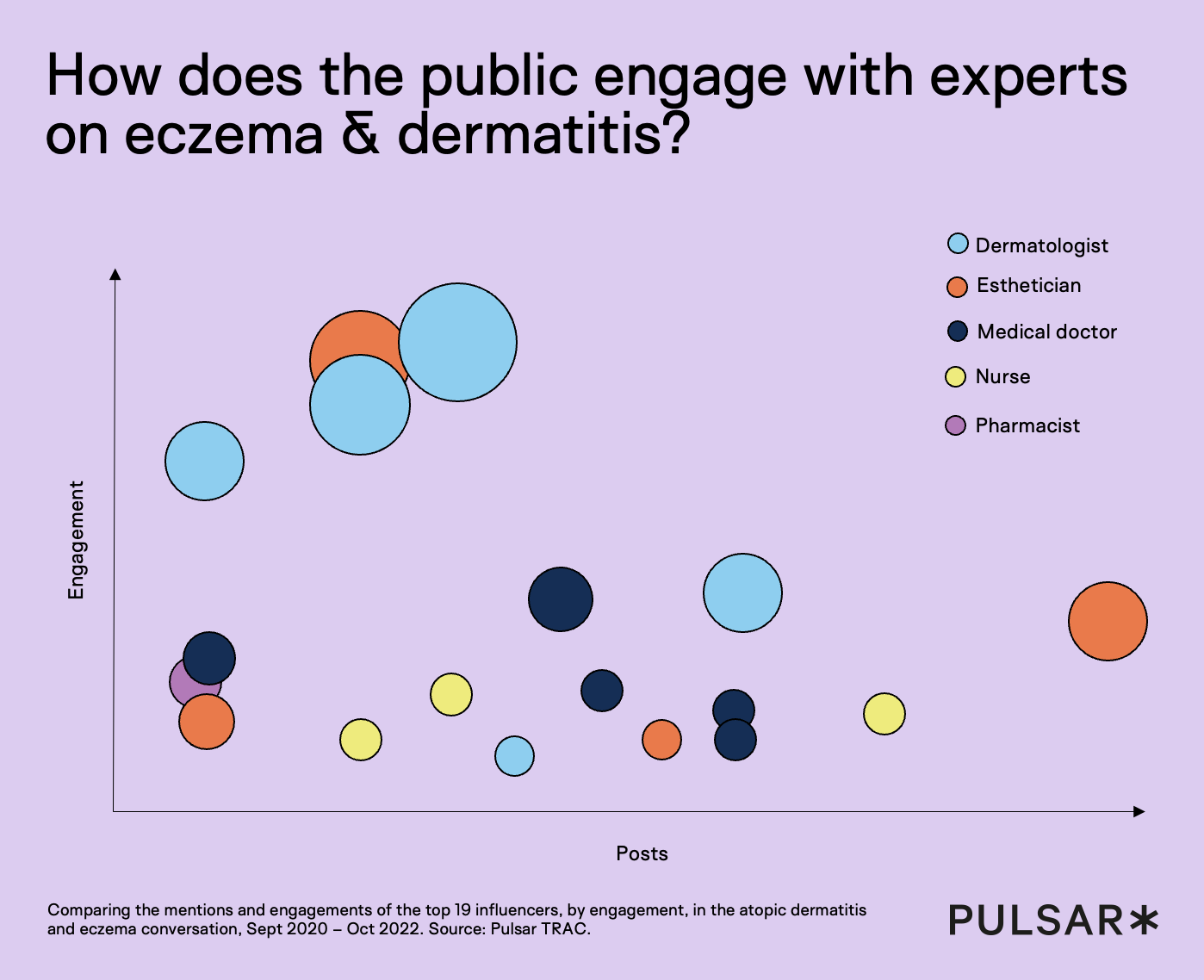
This gap presents a reputation risk for pharmaceutical brands: if their communications are too clinical, they may be perceived as "out of touch" with the daily suffering of the patient. Conversely, by understanding the "lived experience" narrative, a brand can develop supportive content that acknowledges the patient’s desire for natural remedies while providing the necessary clinical context for safety and efficacy. This "narrative bridge" is essential for maintaining brand authority in a skeptical digital age.
| Narrative Mapping: Dermatology | Clinical Discourse | Lived Experience Discourse |
| Primary Focus | Diagnosis & Pathology | Symptom Management & Comfort |
| Key Terms | Atopic Dermatitis, Corticosteroids | Flare-ups, Itch-scratch cycle |
| Preferred Solutions | Prescription Creams, Biologics | Honey, DIY Baths, Silk Clothing |
| Information Source | Medical Journals, Conferences | Reddit, TikTok, Facebook Groups |
Cultural Trend Detection: The "Dopamine Detox" Movement
Using Pulsar Narratives AI, we identified a rising trend known as "Dopamine Detox." This narrative posits that modern digital life has overstimulated our neural pathways, leading to a loss of focus and mental clarity. Audiences discuss dopamine not as a neurotransmitter, but as a "currency" that must be hoarded and spent wisely.
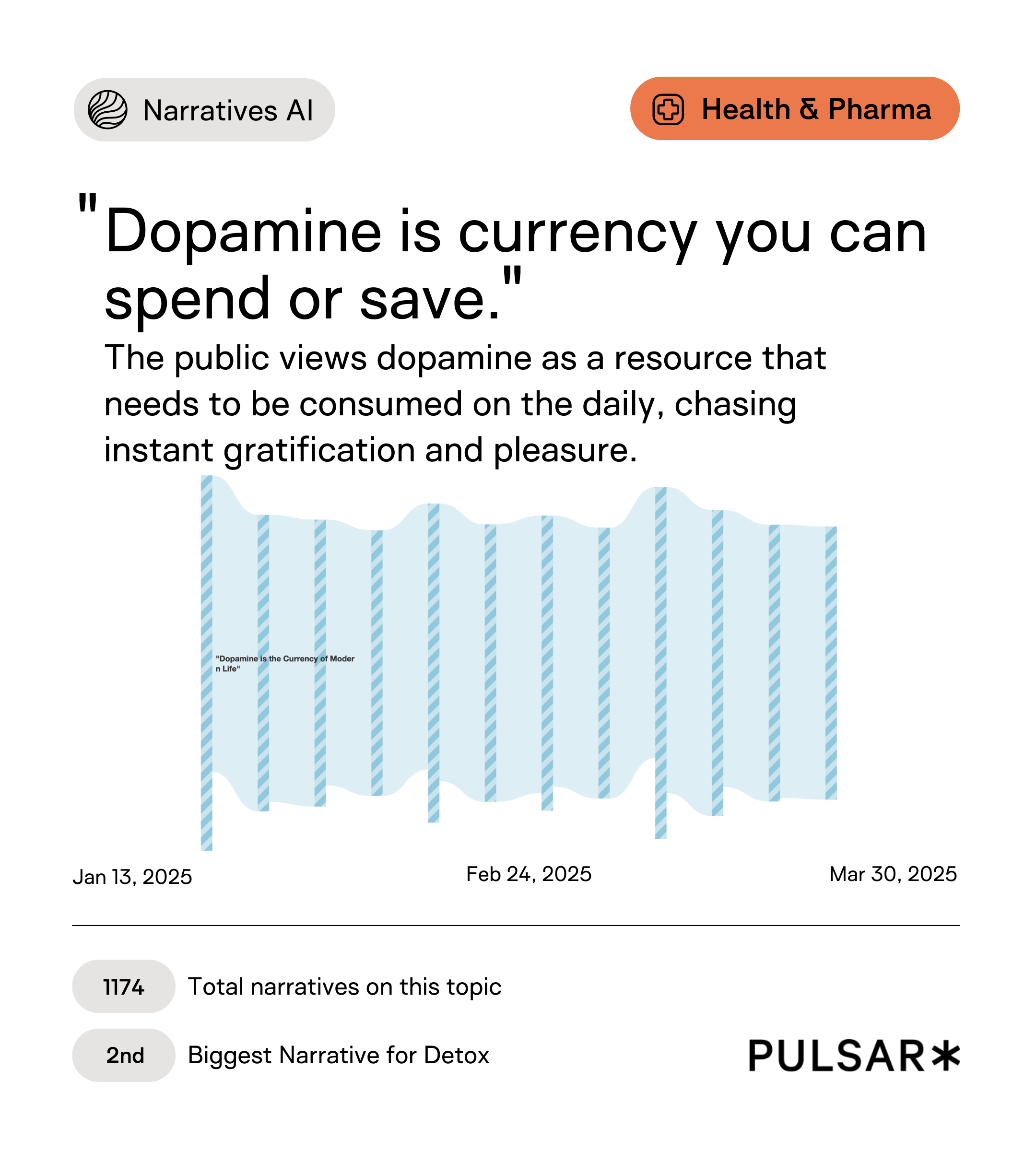
The "Digital Detox" narrative is an extension of this, where users proactively disconnect from platforms to regain "peace and control." For mental health and wellness brands, this is a critical signal. It indicates a shift away from "more features/more engagement" toward "minimalism and intentionality." Brands that can position their tools as "enablers of focus" rather than "sources of distraction" will align more closely with this emerging cultural value.
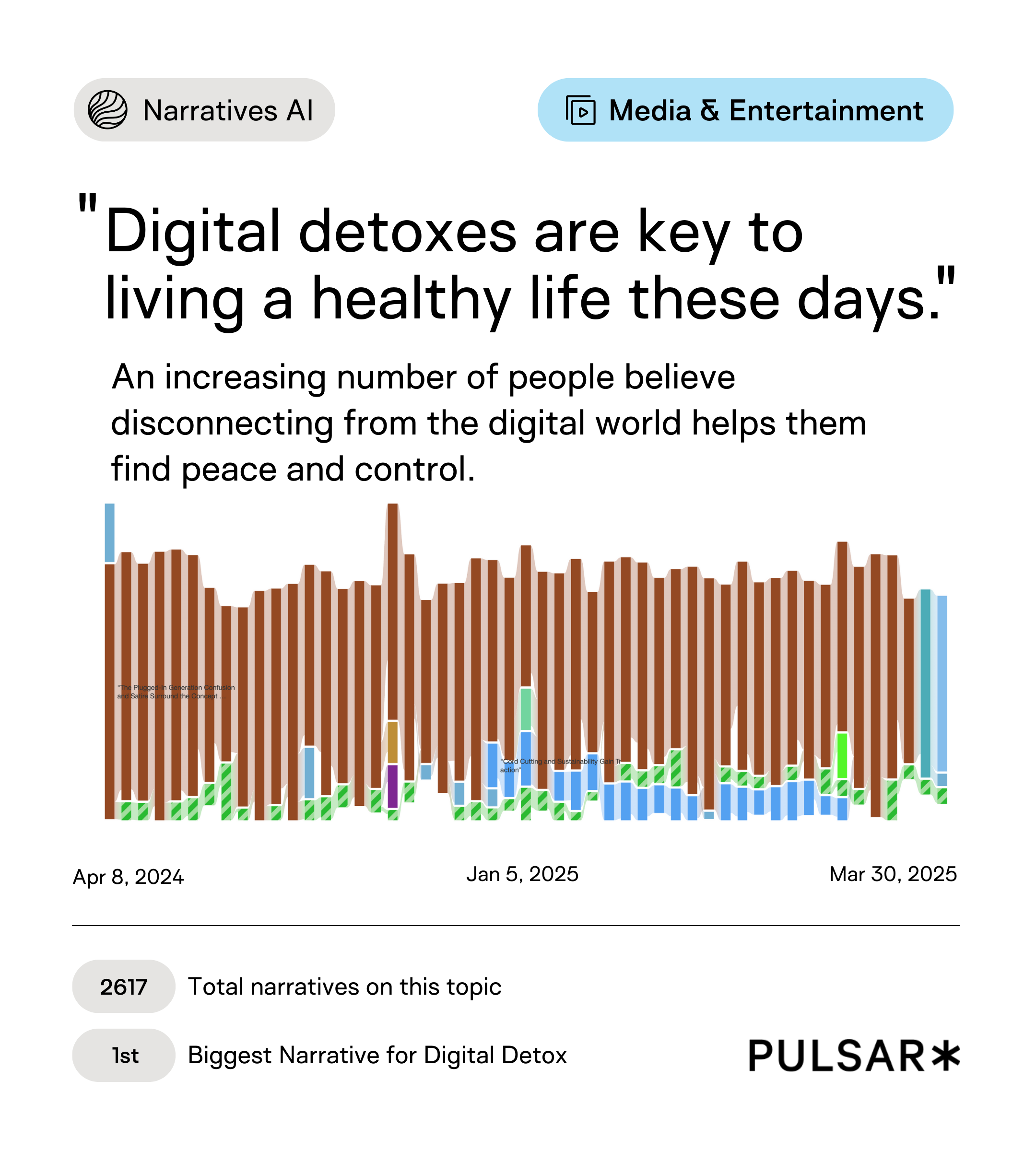
For health, pharma, and wellness organisations, this example demonstrates how social listening and narrative intelligence surface early signals of changing patient and public expectations. By analysing how narratives like “dopamine detox” emerge, cluster, and gain momentum across social media, forums, and digital media, health-sector teams can understand the beliefs, anxieties, and values shaping conversations around mental wellbeing, attention, and digital fatigue. Audience intelligence enables organisations to map this narrative shift in real time, inform evidence-led messaging, support preventative health strategies, and ensure communications align with evolving cultural definitions of balance, focus, and mental health—before these narratives reach peak saturation.
Strategic Framework: From Data to Decision
Pulsar’s Listen → Map → Activate framework provides a structured methodology for health organizations to operationalize audience intelligence.
Listen: Identifying High-Value Signals
The "Listen" phase is about more than just volume; it is about signal quality. In the health sector, conversations happen in siloed spaces—from encrypted WhatsApp groups to public Reddit threads. Effective listening requires a multi-platform approach that tracks specific "need states." For example, monitoring how patients discuss "misdiagnosis" in the menopause space can reveal the exact symptoms that current health tech fails to address.
Map: Structuring Audiences and Narratives
Mapping involves moving beyond simple demographics to "affinity-based" segmentation. In the microbiome study, the mapping phase revealed that interest in gut health was not evenly distributed but clustered around specific communities like "Biohackers" and "Parenting Bloggers." Narrative mapping allows a brand to see how a story—like the benefits of a specific diet for migraines—travels between these clusters, identifying the "key nodes" of influence.
Activate: Informing Strategic Decisions
Activation is the final step where insights are turned into action. This could involve:
- Marketing: Crafting campaigns that use the specific colloquialisms of a patient community to increase "authenticity."
- Comms: Developing "pre-bunking" content to counter common misconceptions about ingredients before they become viral myths.
- Product: Refining the user interface of a Femtech app to include more community-focused features, responding to the desire for peer support identified in our research.
Conclusion: Strategic Implications of Social Listening for the Health Sector
Social listening has become a foundational capability for the health sector because health decisions are now shaped as much by culture, identity, and peer validation as by clinical guidance. Across mental health, nutrition, dermatology, Femtech, and preventative wellness, audiences are actively constructing meaning around symptoms, treatments, and lifestyles in public digital spaces. Audience intelligence and narrative intelligence allow health, pharma, and wellness organisations to observe these conversations at scale, identify emerging belief systems, and understand how trust is earned or lost in real time.
The examples in this guide demonstrate that social listening for the health sector is not limited to reputation monitoring or campaign optimisation. It supports earlier-stage product innovation, more precise brand positioning, and proactive risk management by revealing how patients and consumers conceptualise wellbeing, accountability, and control. From microbiome-led innovation and condition-specific nutritional strategies to cultural movements like dopamine detox and digital minimalism, narrative intelligence helps organisations align with how health is actually discussed and experienced, rather than how it is traditionally framed.
For health brands operating in complex, regulated environments, the strategic value lies in translating these insights into compliant, evidence-led action. By combining social listening data with expert interpretation, organisations can anticipate unmet needs, communicate with greater cultural fluency, and build credibility with increasingly informed and sceptical audiences. As health consumers continue to behave like “prosumers” rather than passive patients, audience and narrative intelligence will remain essential for organisations seeking relevance, trust, and long-term growth in the modern health ecosystem.
Key Takeaways
- Lived Experience Over Clinical Jargon: Patients prioritize peer stories and "natural" experiments; brands must learn to speak this language to remain relevant.
- Micro-Communities Drive Trends: Major health movements (like gut health) start in niche clusters; identifying these early is key to product innovation.
- Accountability is Constant: Consumers use digital platforms to audit brands; transparency regarding ingredients is non-negotiable.
- Tech as Community: For younger audiences, health apps are not just utilities; they are social spaces for empowerment and value-alignment.
- Narrative AI Detects Cultural Shifts: Trends like "Dopamine Detox" signal deep-seated psychological needs that transcend simple product categories.
To stay up to date with our latest insights and releases, sign up to our newsletter below: