Social Listening for Skincare Brands: A Practical Guide to Audience and Narrative Intelligence
Social Listening (SL) for the skincare industry is the systematic process of monitoring, analyzing, and interpreting digital conversations across social media, forums, review sites, and news outlets to extract actionable audience intelligence. In the context of skincare, this practice extends beyond traditional sentiment analysis to encompass Narrative Intelligence—the ability to identify and track the underlying cultural stories, belief systems, and consumer-led movements that dictate market trends and purchasing behaviors. By leveraging advanced tools like Pulsar TRAC and Pulsar Narratives, brands can move from reactive monitoring to proactive strategy, understanding not just what is being said, but the complex motivations and "lived experiences" driving the global skincare discourse.
Critical Insights for Skincare
The global skincare market is characterized by high volatility and a sophisticated, research-oriented consumer base. The following insights represent the most significant signals detected through current audience intelligence frameworks:
- The Regulatory Pendulum: Consumer sentiment has swung aggressively from complex, high-active routines (chemical exfoliation) toward "Barrier Repair" and "Skin Longevity," with interest in skin barrier health rising.
- The AI Consultant Era: Artificial Intelligence (AI) has transitioned from a back-end tool to a front-end personal beauty consultant, Gen Z consumers targeted to purchase from brands offering AI-driven personalized recommendations.
- Medicalization of Self-Care: Niche medical conditions, such as Eczema and Topical Steroid Withdrawal (TSW), have moved from clinical settings to social media communities, with a study from the British Association of Dermatologists finding mentions of TSW increased by 274% in a four-year period.
Category Migration: The "Skinification" of adjacent categories is accelerating, with the global scalp care market growing as consumers apply skincare-grade ingredients to their haircare routines.
Why Social Listening Is Now Essential for Skincare Brands
The skincare landscape in 2025 and 2026 is defined by a literacy-led, well-informed consumer who values transparency and efficacy over brand heritage. This shift has rendered traditional market research—which often provides only a static snapshot of the past—insufficient for modern brand strategy. Social listening is essential because it captures the "fluidity" of consumer behavior in real-time, allowing brands to respond to structural pressures such as "Dupe Culture" and the rapid decentralization of authority from dermatologists to community-led forums.
Structural pressures in the industry include the "media-fication" of social platforms, where discovery is increasingly driven by algorithmic curation rather than social connections. In this environment, a brand's reputation is built or destroyed in niche communities like forums about skincare addiction or through TikTok’s "performative vulnerability" trends. Social listening provides the "Narrative Equity" measurement required to understand how a brand aligns with public narratives versus media-driven narratives. For instance, while the press may focus on high-tech "Exosomes" as the next regenerative breakthrough, social listening reveals consumer skepticism and a preference for "back-to-basics" formulations.
As the beauty industry experiences a $1 trillion global expansion, brands must use social listening to identify these "ritualistic" behaviors to position products not just as tools for aesthetics, but as instruments of holistic well-being and longevity.
Core Use Cases and Industry-Specific Examples
Strategic audience intelligence allows skincare brands to move beyond tactical response and toward "Narrative Dominance." By analyzing specific case studies from our proprietary research, we can observe how digital signals translate into market shifts.
Tracking the "Pendulum Swing" of Trends: Exfoliation vs. Barrier Repair
In our study on the skin barrier Skincare as the Problem and the Solution, social listening tracked a massive consumer backlash against complex, harsh routines. Between 2018 and 2020, the industry reached a peak of "chemical exfoliation," driven by the proliferation of high-percentage AHAs, BHAs, and retinoids. However, by late 2020, data analysis revealed a sharp rise in conversations concerning "irritated, burning skin" and "sensitized barriers".
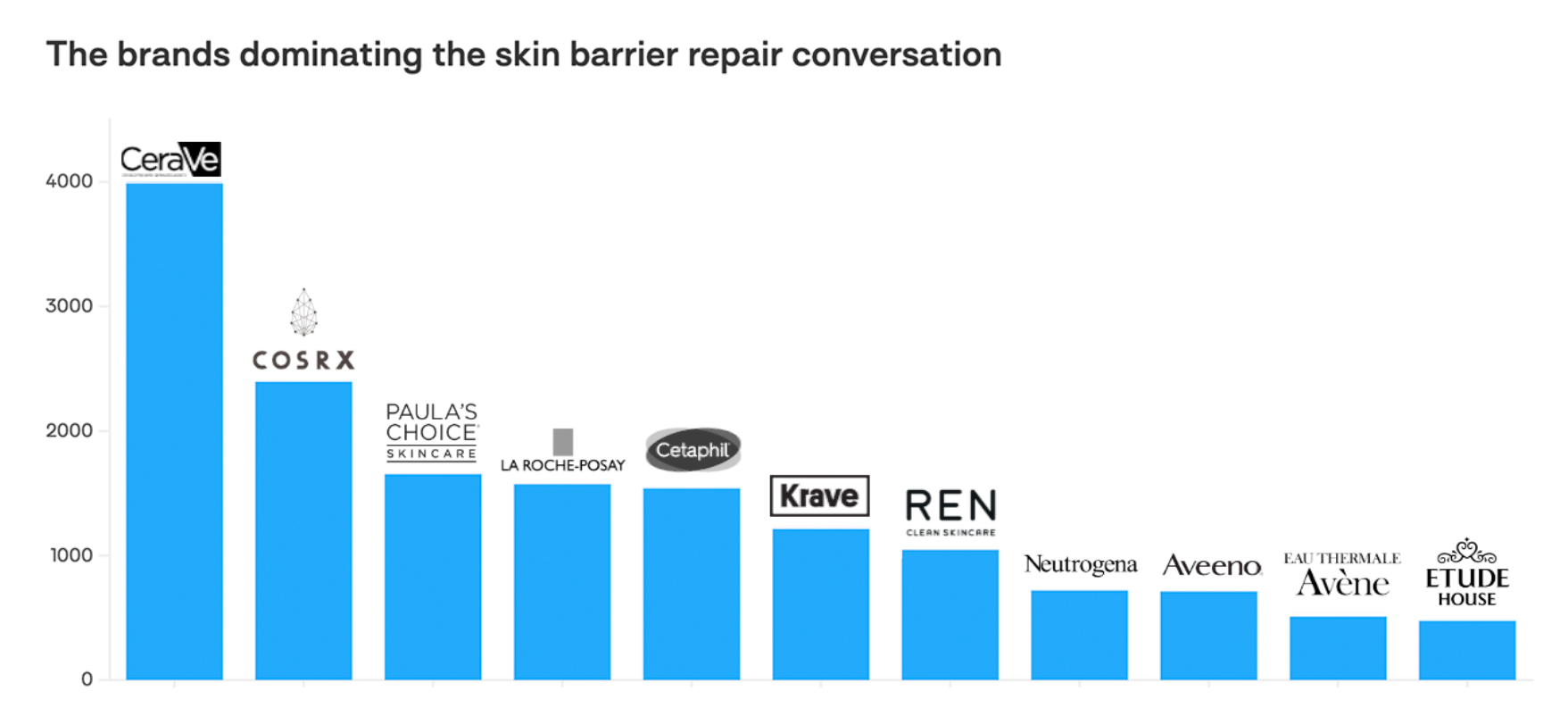
This backlash directly fueled the "Skin Barrier" repair trend. The narrative shifted from achieving "glass skin" via stripping to achieving health through "Slugging"—the use of heavy occlusives like Vaseline to lock in moisture. Brands like CeraVe became dominant in this space because their product identity (centered on ceramides) aligned perfectly with the new narrative of "repair" rather than "strip". Social listening allowed these brands to identify the exact moment the "exfoliation fatigue" set in, enabling them to pivot their marketing toward "gentle resilience."
| Trend Cycle | Key Narrative | Core Active Ingredients | Consumer Sentiment |
| Peak Exfoliation (2020) | "Glass Skin," Transformation | Glycolic Acid, Retinol | High Enthusiasm, Aggressive |
| Backlash (2021-2022) | "Burning Skin," Over-processing | N/A | Regret, Pain, Search for Relief |
| Barrier Repair (2023-2025) | "Slugging," Healing, Resilience | Ceramides, Niacinamide, Squalane | Protective, Scientific, Calming |
The industry serves as its own corrective mechanism. Brands must monitor "distress signals"—mentions of redness, stinging, or sensitivity—as leading indicators for the next reparative cycle. By anticipating the "pendulum swing," brands can prepare "soothing" SKUs ahead of the inevitable exhaustion of aggressive active trends.
Reframing Stigma: The "Cute-ification" of Acne
The evolution of acne care demonstrates how narrative intelligence can identify a fundamental shift in cultural psychology. As we found in our blog on Starface and the Pimple Patch trend, the conversation around acne has transitioned from "concealing" to "decorating". Brands like Starface successfully turned the hydrocolloid bandage—traditionally a discreet medical product—into a "fashion-cultural object" and a "badge of coolness" through bright colors and emoji-inspired designs.
Social listening data reveals a critical "Platform Intelligence" insight here. While TikTok and Instagram drive the "aesthetic" and viral "GRWM" (Get Ready With Me) moments using these patches, deep trust and detailed product efficacy reviews occur in slower-burn spaces like forums and blogs. This suggests a dual strategy for skincare brands: high-impact visual "vibes" for social video, and deep, science-backed data for community-driven forums where long-term brand loyalty is forged.
Acne care is no longer just a medical category; it is an identity category. Brands that embrace "performative vulnerability" and "visibility" in their packaging design can accrue social capital with Gen Z, who view acne as a shared human experience rather than a flaw to be hidden.
Regional Nuances: The Global Sunscreen Divide
A global "one size fits all" marketing strategy often fails in the SPF category due to deep-seated regional differences in consumer motivation. In our Sunscreen report, analysis of sun protection conversations revealed two distinct cultural poles.
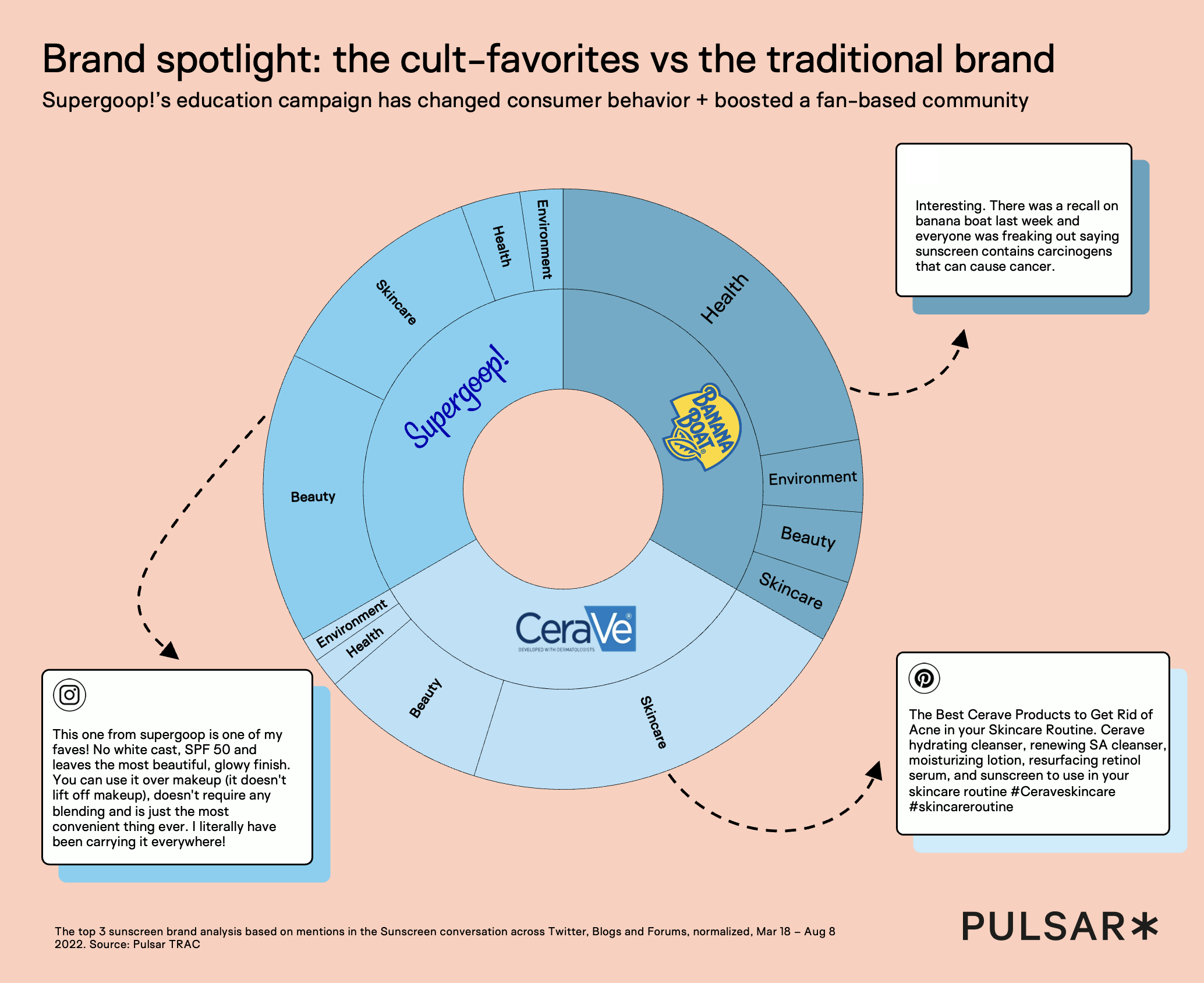
In Australia, the conversation is highly politicized, health-driven, and focused on regulation, cancer prevention, and the ethics of production. This is driven by high regional skin cancer rates, where 37% of cancer cases are skin-related. Conversely, in the USA and UK, the conversation is dominated by "Beauty Gurus" and focuses on anti-aging, "white cast" concerns for darker skin tones, and how the product sits under makeup.
| Region | Primary Driver | Regulatory Context | Top Concern |
| Australia | Public Health/Safety | TGA (Therapeutic Goods Admin) | Cancer Prevention, Chemical Safety |
| USA | Beauty/Aesthetics | FDA (Food & Drug Admin) | Anti-aging, "White Cast," Under-makeup wear |
| UK | Wellness/Protection | EU/UK Compliance | Urban Pollution, Texture/Elegance |
Cultural segmentation is mandatory for global SPF brands. Australian consumers respond to "clinical authority" and "ethical production," while US and UK consumers are more likely to discuss "dupes" (e.g., finding a budget version of Supergoop) or "cosmetic elegance".
Innovation & "Skinification": Scalp Care
Social listening has successfully tracked the migration of skincare terminology and philosophy into the haircare space. In our analysis How Haircare Came to Resemble Skincare, we found that consumers have started treating their scalps with the same precision and active ingredients they use for their faces—a trend known as "Skinification".
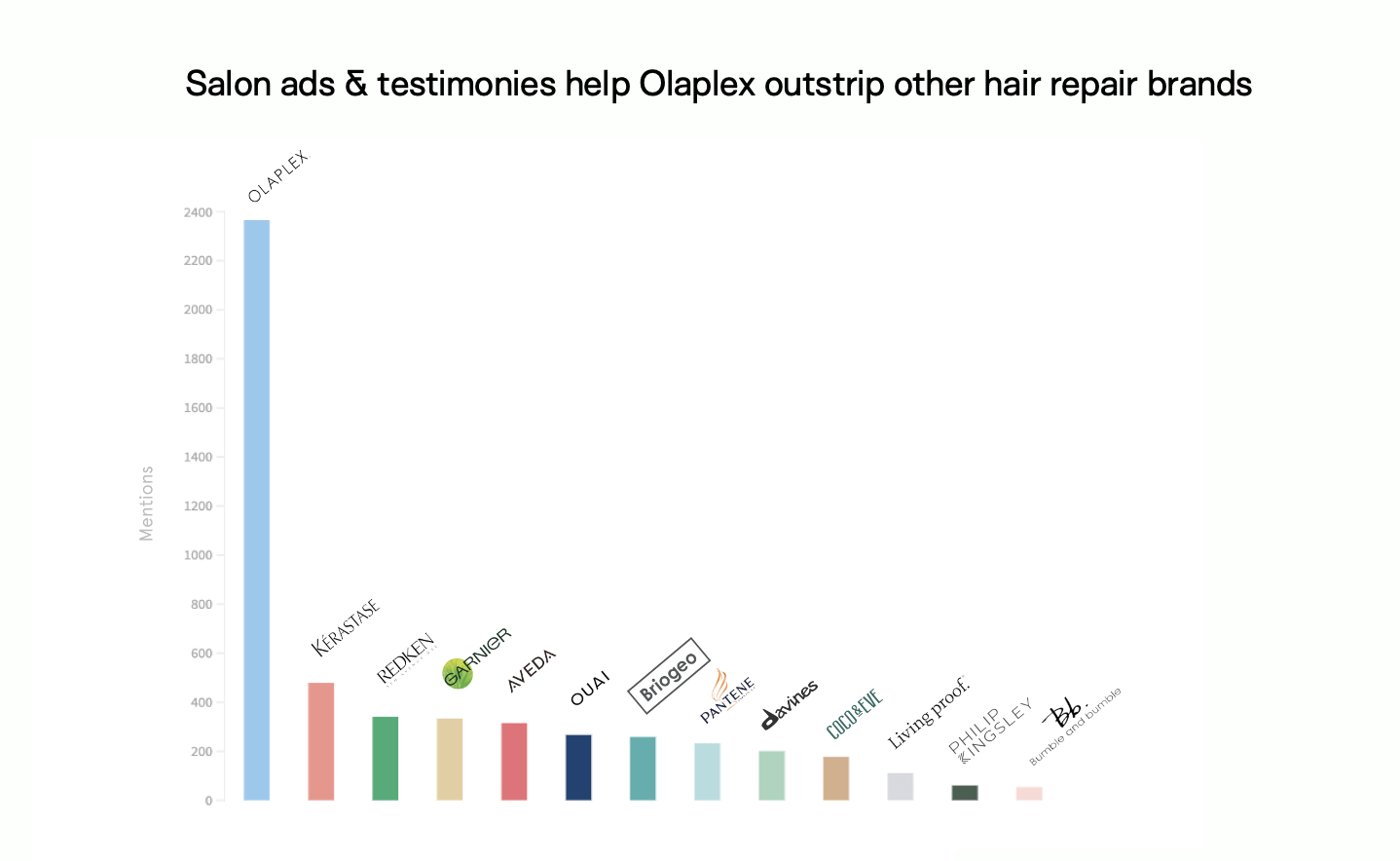
Mentions of ingredients like Hyaluronic Acid, Salicylic Acid, and Niacinamide in the context of scalp health have surged, with the global scalp care market projected to climb to $23.8 billion by 2032. Data shows that scalp treatments are no longer "one-off indulgences" but are now integrated into "regular self-care routines". This allows skincare brands to expand their product lines by marketing scalp serums and exfoliants using the exact same ingredients their customers already trust for facial care.
Category expansion is most successful when it leverages "ingredient trust." Skincare brands can enter the professional haircare market by framing the scalp as "the foundation for hair longevity".
The "Patient" vs. "Consumer" Journey: Eczema
For chronic skin conditions, the customer journey is non-linear and often characterized by frustration with traditional medicine. In our Dermatitis report, we mapped the patient cycle of Prevent > Flare-Up > Clear to understand unmet needs.
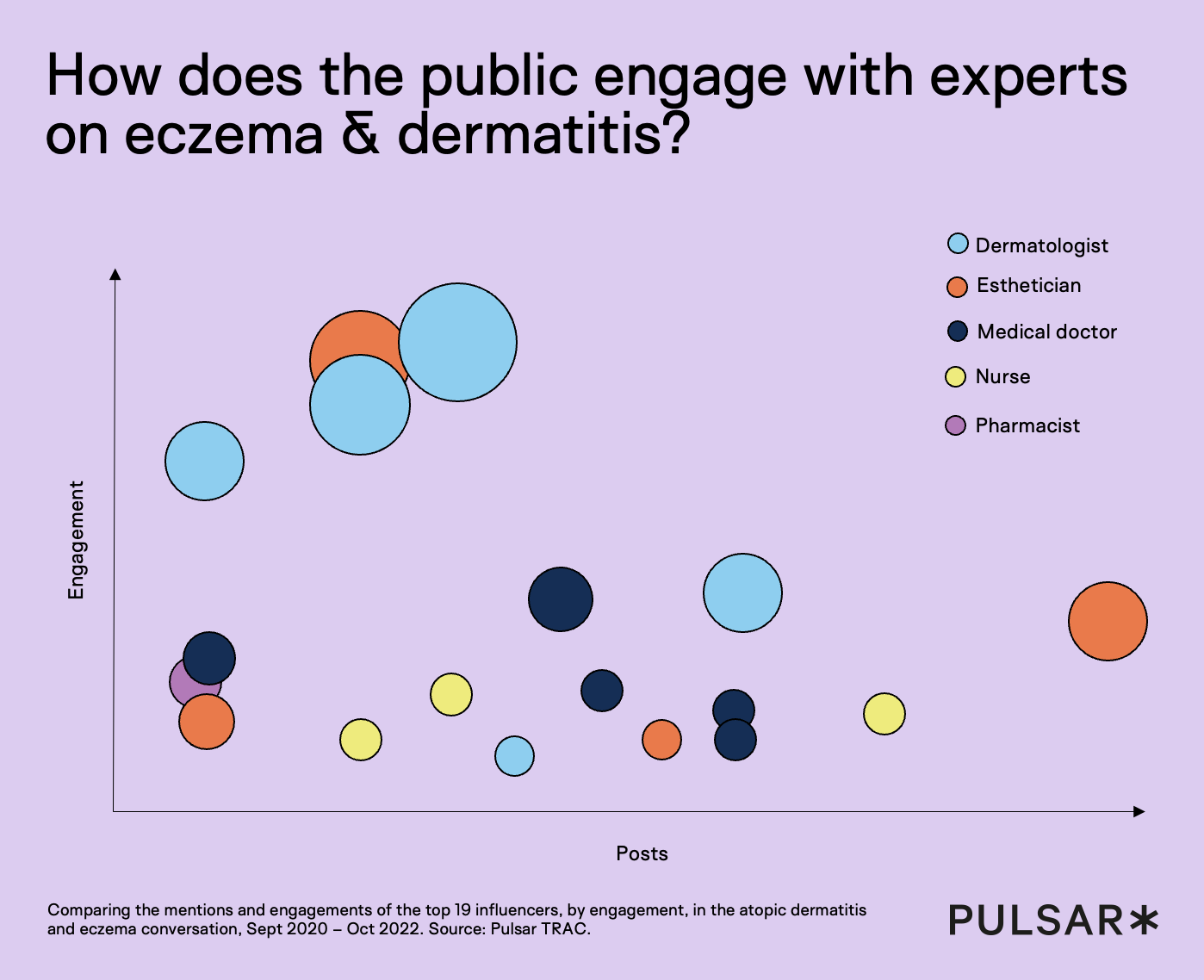
Data revealed a massive volume of conversation around "Treatment Fatigue" and "Topical Steroid Withdrawal" (TSW), where patients turn to DIY remedies (such as "rose milk bath tea") because they feel clinical options have failed them. Mentions of TSW on social media increased by 274% between 2016 and 2020, highlighting a significant distrust of the traditional dermatology community.
There is a massive "trust gap" in the chronic skincare space. Brands that offer "supportive care" for the "Clear" and "Prevent" phases of the eczema journey—without relying on steroids—can capture an audience that feels abandoned by pharmaceutical solutions.
Tech Integration: "AI Told Me To Buy It"
A dominant narrative emerging in 2024 and 2025 is the use of AI as a personal beauty consultant. In our Beauty in an AI Age report, we identified the trend "AI told me to buy it," where consumers use LLMs to design personalized routines based on specific ingredient profiles.
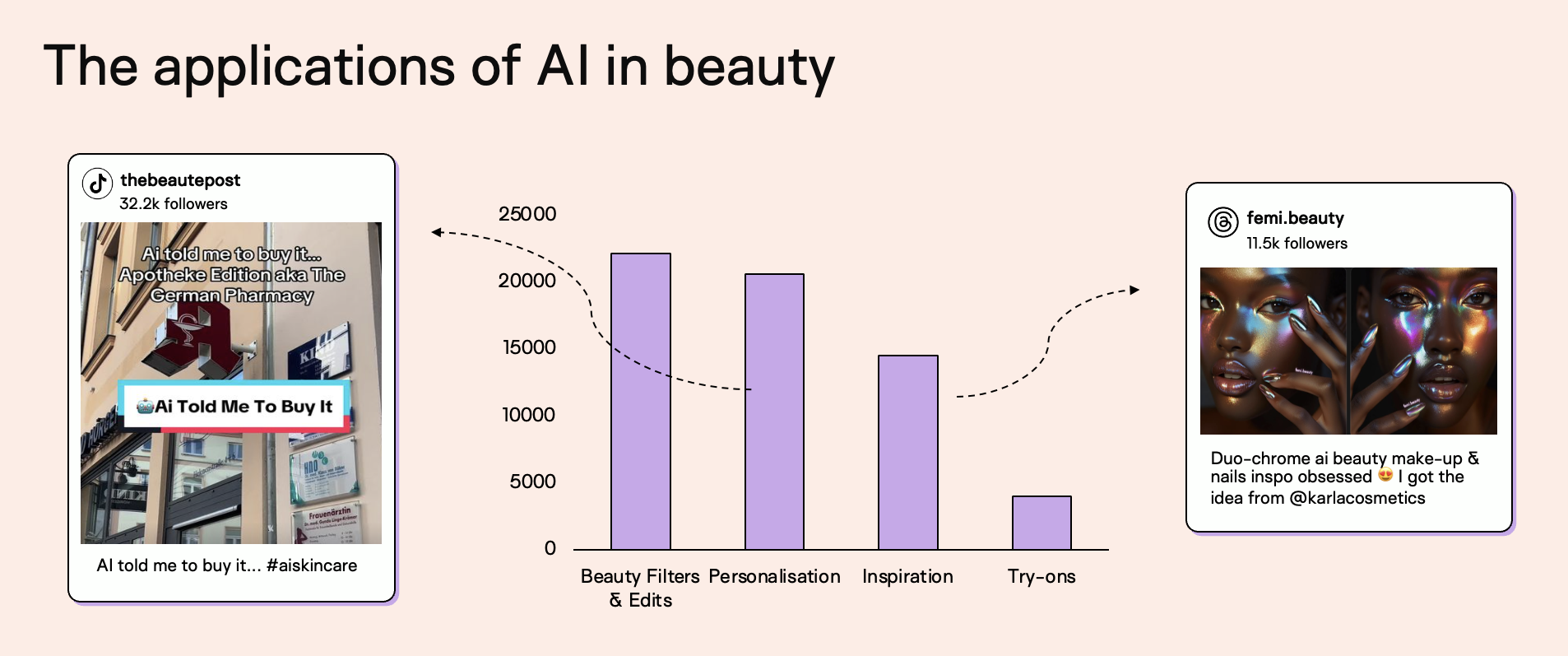
Skincare consumers are increasingly overwhelmed by the "paradox of choice." They are using AI to cut through marketing noise and find "optimal" science-backed routines. Brands that ensure their ingredient lists are "AI-friendly" (structured in a way that AI can easily parse their benefits) and integrate AI-driven skin analysis tools will gain a significant advantage.
Personalization is no longer a luxury; it is a baseline expectation. Brands must pivot from "mass marketing" to "algorithmic visibility," ensuring their product data is optimized for the AI agents that consumers are now using as gatekeepers.
Strategic Framework: From Data to Decision
To turn fast-moving skincare conversations into business impact, Pulsar Platform applies the Listen → Map → Activate framework, embedding audience intelligence across marketing, product, and risk decisions.
Listen focuses on identifying early skincare signals across platforms like TikTok, specialist forums, and search. The most valuable indicators are often long-tail and behavioural: emerging ingredients, niche skin conditions, and how products are actually used in routines. These signals surface demand shifts well before they appear in sales or traditional research.
Map structures these signals into coherent audiences and narratives. In skincare, segmentation is less about demographics and more about skin state and belief systems—such as ingredient-led science seekers, clean-beauty advocates, or routine minimalists. Mapping also reveals whether trends are accelerating or fading, and where media coverage has drifted out of sync with real consumer behaviour.
Activate is where insight informs action. Audience and narrative intelligence can guide product development, refine positioning, and flag early risk—whether that’s responding to barrier fatigue, reframing ageing narratives, or identifying backlash against a viral ingredient before it escalates.
Audience Discovery as Advantage
In a category shaped by dupe culture and ingredient-level shopping, relevance is the only durable form of loyalty. Social listening enables brands to identify the cultural cues—language, rituals, and values—that make skincare narratives travel.
Brands have benefited from aligning with authenticity-led language and avoiding perfection-based claims, reflecting Gen Z’s values. When applied well, audience intelligence allows skincare brands to move from broadcasting messages to participating credibly in the conversations shaping purchase decisions.
Conclusion & Next Steps: Social Listening for Skincare Brands
Social listening for skincare brands has evolved beyond basic sentiment tracking or mention volume. In 2026, it functions as a form of audience and narrative intelligence—helping brands explain why consumer behaviour shifts, not simply what is trending.
By analysing recurring cultural dynamics such as the pendulum swing between active ingredients and repairing ingredients, the cute-ification of previously clinical or stigmatised conditions, and the skinification of adjacent categories, skincare brands can make sense of an increasingly fragmented, fast-moving market.
The competitive advantage now lies in strategic sensitivity: the ability to interpret weak signals, emerging narratives, and belief systems before they peak. Brands that apply narrative intelligence to align product development, positioning, and communication with lived consumer experience achieve durable relevance rather than reactive visibility. Platforms like Pulsar Platform enable this shift by connecting real-time conversation with business decision-making across marketing, innovation, and risk.
For skincare leaders, the next step is clear: embed social listening into core strategy, where audience discovery directly informs product pipelines, messaging frameworks, and long-term brand trust.
Key Takeaways for Skincare Brands
- Track the Pendulum: Monitor early signals of trend fatigue—such as irritation from over-exfoliation or active overload—to anticipate shifts toward barrier repair and recovery.
- Adopt Platform-Specific Strategy: Use TikTok to build aesthetic awareness and cultural relevance, while relying on specialist forums to establish scientific credibility and ingredient trust.
- Account for Regional Nuance: Local narratives matter. Sunscreen messaging driven by cancer prevention in Australia does not translate directly to beauty- or ageing-led framing in the US or Europe.
- Expand Categories with Logic: Apply established ingredient trust from facial skincare to adjacent growth areas such as scalp care and body care.
- Identify Trust Gaps Early: Use social listening to surface areas where consumers feel underserved by clinical or pharmaceutical solutions, including eczema and topical steroid withdrawal (TSW).
- Prepare for the AI Consultant Era: Optimise product data, ingredient explanations, and digital experiences for AI-mediated discovery and recommendation environments.
To stay up to date with our latest insights and releases, sign up to our newsletter below: