
Less is more? How sustainability is fueling the rise of conscious consumption
Contents:
As climate concerns and cost-of-living pressures intensify, audiences are changing how they think about what they buy. From de-influencing trends to no-buy pledges, consumers are increasingly opting out of fast consumption models in favour of more sustainable behaviours.
In this blog, we use TRAC, Pulsar's audience intelligence platform to explore how sustainability shows up in online discussions of consumption. Analysing millions of datapoints across X, TikTok, Reddit, Threads, Instagram, Pinterest, Tumblr, online news, blogs, and forums we uncover how anti-consumption trends reflect deeper shifts in values, identity, and environmental awareness.
@miawestrap 2024 is the year of no cherry pepsi max. Not sure why I said I “bought” a library card, they’re free!!! #nobuyyear #nobuy2024 #nobuychallenge #lowbuyyear #budgeting ♬ original sound - Mia Westrap
Degrowth and the decline of haul culture
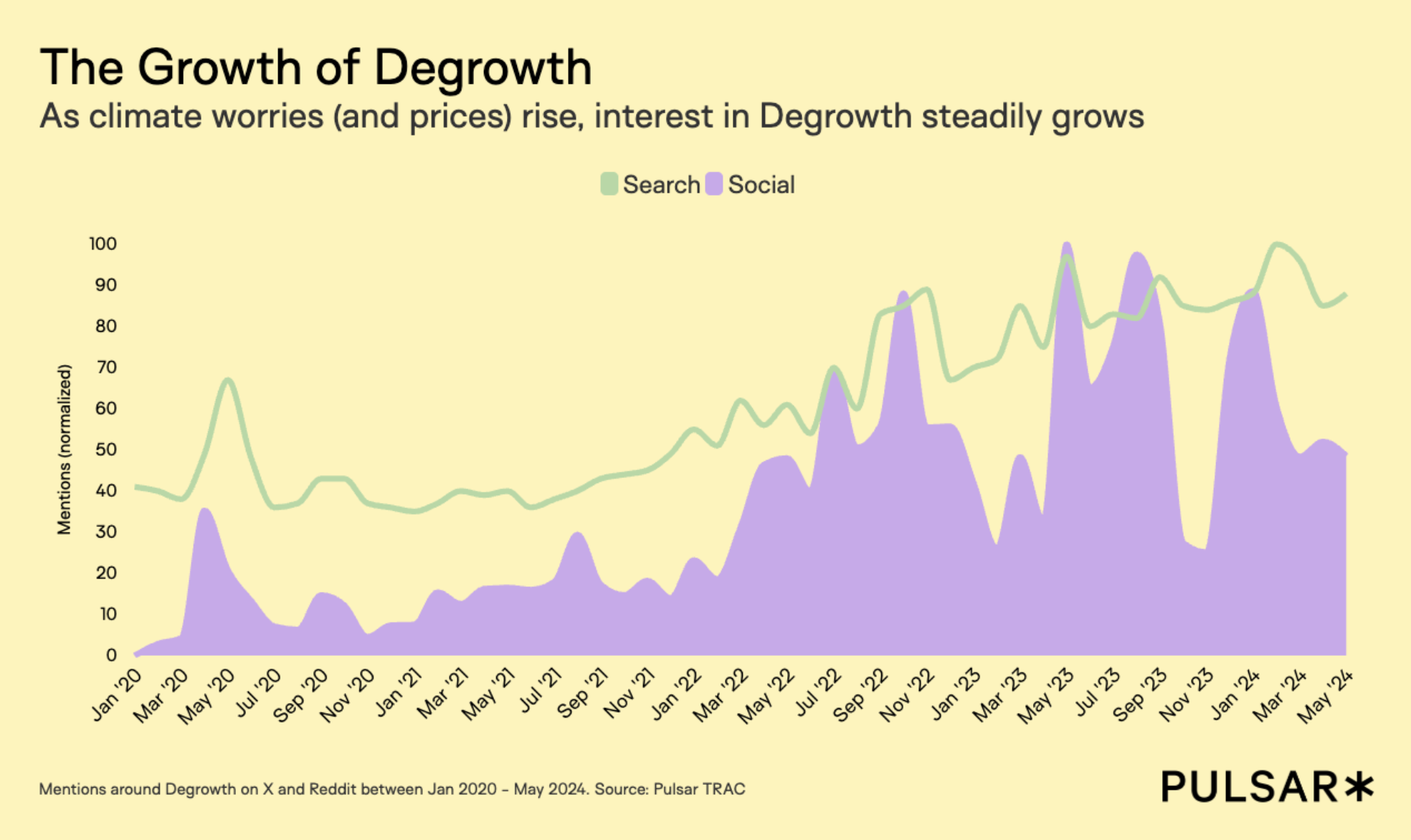
The once-niche idea of degrowth - challenging the link between economic growth and wellbeing - is gaining traction in online culture. Alongside it, we see audiences rejecting overconsumption and the influencer economy. From decluttering content to the rise of de-influencing (up 106% in H1 2024), online communities are turning away from the 'TikTok made me buy it' mindset.
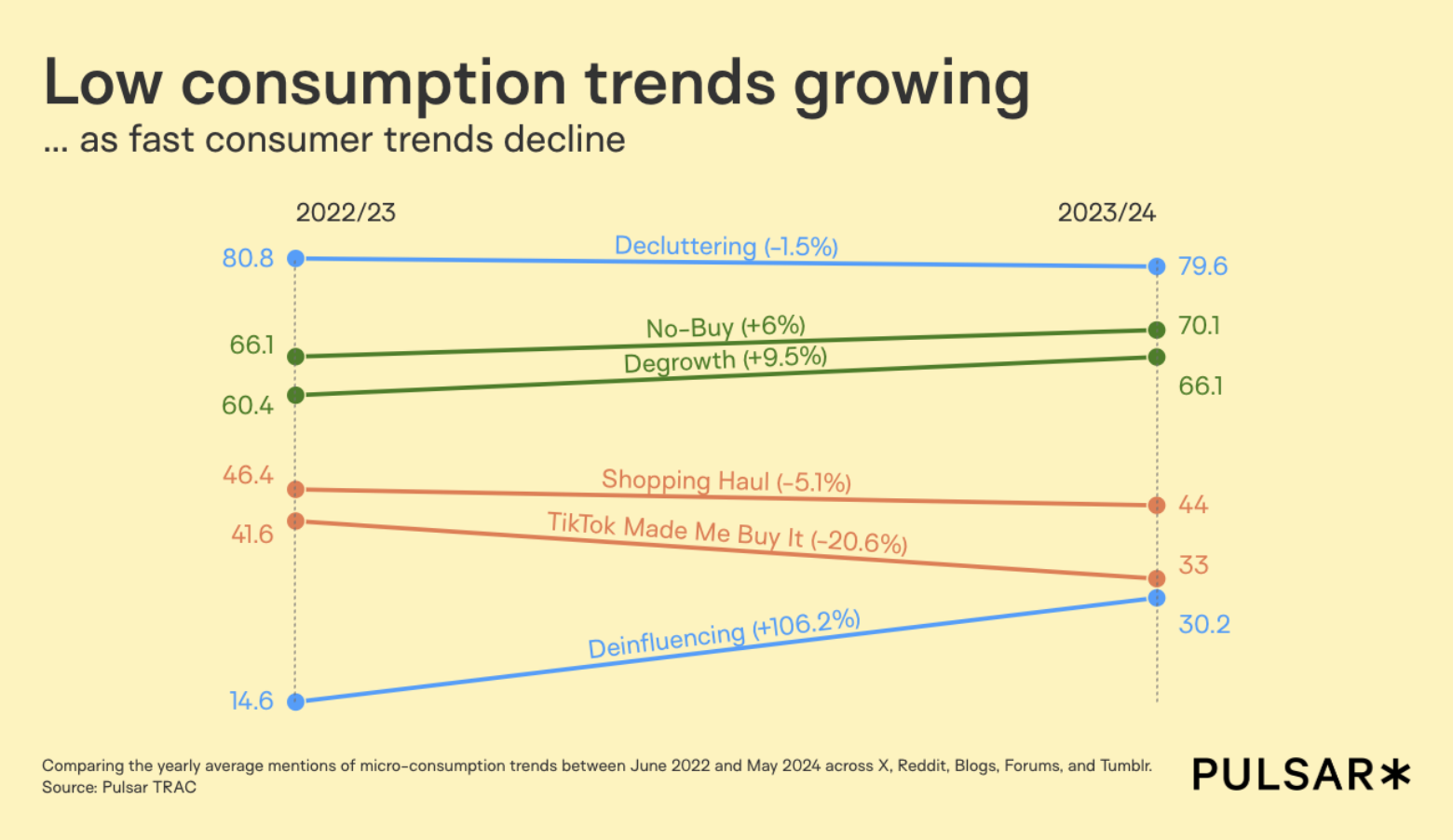
Rather than opting out entirely, these audiences are reframing what conscious consumption looks like. Audiences are being less impulsive, more intentional, and deeply tied to sustainability goals.
Degrowth propaganda is everywhere you look now
From Dutch news today:
"The Netherlands will have to get rid of the idea that electricity is available to everyone at all times"
They want us to go back to 1890? pic.twitter.com/ZvPmA5s9VO
— @levelsio (@levelsio) June 17, 2024
The frugal shift - saving money for green goals
When we dive into the data, audience intelligence reveals that sustainability isn’t always the lead motivator for these sustainable behaviours - it's also frugality. But this doesn’t signal a retreat from environmental values. Instead, financial constraints often reinforce sustainable habits: buying less, repairing more, and cutting waste.
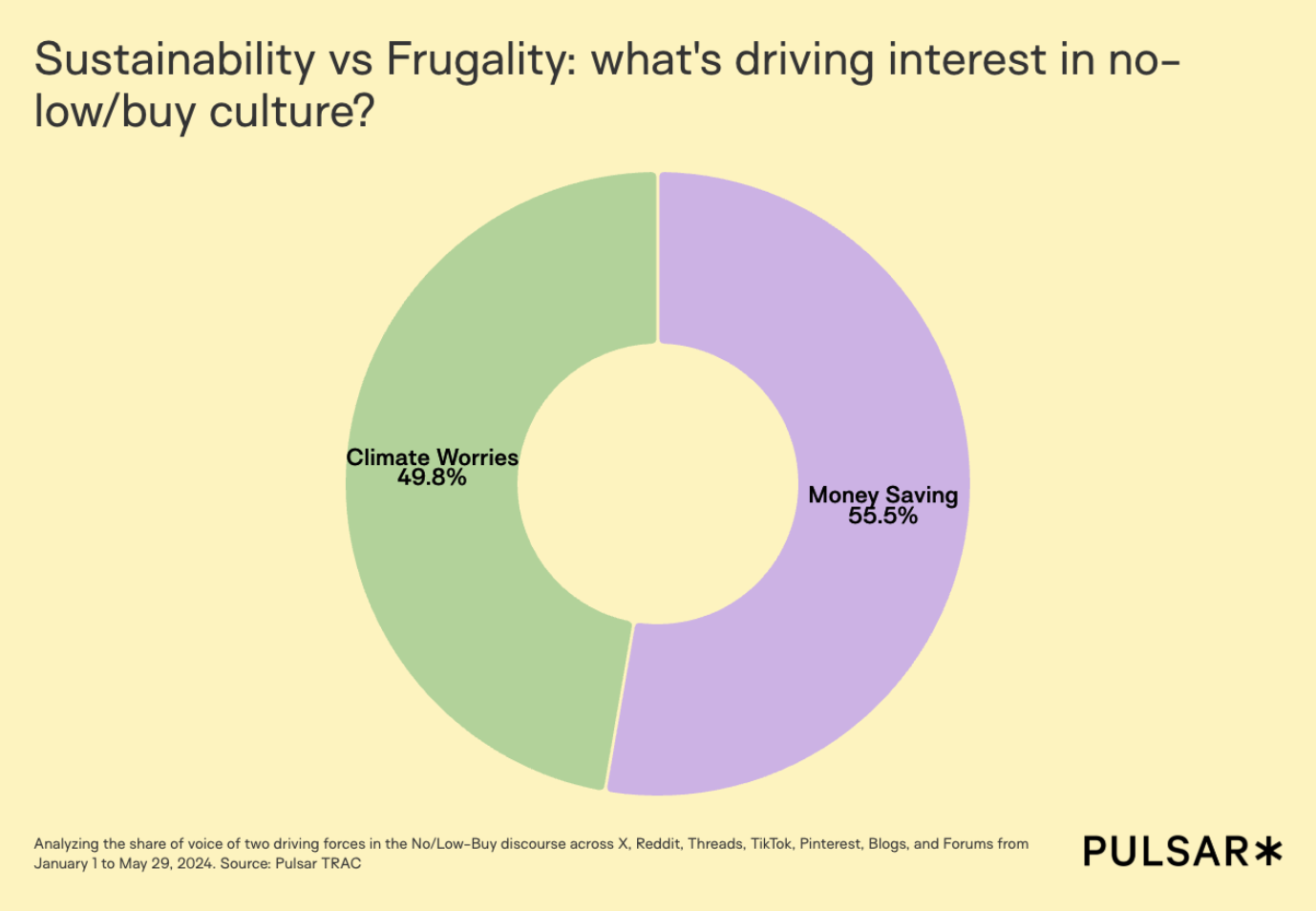
As younger demographics face economic uncertainty, they’re adopting behaviours that are both budget-friendly and environmentally conscious. Audiences are thinking about repairing over replacing, buying second hand, upcycling and community swaps. There's also a trend of 'digital decluttering', where audiences clear out files from their clogged up phones and harddrives - showing this is a psychologically motivated trend, not just a material fad.
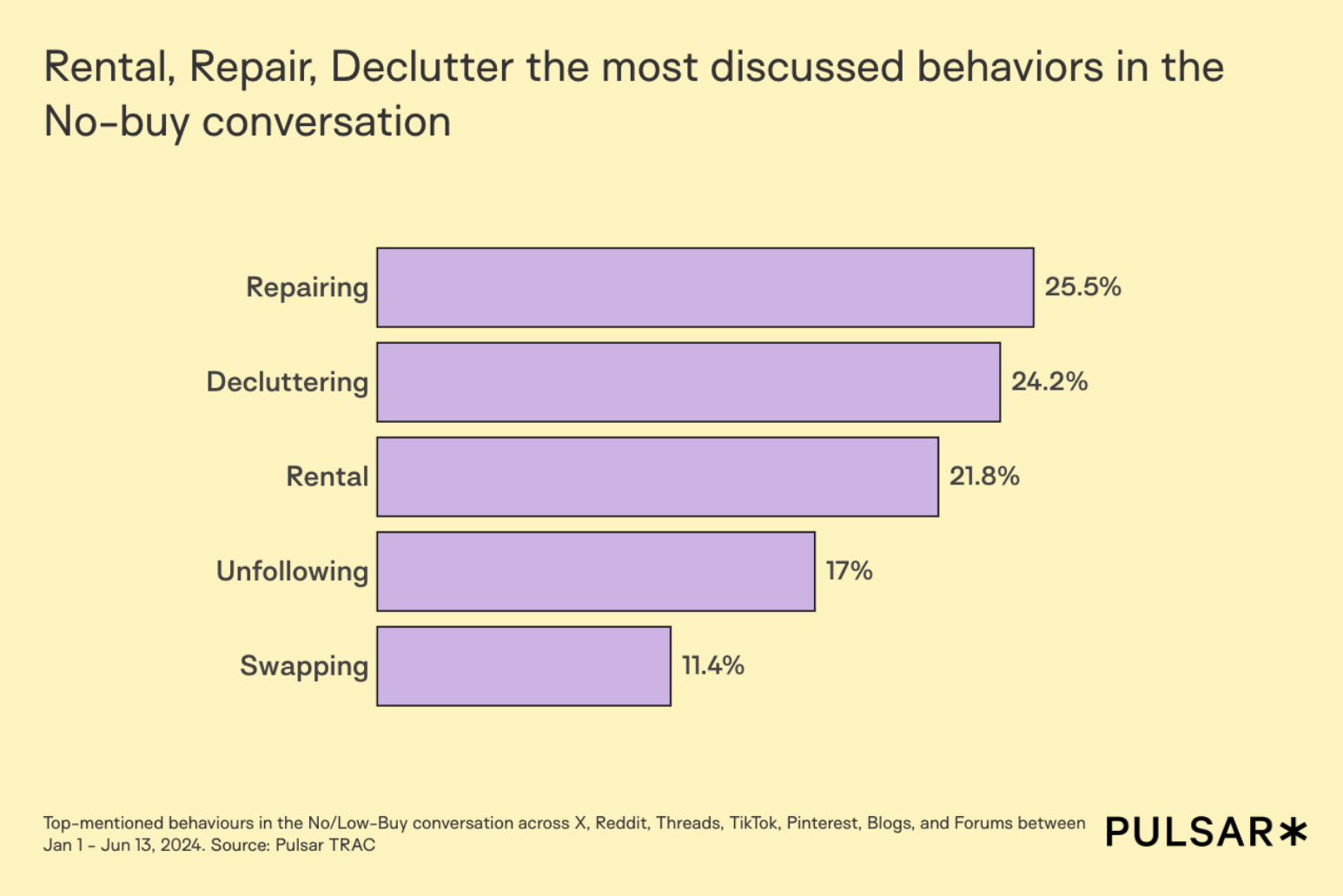
These hybrid motivations create a powerful feedback loop: frugality drives sustainability, and frugality drives sustainability.
The audiences of low-buy behaviors
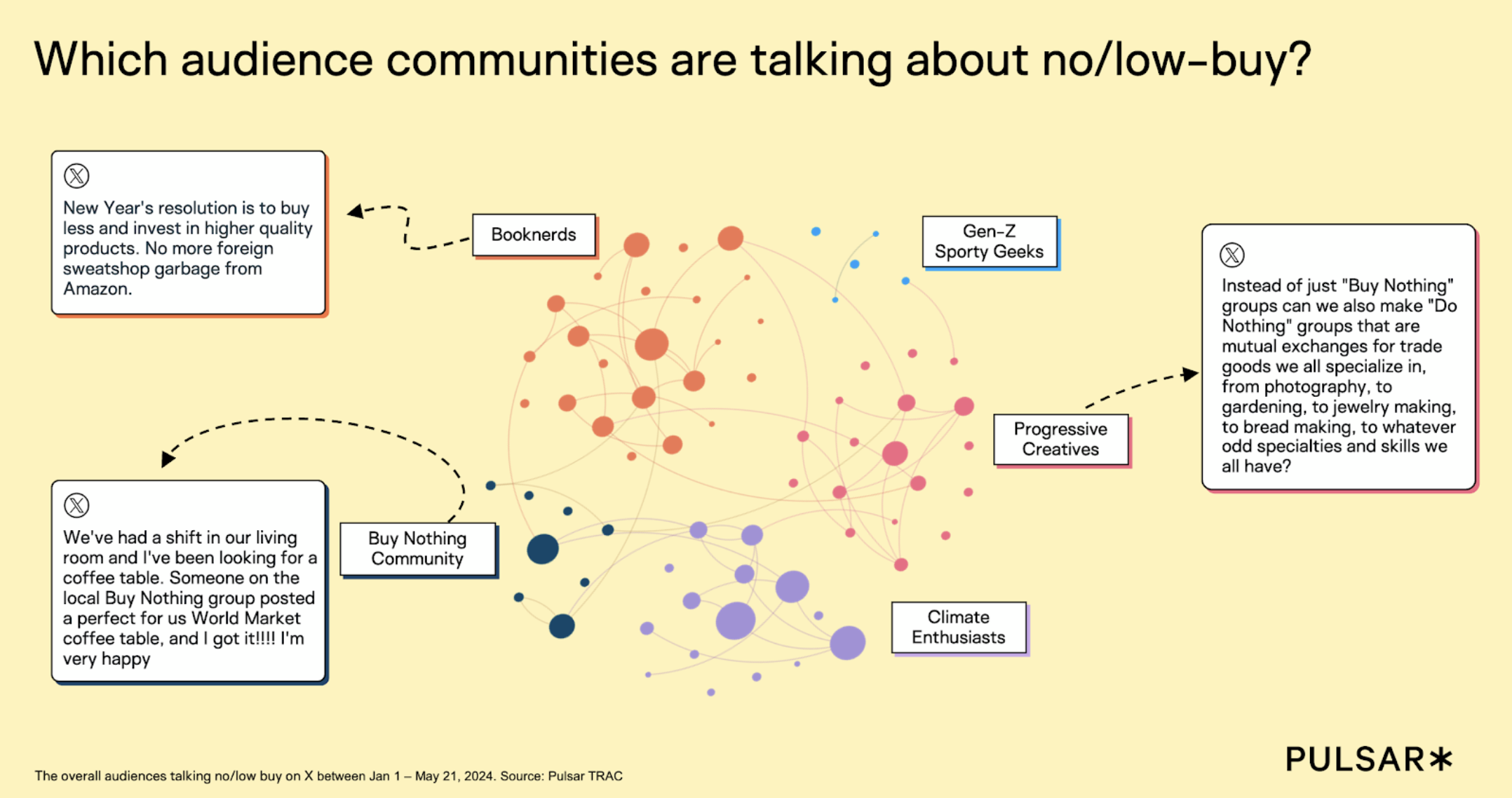
Using Pulsar TRAC, we identified five audience segments shaping the no/low-buy space. Progressive Creatives are a key force in the anti-consumption space. Mostly Millennial Americans, they focus on eco-conscious fashion and minimalist lifestyles, often challenging fast fashion through campaigns like the #75Hard Style Challenge, where users remix their outfits for 75 days without buying anything new.
Booknerds are similarly thoughtful and intentional, using no/low-buy behaviours to reflect values like discipline and self-restraint. They’ve helped carry the trend into wider, educated circles who see buying less as both practical and principled. Climate Enthusiasts tie low consumption directly to emissions goals. Their actions focus on cutting out meat, dairy, and waste-heavy products to align their consumption with urgent environmental values.
The “de-influencing” trend is such a breath of fresh air
byu/t3mp0rarys3cr3tary inGenZ
Buy Nothing Community members are deeply embedded in local networks, particularly in cities like San Francisco. For them, anti-consumption is a lifestyle rooted in sharing, mutual aid, and rejecting commercial systems in favour of community-based sustainability. Gen Z Sporty Geeks approach no-buy behaviour with humour and creativity. They engage in challenges, meme culture, and TikTok trends that turn low consumption into something fun, social, and trend-forward.
Each group contributes to a growing ecosystem of low-impact living, amplified through social platforms and supported by digital infrastructure.
What this means for brands
Sustainability is no longer limited to eco-labels or carbon-neutral packaging. It’s a mindset, and that mindset is shifting how audiences live, consume, and spend. Conversations around degrowth and low-buy trends are revealing a deep cultural re-evaluation of what it means to participate in consumer society.
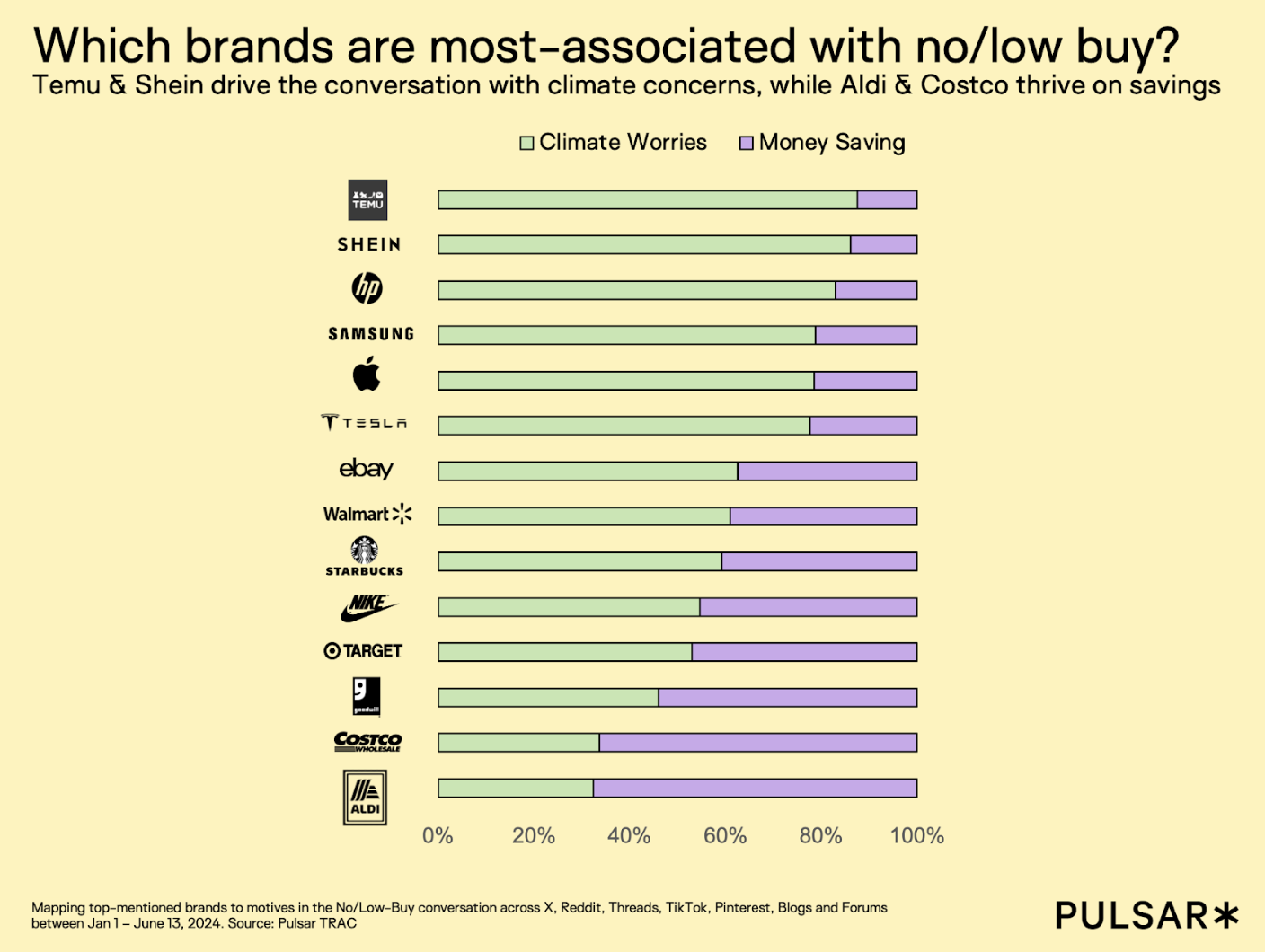
From no-buy pledges to minimalist content, sustainability now shows up in online behaviours as both a lifestyle and a value system. For brands, audience intelligence and social listening aren’t just tools - they’re essential to understanding how sustainability values are evolving in real time. Brands that miss this shift risk being called out, tuned out, or simply overlooked in favour of those aligned with the values of low-impact living.
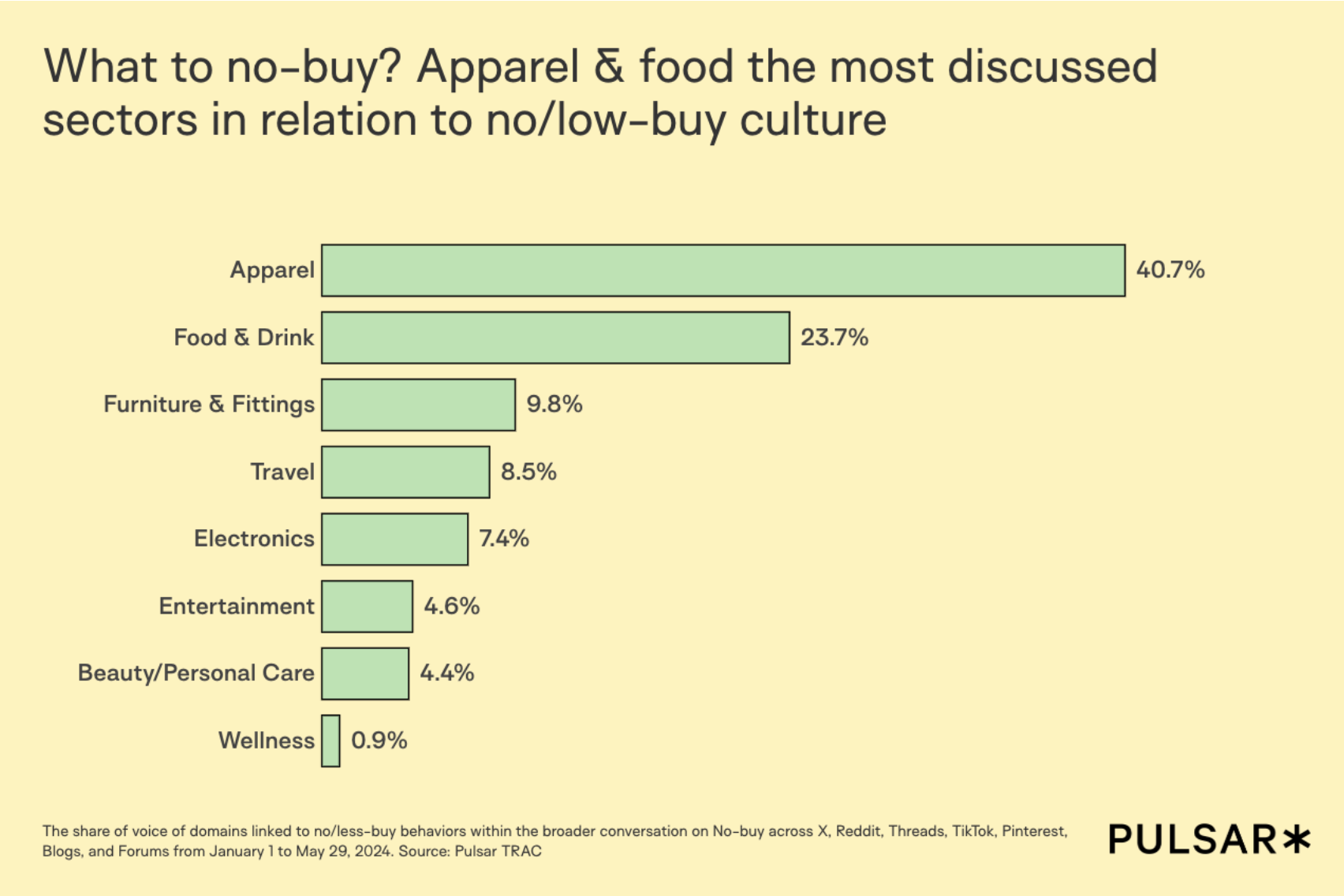
Temu and Shein are regularly called out for unsustainable practices in online forums Aldi and Costco earn praise in frugality-led conversations, even as sustainability critiques remain Digital retail platforms are being reframed as tools for conscious consumption - when used to buy second-hand, swap, or support low-waste goals
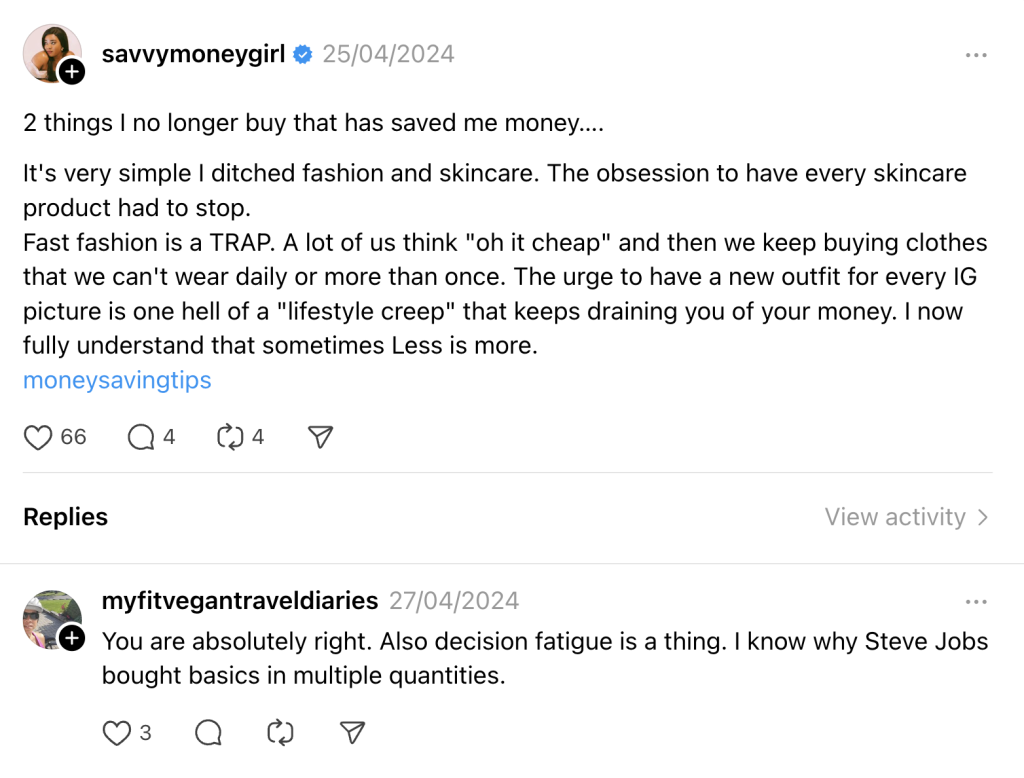
This might seem contradictory. Can massive tech platforms really coexist with anti-consumerist behaviours? Yet that’s exactly what audience intelligence reveals. Platforms are being co-opted and repurposed by consumers whose values are changing. Digital shopping, once synonymous with impulse, is being retooled for intention. Media designed to sell more is being reframed to inspire less.
For brands navigating this landscape, the lesson is clear: audiences are not passive. They are resourceful, values-led, and increasingly fluent in how they remix digital tools to reflect a sustainability mindset. To connect with them, brands must listen beyond keywords. They need to understand the cultural signals, emotional motivations, and real-world compromises driving how people consume - and how they choose not to.
Want to read more
Want to dig into the full dataset, see the visual breakdown, and explore which brands audiences trust most (and least)?
Download the full report using the form below:
Click here to go back to the Audiences of Sustainability Hub homepage.