
Green claims, called out: how audiences challenge greenwashing in sustainability
Contents:
When it comes to environmental responsibility, audiences are keeping score. From half-hearted ad campaigns to questionable product launches, brands seen to be faking their climate credentials are called out fast, and often publicly.
Using insights from our Audiences of Sustainability report (based on over 23 million social and media datapoints), we examined how the conversation around greenwashing is evolving online. Here's what we found.
The rise of the greenwashing backlash
Greenwashing isn’t new. But today, it’s a cultural flashpoint. It describes moments where a brand appears to champion sustainability, while ignoring the broader environmental impact of its operations. Think bold climate promises followed by business-as-usual practices.
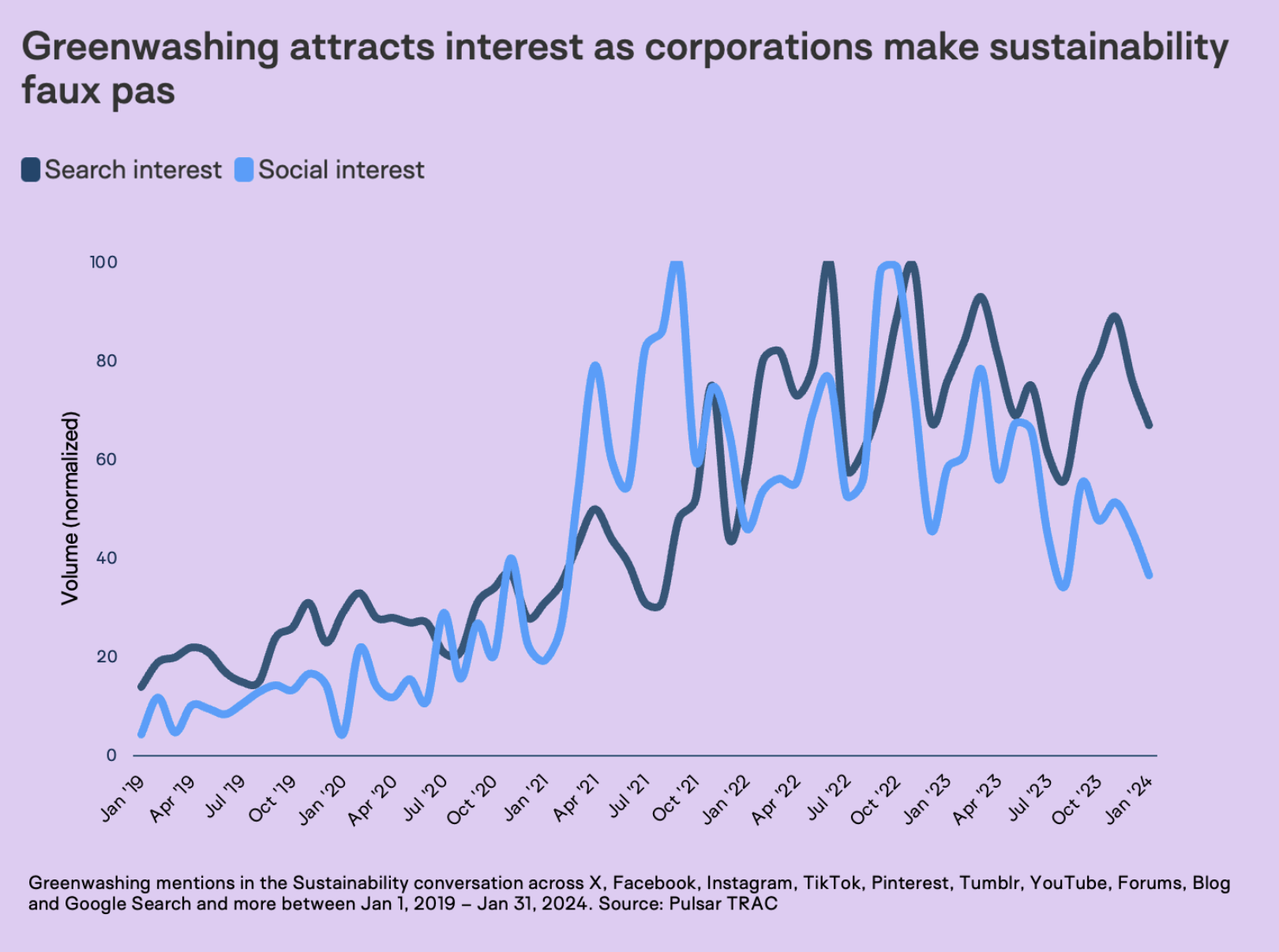
Mentions of the term have surged since 2021, alongside a growing demand for accountability. From forums to TikTok comment sections, online communities are scrutinising brand behaviour more closely than ever. If a brand talks the sustainability talk but doesn’t walk it, audiences are quick to say so.
Which brands get caught in the crossfire?
Our data shows that global giants are most likely to be swept up in the greenwashing conversation. As some of the biggest brands in the world, their scale, visibility, and complex supply chains make them easier to critique and harder to defend.
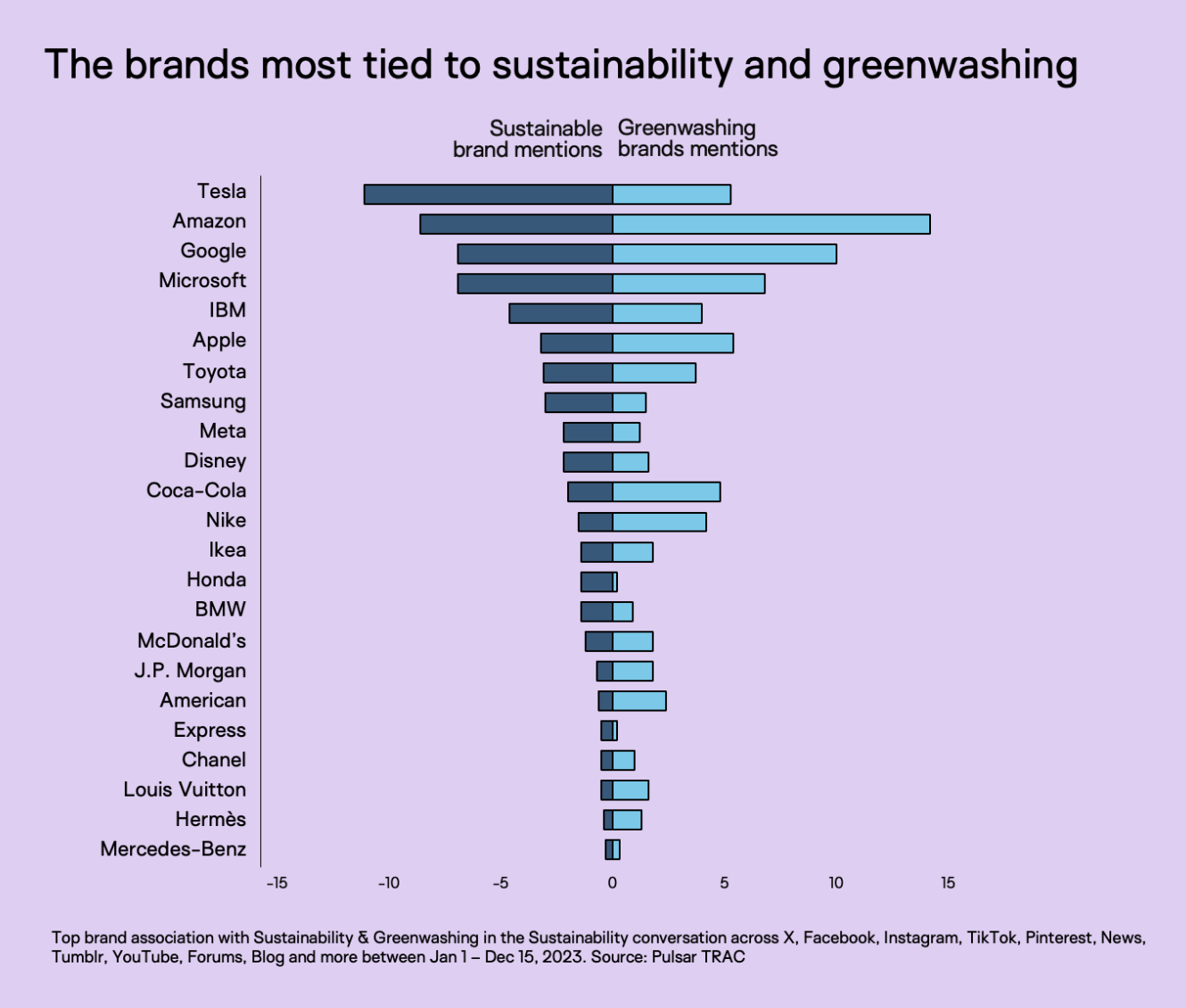
- Apple drew criticism around its 2023 carbon-neutral Apple Watch launch, with users questioning the brand’s broader sustainability strategy.
- Tesla remains an outlier. While the brand's EV mission protects it somewhat, debates around Elon Musk, misinformation on X, and concerns about EV production still cloud the conversation.
- Coca-Cola, Nike, and J.P. Morgan were repeatedly name-checked in posts calling out inconsistencies between their messaging and their practices.
Greenwashing isn’t always framed negatively, but positive uses of the term remain rare. Much of the discourse is laced with cynicism, especially when brands are perceived to be masking old problems with new buzzwords.
Words that trigger audience suspicion
Language matters. Certain words regularly appear alongside greenwashing accusations — and not always in a good way.
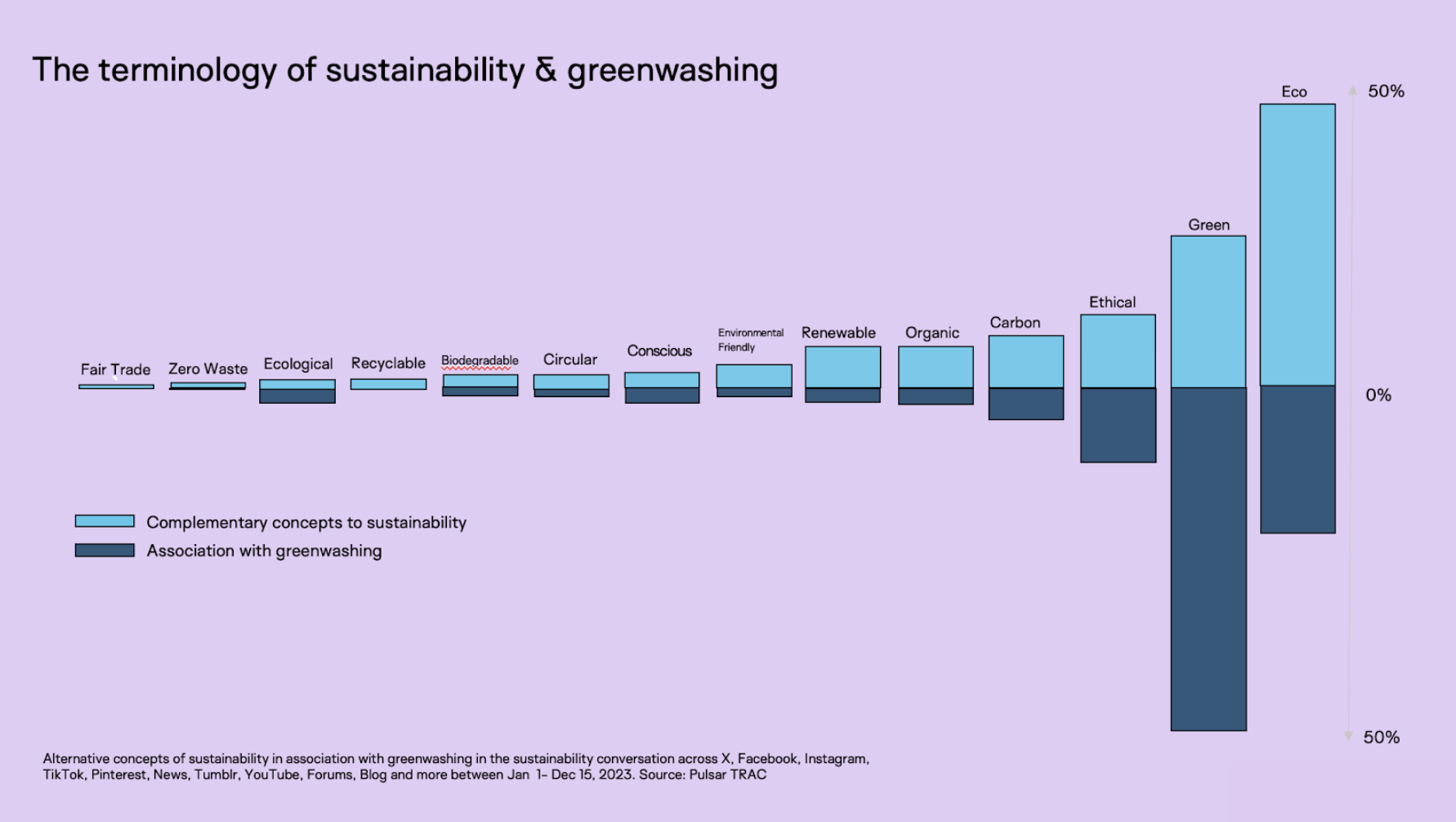
- "Green" is closely tied to the term itself, with many online users seeing it as vague or overused.
- "Ethical" and "Conscious" frequently pop up in sceptical posts, where consumers doubt a brand’s moral positioning.
- "Ecological" and "Circular" are also pulled into the conversation, suggesting a broader tension around the language of environmentalism and its real-world impact.
As the vocabulary of sustainability becomes more widespread, it also becomes more contested. Words that once carried hope are now met with scrutiny.
What this means for brands
The message is clear: sustainability messaging needs to be specific, transparent, and backed by real action. Brands operating at scale will always be under the spotlight, but honest storytelling and meaningful progress can change the tone of the conversation.
Want to dig into the full dataset, see the visual breakdown, and explore which brands audiences trust most (and least)?
Download the full report using the form below:
Click here to go back to the Audiences of Sustainability Hub homepage.