
Sustainability & Behaviour: how values, compromise and culture shape action
Contents:

With Melissa Nassimiha, Insights Manager, Colart and Katrina Russell, Associate Director, Sign Salad. Moderated by Alex Bryson and Dahye Lee from Pulsar.
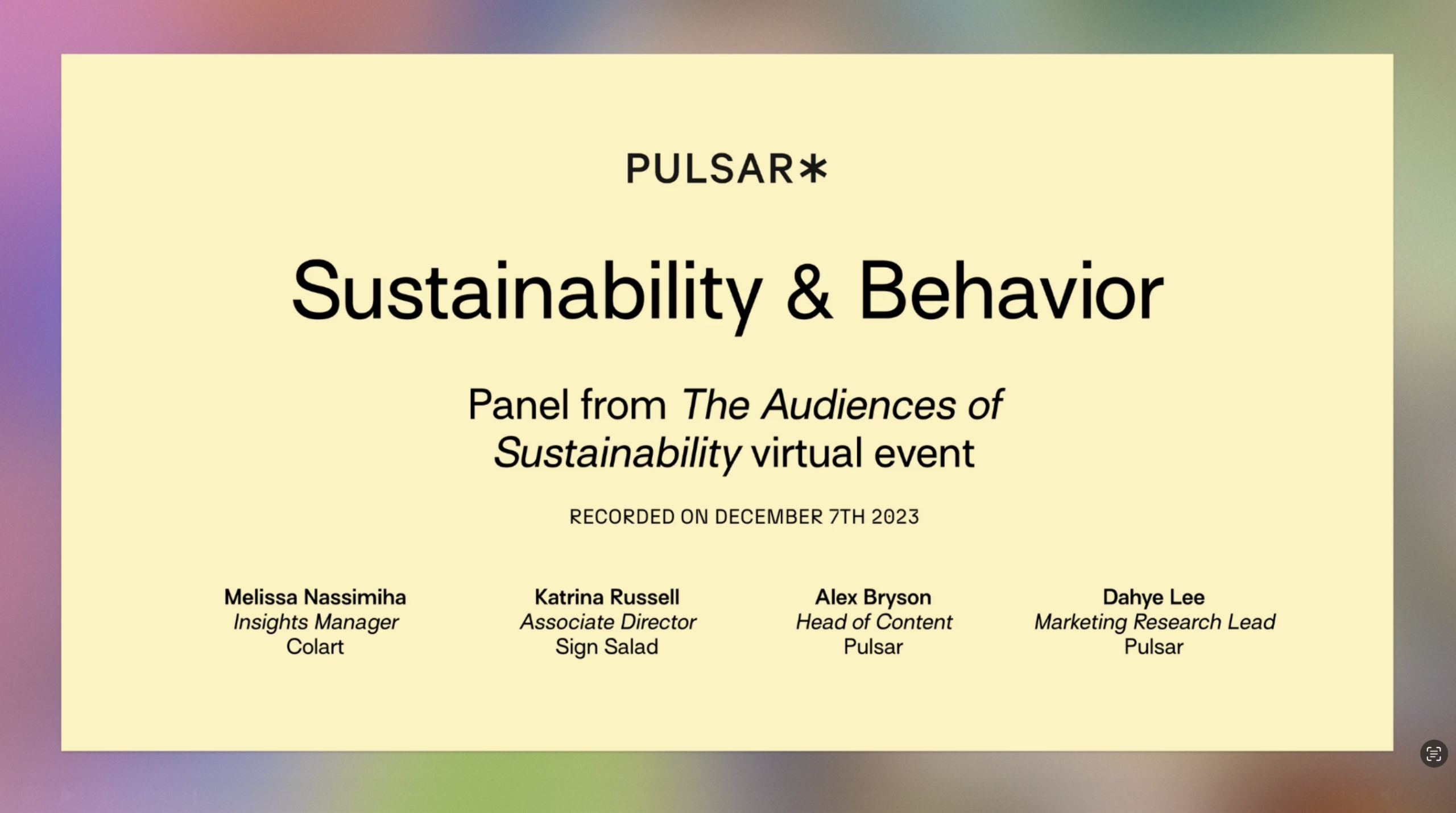
From thrifting to train travel, de-influencing to dietary shifts, sustainability shows up in the behaviours people practise every day. But what motivates those choices? And how do different communities balance the tension between ethics, enjoyment and compromise?
This session from Pulsar's Audiences of Sustainability digital event brought together experts in cultural insight and behavioural research to unpack the signals beneath the surface.
What we explored
Sustainability behaviours reflect deeper cultural identities
Audiences aren’t just "acting green", they’re integrating sustainability into their identities. Pulsar’s data revealed that individual behaviours like reducing meat consumption, choosing thrifted goods, or growing your own food are deeply tied to how people understand their values, their identity, and their role in society.
Here we can see the customer's transition to other societal values and the personal preference in sustainable behaviour like reduced meat consumption and thrifting. Particularly among younger generations, these personal acts of sustainability represent not just environmental consciousness but also an aesthetic and cultural statement.
Katrina Russell linked these behaviours to broader historical patterns: "There’s this kind of resonance still of the idea of make do and mend… even tapping into a post-World War II kind of culture of rationing and austerity. The residue of which is still re-emerging." These behaviours may appear modern, but they’re grounded in longer traditions of resilience and resourcefulness.
Compromise is a key theme
One of the most resonant takeaways from the panel was the role of compromise. Melissa shared findings from Colart’s behavioural science-led research into artists, revealing that while they are deeply socially conscious, sustainability often takes a back seat when it comes to their creative materials.
As Melissa outlines in the video above, artists "try to do their best in other areas of their lives," she said. "But when it comes to their art - their passion, their work, what makes them feel good - they want to make sure they trust the results. They trust the quality of the product. So they’re willing to close an eye on sustainability when it comes to art."
Even more revealing: when asked what mattered most, Colart found artists ranked their art first, their health second, and the planet third. Melissa emphasised that this doesn't signal a lack of concern, but it reflects the specific values and trade-offs at play within that audience.
Motivation matters: it’s not just about duty
Looking at longitudinal data from 2021 to 2023, Dahye showed a shift in what drives sustainable behaviour. Financial concerns have surged as a primary motivator - "money saving has become the predominant motivator," she explained - while moralistic motivators like duty and guilt have declined.
Instead, "hope" and "habit" are on the rise. These new motivators suggest that sustainability is being absorbed into daily life. "The influence of habit is becoming increasingly crucial in driving sustainable behaviour change, especially amongst the younger generation," said Dahye. Sustainability is no longer just a call to action, it’s something people are embedding into their routines and aspirations.
Class and access shape sustainable action
As Katrina pointed out, many sustainable behaviours require more than good intentions - they also require time, space, and financial flexibility. "A lot of these ideas assume that you have a certain amount of disposable time, or even just outdoor space for yourself," she said. Practices like growing your own food, drying clothes outside, or shopping sustainably can subtly exclude those without such privileges.
At the same time, premium sustainable brands often target wealthier audiences. "More sustainable brands tend to come at a higher premium," Katrina noted, making affordability a barrier even for those with strong values.
Katrina explained how this plays out visually in branding: "Sustainability is becoming less and less visually green... It’s kind of becoming more of a universal language that isn’t just confined to references to nature or having a leaf icon."
Behavioural insights can guide brand strategy
So what should brands do? Both Melissa and Katrina shared how understanding behavioural context can lead to better product development, communication, and long-term strategy.
"The key thing to do is identifying what are the barriers to sustainable behaviour," said Melissa. Whether it’s time, price, or quality, understanding those blockers is the first step. At Colart, that means tackling assumptions about sustainable product performance head-on: "We’re going to communicate about that. We’re going to reassure them on quality."
Katrina added that understanding sustainability through the lens of a specific category is crucial. "It’s also about appealing to people who aren’t already talking about sustainability." That means finding the overlap between what matters to audiences in a category - like coffee, fashion, or tech - and the sustainability conversation happening more broadly.
Watch the full recording
Find the full recording of Sustainability & Behaviour below.
Click here to go back to the Audiences of Sustainability Hub homepage.