Social Listening for the Pharmaceutical Sector: A Practical Guide to Audience and Narrative Intelligence
The pharmaceutical landscape of 2026 is defined by a paradox of unprecedented innovation and deepening skepticism. While the industry achieves clinical breakthroughs in gene therapy and metabolic health, it simultaneously navigates a digital ecosystem where a single viral narrative can destabilize years of reputational capital. In this environment, the traditional methods of market research—static surveys and retrospective data—are insufficient. Pharmaceutical leaders now require a more sophisticated toolkit: Audience and Narrative Intelligence.
For the modern pharmaceutical marketer, social listening is no longer just about tracking brand mentions or managing customer service inquiries. It has evolved into a foundational capability for understanding the "climate" of public trust, rather than just the "weather" of daily headlines. By leveraging the Pulsar framework of Listen, Map, and Activate, organizations can move from reactive monitoring to proactive meaning-making, identifying the belief systems that drive patient behavior and healthcare professional (HCP) decision-making.
Narrative Intelligence for Pharma: Concrete Applications
To understand the power of narrative intelligence, we must look at how it applies to specific therapeutic areas and market shifts in 2025.
The Medicalization of Psilocybin vs. Cannabis
The trajectory of psilocybin provides a masterclass in narrative divergence - we dove deep into the conversation in our Psilocybin report. While often compared to cannabis, audience intelligence reveals that psilocybin is following a distinct path toward medicalization rather than high-street legalization. The primary driver of this conversation is the focus on complex psychological disorders—depression, anxiety, PTSD, and addiction—which require a level of medical oversight that a standard dispensary cannot provide.
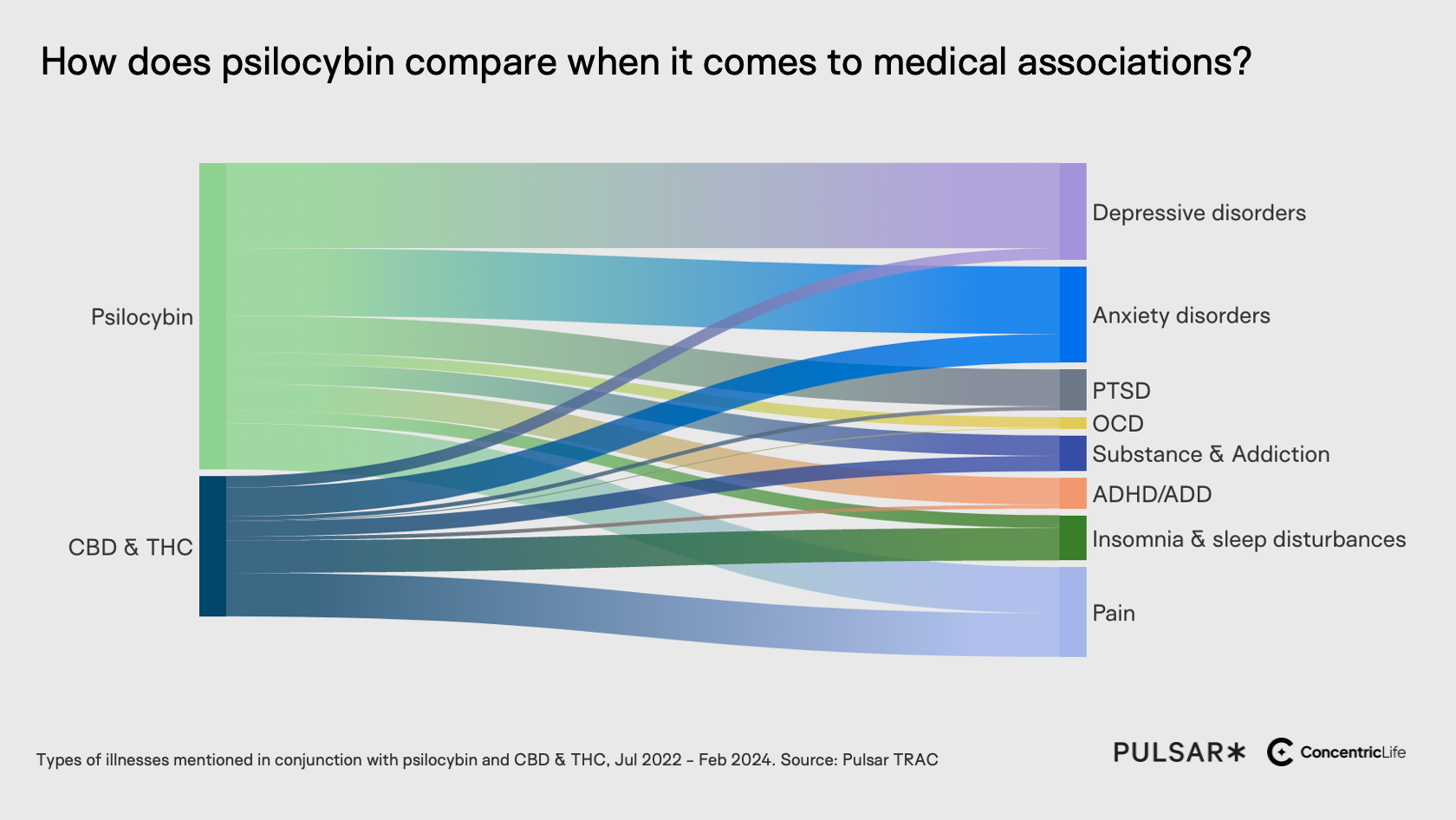
Narrative mapping shows that while cannabis delivery moved toward masking taste with gummies and chocolates, the medical narrative for psilocybin favors precisely dosed capsules and pills, emphasizing safety and efficacy. Understanding this "proven FDA-centric medicine" narrative allows pharmaceutical companies to position themselves as credible developers of legitimate mental health "wonderdrugs," distancing their products from historical stigmas.
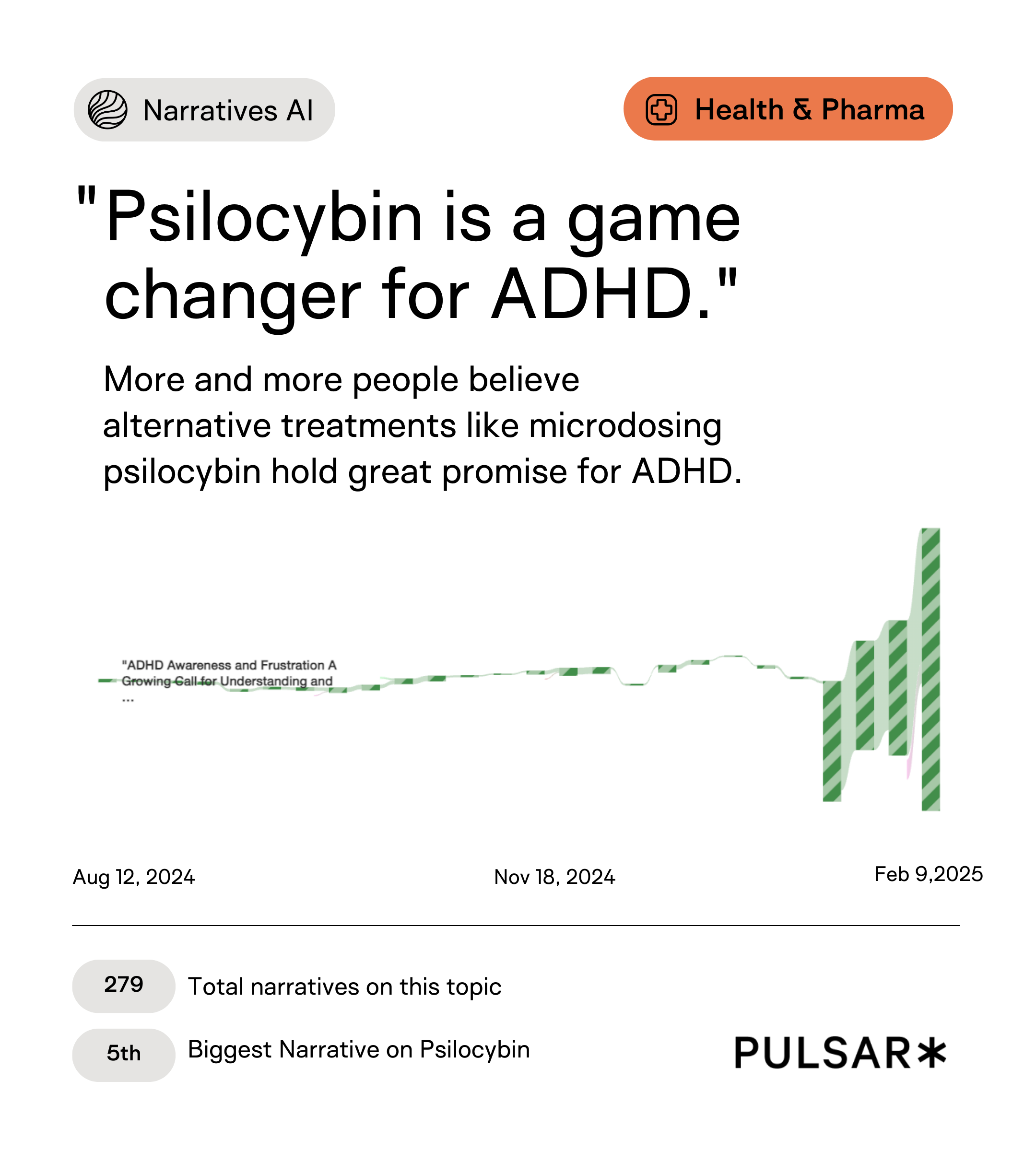
What social listening reveals about public attitudes towards psilocybin
| Feature | Psilocybin Narrative Path | Cannabis (CBD/THC) Path |
| Primary Clinical Focus | Depression, PTSD, Addiction | Pain, Insomnia, Wellness |
| Regulatory Framework | Prescription/Licensed Medicine | High-street Consumer/Recreational |
| Core Audience Sentiment | Medical "Wonderdrug" for Mental Health | Lifestyle/Physical Symptom Management |
| Preferred Format | Dosed Capsules/Pills | Edibles, Oils, Raw Flower |
Metabolic Health and the GLP-1 Tension
The rise of GLP-1 weight loss drugs, such as Ozempic and Wegovy, has created a complex web of narratives involving metabolic health, sugar management, and patient archetypes. Pulsar's research into sugar-related conversations revealed a behavioral cycle of "Balance, Cravings, Binge, and Guilt," which often underpins the patient experience with weight-management medications.
Furthermore, audience intelligence has surfaced a significant narrative tension between diabetic patients who rely on these drugs for insulin regulation and "healthy" individuals using them for aesthetic weight loss. This tension is exacerbated by supply chain challenges, leading to a "reckoning" where brands must navigate ethical questions about patient prioritization and accessibility. By mapping these divergent voices, brands can balance mass-appeal celebrity moments with evidence-driven messaging, ensuring they don't alienate the core medical communities that form their long-term customer base.
Reputation Management in a Volatile Political Climate
In 2025, pharmaceutical reputation is no longer shaped by isolated incidents; it is shaped by how narratives form and stabilize across audience ecosystems. The industry is currently contending with an aggressive regulatory environment, driven by both the Inflation Reduction Act (IRA) and executive orders aimed at lowering drug costs.
The Gap Between Price and Value
The reputation of "Big Pharma" is also under pressure from the launch of high-cost gene therapies. According to the Campaign for Sustainable Rx Pricing, there was an inflation-adjusted median annual list price increase of 24% between 2022 and 2024, with some treatments reaching over $4 million.
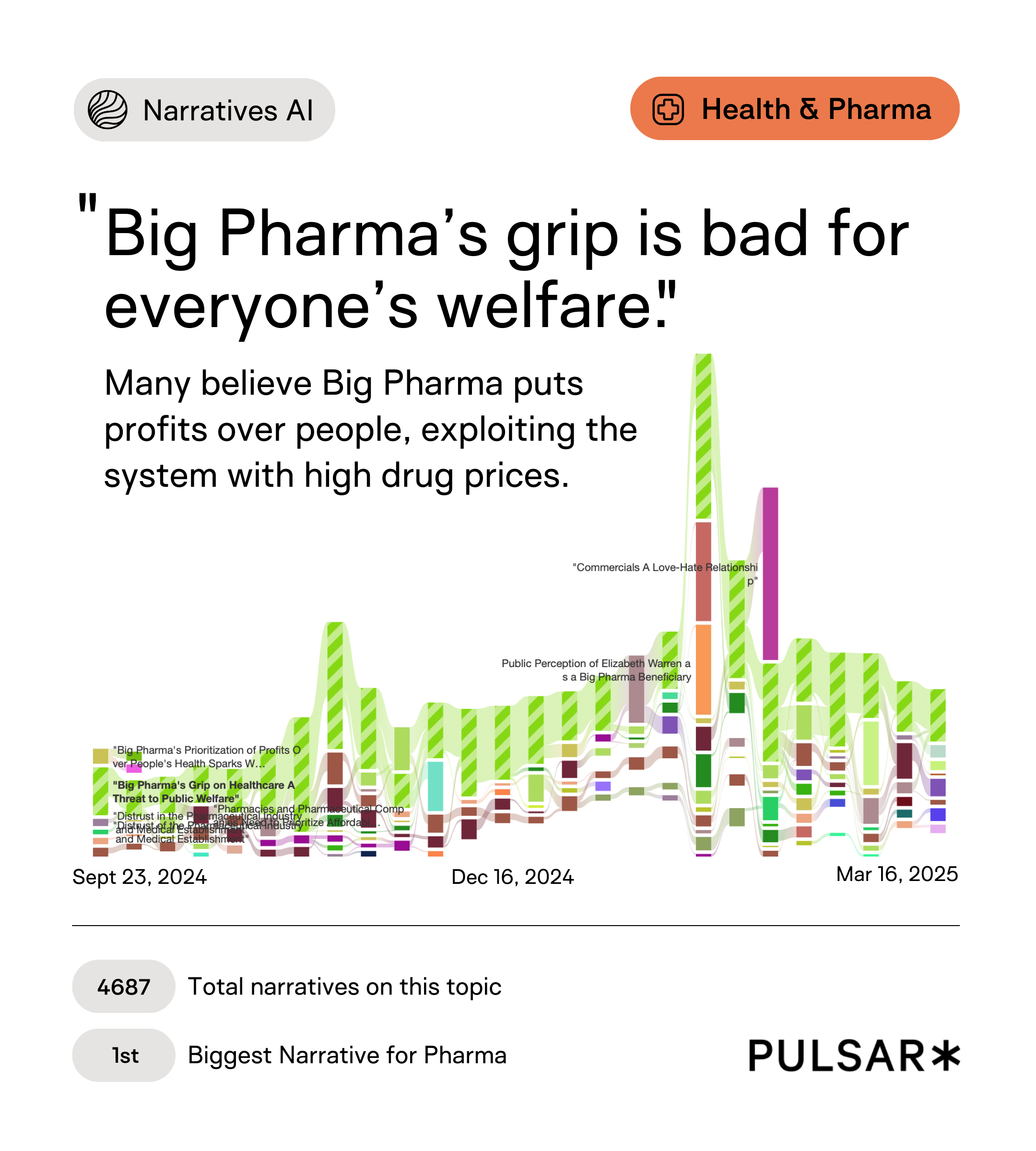
Narrative analysis highlights a growing disconnect between these out-of-control launch prices and clinical value benchmarks.
| Innovative Treatment | 2025 List Price | Estimated "Fair Price" | Delta (Price vs. Value) |
| Lenmeldy | $4.2M | $2.3M | $1.9M |
| Hemgenix | $3.5M | $1.3M | $2.2M |
| Lyfgenia | $3.1M | $1.5M | $1.6M |
| Roctavian | $2.9M | $1.2M | $1.7M |
Social listening identifies these "egregious pricing" narratives early, allowing brands to respond with transparency and market-based solutions before the headlines lead to Medicare formulary changes or revoked drug approvals.
Audience Intelligence for Clinical R&D
The application of audience intelligence extends deep into the R&D lifecycle. Innovative science is growing in parallel with an increasing proportion of novel therapeutic modalities, such as cell and gene therapies, entering clinical trials. However, over half of new prescriptions for novel medicines go unfilled, often due to benefit design and high out-of-pocket costs.
Accelerating Trials through Digital Epidemiology
In the pharmaceutical sector, social listening has moved from a monitoring tool to a core capability for audience and narrative intelligence. During COVID-19, it proved especially valuable for identifying behavioural risk, trust gaps, and emerging misinformation faster than traditional research.
Oxford University’s Ethox Centre and UCL’s RREAL (Rapid Research, Evaluation and Appraisal Lab) used Pulsar TRAC and CORE to get up-to-the-minute information to aid in creating solutions to never before seen public health problems. Pulsar was used to detect and map coordinated anti-vaccine narratives in real time, including the rapid spread of the #Nuremberg2 conspiracy cluster. This enabled earlier policy recommendations and communication responses than survey-based methods, which typically lag by months.
In parallel, the COVID Vaccine Sentiment Index—built using Pulsar Platform—tracked public sentiment toward Pfizer, Moderna, AstraZeneca, and Johnson & Johnson. By correlating sentiment shifts with trial updates, regulatory decisions, and supply-chain events, the analysis showed how reputation evolves alongside scientific progress and media exposure.
Crucially, RREAL compared public conversation with clinician discussion on Sermo, revealing persistent gaps between professional confidence and public uncertainty. Treating these groups as distinct audiences—rather than a single “public”—made it possible to identify where trust was stable, where misinformation was accelerating, and which communities required targeted intervention.
For clinical development, this approach supports earlier identification of localised scepticism, improving trial site selection, recruitment messaging, and community engagement before participation is disrupted.
In practice, RREAL’s work demonstrates that social listening, when applied through audience and narrative intelligence, functions as decision support for public health, regulation, and trust—rather than a peripheral analytics layer.
Social Listening for Pharma: from Monitoring to Meaning
Social listening in the pharmaceutical sector has progressed from basic monitoring to audience and narrative intelligence. Traditional approaches focus on volume, keywords, and sentiment to identify immediate risks. While useful, these signals rarely explain the cultural drivers shaping trust, behaviour, and long-term reputation.
Audience intelligence focuses on who is speaking. By clustering conversations into communities and behavioural segments, pharmaceutical organisations can understand how different patient, caregiver, and professional groups discuss health issues, treatments, and institutions—using their own language and values rather than broad demographics.
Narrative intelligence explains why these conversations matter. It identifies the belief systems and story patterns underpinning public discourse, such as mistrust of pharmaceutical pricing or expectations of ethical responsibility. This enables brands to anticipate pressure points and respond with cultural relevance rather than reactive messaging.
The Listen–Map–Activate Framework
A structured framework is essential for turning social listening into strategic value in regulated healthcare environments.
Listen captures unfiltered public health conversations across platforms such as Reddit and TikTok, providing insight into lived experiences, unmet needs, and emerging concerns. Advanced filtering allows analysis by geography, role, or stakeholder type, while historical data reveals how narratives evolve over time.
Map synthesises large-scale conversation data into meaningful audience and narrative structures. Mapping exposes patient journey stages, emotional drivers, weak signals, and shifts in trust that may not appear in traditional media analysis.
Activate applies these insights to strategy. Narrative-led activation supports clearer education, targeted engagement, and more credible participation in health conversations. At this stage, the value of social listening becomes measurable through improved alignment, trust, and long-term decision-making.
Conclusion: Social Listening as Strategic Infrastructure for Pharma
In 2025, social listening for the pharmaceutical sector has evolved into strategic infrastructure. As innovation accelerates across gene therapy, metabolic health, and novel modalities, public trust is increasingly shaped by decentralised, fast-moving narratives rather than institutional authority or clinical evidence alone. Audience and narrative intelligence provide the only scalable way to understand how these narratives form, who drives them, and where they influence behaviour across patients, healthcare professionals, policymakers, and caregivers.
For pharmaceutical organisations, the shift is structural. Monitoring brand mentions or sentiment in isolation no longer explains risk, opportunity, or adoption. What determines outcomes is how beliefs stabilise across communities, how ethical tensions emerge around access and pricing, and how different stakeholder groups interpret scientific progress through their own lived experiences. Social listening, when applied through audience segmentation and narrative mapping, makes these dynamics visible early enough to inform decision-making.
The Listen–Map–Activate framework operationalises this capability in regulated environments. Listening captures unfiltered health discourse at scale. Mapping reveals how narratives, trust gaps, and behavioural drivers differ by audience and geography. Activation translates insight into credible engagement, evidence-led education, and risk mitigation across communications, market access, clinical development, and public affairs.
Looking ahead to 2026, pharmaceutical leadership will increasingly depend on the ability to anticipate narrative pressure before it becomes reputational or regulatory risk. Organisations that embed audience and narrative intelligence into their research, strategy, and governance workflows will be better equipped to navigate political scrutiny, ethical expectations, and fragmented patient journeys. In a digital health ecosystem where trust is continuously negotiated, social listening is no longer an insight layer; it is a prerequisite for sustainable growth and public legitimacy in the pharmaceutical industry.
To stay up to date with our latest insights and releases, sign up to our newsletter below: