
3. Why some investigative journalism stories go viral—and others don’t
Table of contents
Investigative journalism plays a vital role in exposing hidden truths, holding power to account, and shaping public discourse. But in today’s digital media landscape, not all investigations break through. Some investigative scoops dominate headlines and social platforms for weeks—others struggle to survive for long outside the newsroom.

This blog draws from our wider investigation into how investigative journalism spreads in the digital age—a report that dissects the audience dynamics behind some of the biggest scoops in recent media.
The full report includes:
- AP’s exposé on food brands using U.S. prison labour
- Reuters’ reporting on labour exploitation at LVMH and Armani
- BBC’s Burning Sun documentary, exposing abuse in the K-Pop industry
Let's focus on one case in particular: the Associated Press (AP) exposé on U.S. prison labour, which named major food brands involved in exploitative systems. Using the Pulsar TRAC audience intelligence platform, we tracked how the story moved across platforms, who shared it, and why it failed to gain mainstream traction.
For the full report, fill in the form at the bottom of the page.
Why some stories never break out of the bubble
On January 29, 2024, the Associated Press published a major investigative report on how U.S. food companies benefit from prison labour. On X, the story experienced a short-lived spike—mostly driven by journalists and activist accounts.
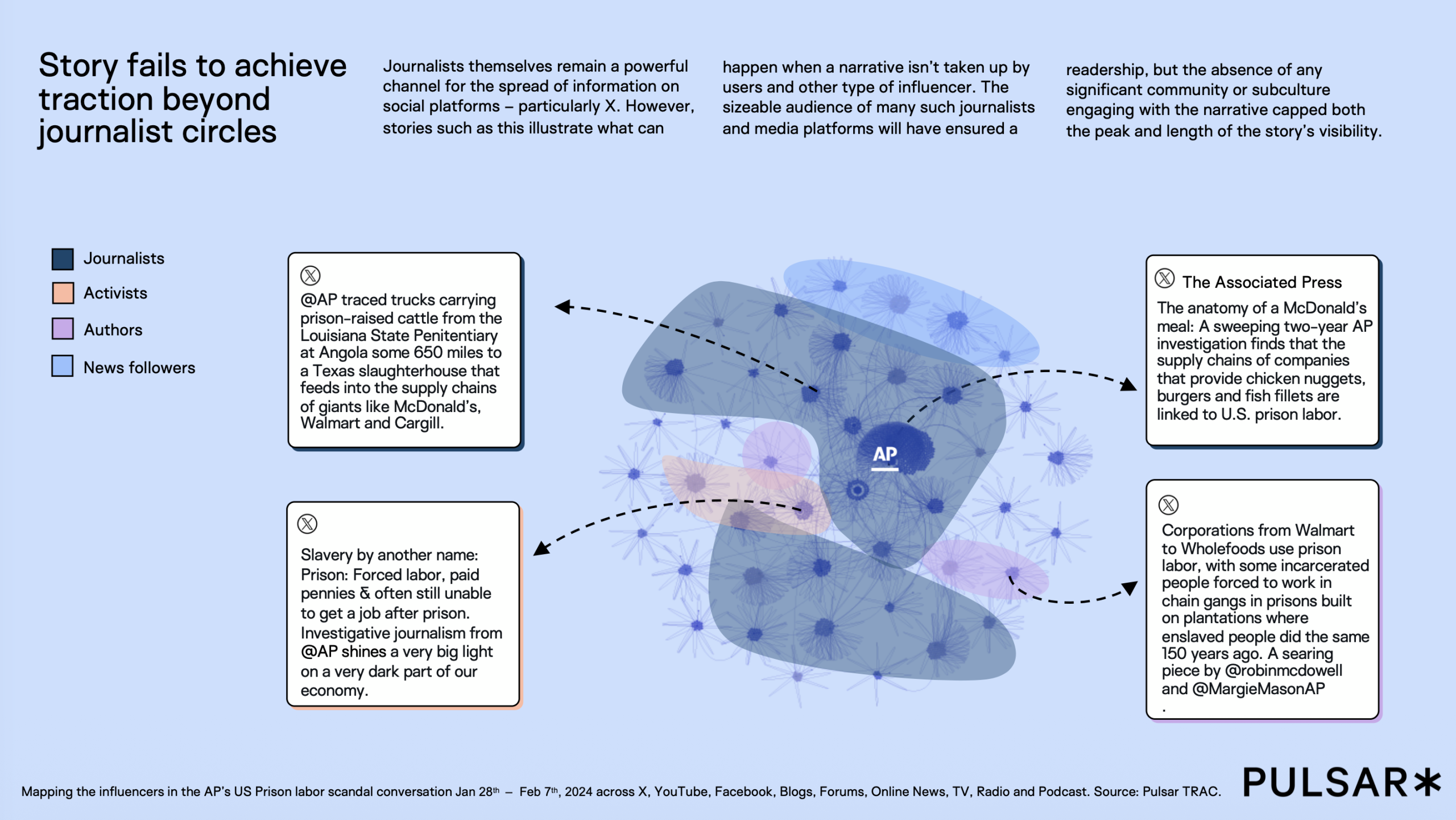 However, engagement dropped off quickly. On forums, many users dismissed the story as unsurprising, reflecting a kind of scandal fatigue around corporate ethics. Without uptake from strong identity-driven or interest-based communities, the story failed to cross into mainstream cultural conversation.
The case illustrates a key point in modern digital journalism: even impactful reporting needs community momentum to extend its visibility. Journalist amplification is important—but insufficient on its own.
The branding impact of limited media virality
Even when an investigative story doesn’t achieve widespread attention, brands named within it can still find themselves embroiled in public backlash. The AP’s prison labour investigation may not have broken into the mainstream, but it left a mark—and for some brands, that mark was significant.
Walmart became the focal point of conversation largely due to one viral post that surfaced above the fold, making it appear more implicated than others regardless of deeper context. Coca-Cola, meanwhile, was widely mentioned by everyday users, suggesting that the brand had become symbolic of broader corporate exploitation narratives. Aldi, on the other hand, was mostly mentioned by media sources—with little pickup in public discourse, limiting its reputational exposure.
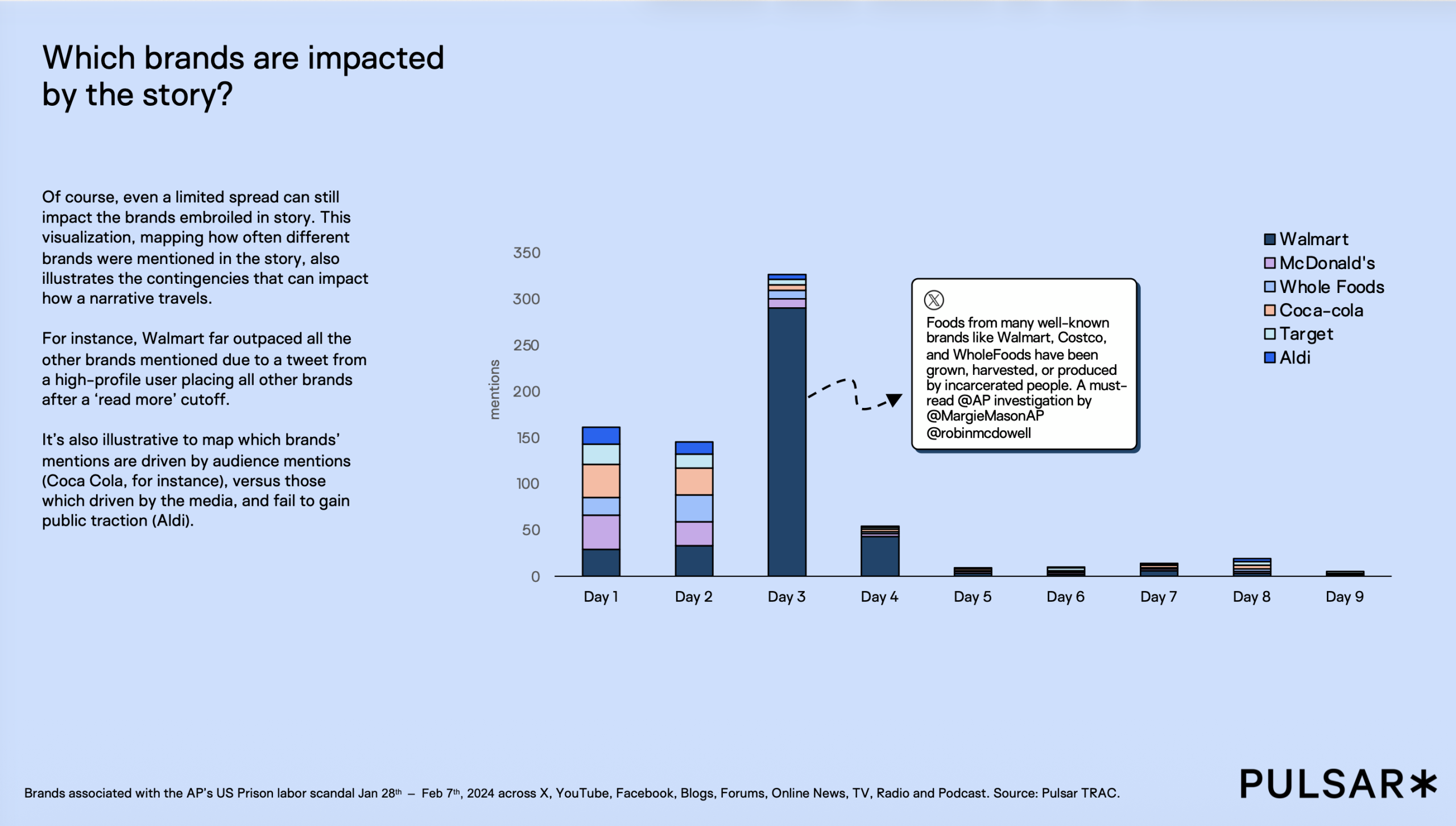
This variation matters. Brands don’t need mass coverage to face risk. Sometimes, a single piece of virality—driven by audience framing or influencer emphasis—is enough to anchor a brand to a scandal. In an environment where visibility equals vulnerability, even short-lived stories can have lasting consequences for brand trust and identity.
Some scoops travel further than others: the full report
This report captures something essential about today’s media ecosystem: that the success or failure of investigative journalism isn’t just about the strength of the story—it’s about the structure of the audiences online. Communities, platforms, and attention dynamics now dictate what gets seen, shared, and remembered.
In the full report, we compare this case with:
- Reuters’ reporting on LVMH and Armani, which gained traction through influencer commentary and fragmented interest groups
- The BBC’s Burning Sun documentary, which went viral due to coordinated sharing among global K-pop fandoms and the native dynamics of YouTube
Together, these cases map the anatomy of investigative journalism virality—from community alignment to platform-native storytelling. Some stories burn fast and bright, fuelled by fandoms or influencers. Others fade quickly, regardless of their importance. Understanding that difference is no longer optional—it’s strategic.
To read the full report, fill out the form below: