7. Seeking Audiences: Journalism in the Platform Era – London Event
Table of contents
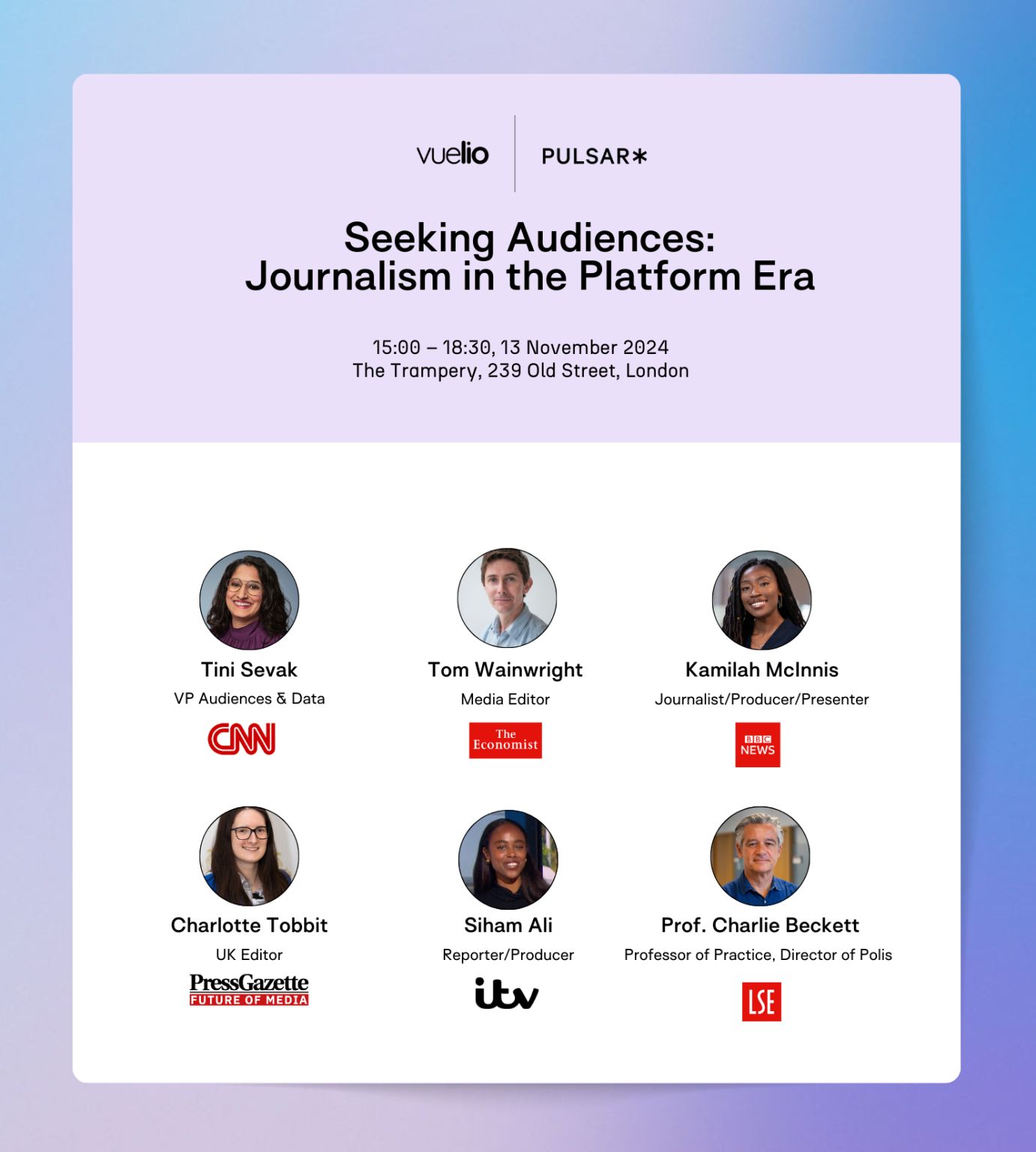
On 13th November 2024, Pulsar and Vuelio brought together a room of journalists, strategists and media professionals at The Trampery, London, to explore how journalism is evolving in the age of platforms, audiences and AI. With two panels featuring speakers from CNN, BBC, ITV, the LSE, Press Gazette and The Economist, we explored where news goes next—and how audience connection is being redefined.
Why Seeking Audiences?
This event forms part of Pulsar’s wider journalism research programme: a deep dive into how journalism is reshaped by platform logic, attention scarcity, and identity-led consumption. For those of us already working with news data, audience analytics, and platform culture, the conversations were a reflection of shifts we’ve been tracking for years.
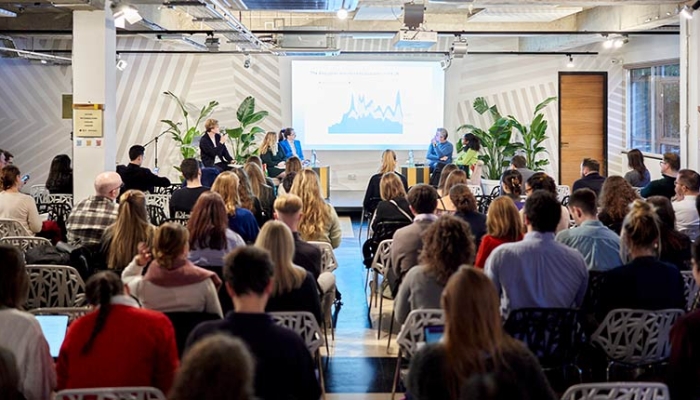
As Tom opened the day, he captured a familiar truth: news distribution has fundamentally changed. Where once we talked about homepages, circulation and print runs, we now talk about TikTok strategies, creator collaborations and AI summaries. The audiences haven’t disappeared—but they have dispersed. The challenge is meeting them on their terms.
Panel 1 - The New News: Reaching Audiences with Journalism Today
Speakers: Charlie Beckett (Founding Director, JournalismAI Project, LSE), Charlotte Tobitt (UK Editor, Press Gazette), Siham Ali (Reporter/Producer, ITV News), Amy Chappell (Head of Insights, Vuelio)
Moderator: Alex Bryson (Pulsar)
We know audience behaviour has changed. This panel explored how the homepage is no longer the front door to journalism. Discovery happens through feeds, recommendations, and relationships with trusted individuals—not always institutions.
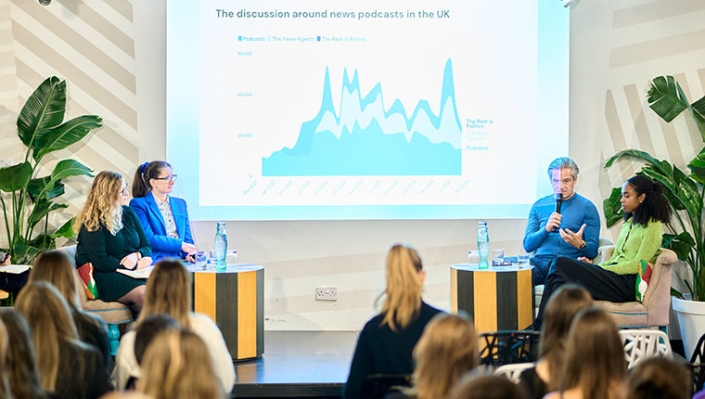
Charlie reminded us that audiences are emotionally driven, and that the framing of news increasingly reflects that. Journalism has always been a mix of facts and feeling. But now, it must also compete with influencers, creators, memes, and algorithms. The challenge isn’t only reaching audiences—it’s being part of their world.
Charlotte echoed this, noting how platform fragmentation has pushed publishers to strengthen brand identity and create content built to travel. As she put it, TikTok has become too important to ignore—not because of its monetisation model, but because of how well its algorithm understands audiences. For Siham, TikTok is no longer a bolt-on but a core part of the editorial workflow. Her team now builds stories for vertical video from the start. And those stories land: with millions of views and rising expectations from a growing audience.
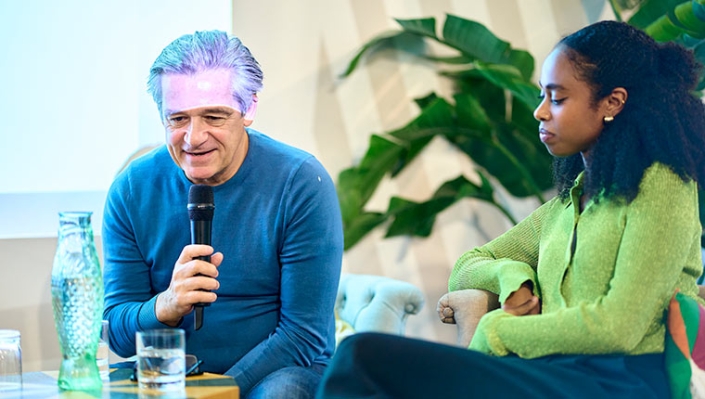
Amy brought in the comms perspective. Audiences don’t experience media in silos. A podcast, a news clip, a TikTok stitch—these all contribute to brand perception. And they all shape how trust is built (or lost). It means comms teams need to think multiplatform too: not just who they’re reaching, but where, and in what tone.
Panel 2 - Journalism in the Platform Economy
Speakers: Tini Sevak (VP, Audiences & Data, CNN International Commercial), Tom Wainwright (Media Editor, The Economist), Kamilah McInnis (Journalist/Producer/Presenter, BBC News)
Moderator: Francesco D’Orazio (Pulsar)
After the first panel focused on formats, the second turned to infrastructure. Fran opened by naming the real tension: control. Who owns the audience? Is it the newsroom, the platform, the algorithm—or the AI summarising your content before anyone clicks?
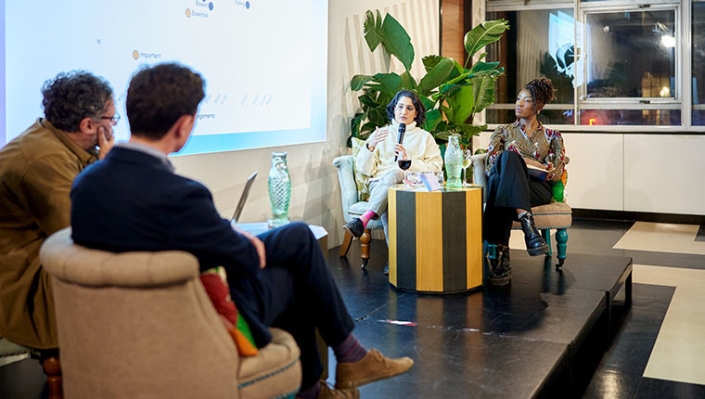
Tom described the collapse of the broadcast news environment—replaced by on-demand feeds that deprioritise news entirely. Meanwhile, the partisan trust divide has widened. Trust in journalism now splits along political lines, in both the UK and US.
Tini challenged the idea that trust has disappeared. It’s just moved. Audiences still trust—but they trust differently. They trust individuals over institutions, affinity groups over titles. That shift isn’t necessarily negative. But it does demand that publishers reconsider how they earn that trust. Kamilah offered a response to the fatigue and disconnection. The Upbeat, her solutions-focused newsletter at the BBC, is an attempt to rebalance the narrative. People still want to be informed—but they’re looking for context, not just crisis.
On business models, Tom drew the line clearly: if you’re advertiser-funded, you go broad and avoid controversy. If you’re subscription-funded, you go deep and serve audience affinity. Neither is inherently better—but each comes with constraints.
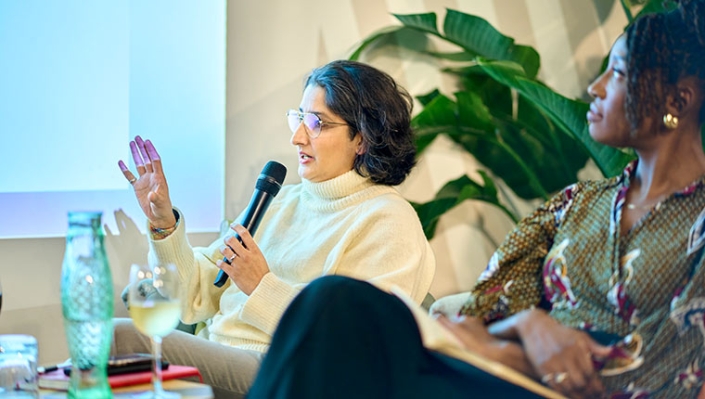
Tini argued that advertisers shouldn’t fear the news. Brands can align with journalism without compromising on safety. She pointed to CNN’s own example—where smart placement alongside political content drove positive engagement, backed by Pulsar analysis.
Looking forward, Tom urged publishers to prioritise exclusivity. Generative AI can summarise what’s already public. Journalism needs to be about uncovering what isn’t. That means original reporting, proprietary data, and real-world presence.
What We Learned
Journalism is adapting, not ending. The role it plays—as a civic tool, a decision-making aid, a reflection of cultural mood—has splintered across platforms, formats and business models, each pulling it in different directions. What we heard repeatedly was what we already see in the data: that audiences want reporting they can use, trust, and feel something from. And that they’re increasingly curating their own media experiences to suit those needs.
PHOTO
Whether that comes via a TikTok explainer, a niche newsletter, or a reactive livestream depends on context. But the throughline is clear: journalism has to justify its value every day.
As Francesco put it: “The future of journalism lives at the intersection of integrity and innovation.”