
6. New platforms, same purpose: the evolution of local journalism
Table of contents
Local journalism is experiencing a turning point. Even as newsrooms shut down and regional titles consolidate, audiences haven’t stopped seeking out local information. What has shifted is how they access it, who they trust, and what they expect in return.
In this piece, we examine how local journalism is being talked about across the UK and Australia—two countries where media consolidation, funding pressures and audience behaviours are evolving in parallel. It’s part of a broader series from Pulsar exploring how journalism is defined, consumed and discussed in 2024.
The volume of local news talk is rising
When we look at mentions of local journalism online, a clear trend emerges: people are talking about it more. From grassroots reporting to council coverage and community radio, audience interest in local stories is growing—often in response to a perceived gap left by national outlets.
Man, I love local journalism
byu/Johan_Sebastian_Cock inJournalism
This surge isn’t just about media professionals. Local news is increasingly being referenced by community organizers, educators, activists and public sector workers. In other words: people who need trusted, location-specific information to do their jobs.
Audiences want something different from local news
As we dig deeper, we find that conversations about local journalism are not just nostalgic—they’re forward-looking. People aren’t simply mourning lost titles. They’re asking for better formats, clearer funding models and more accountability.
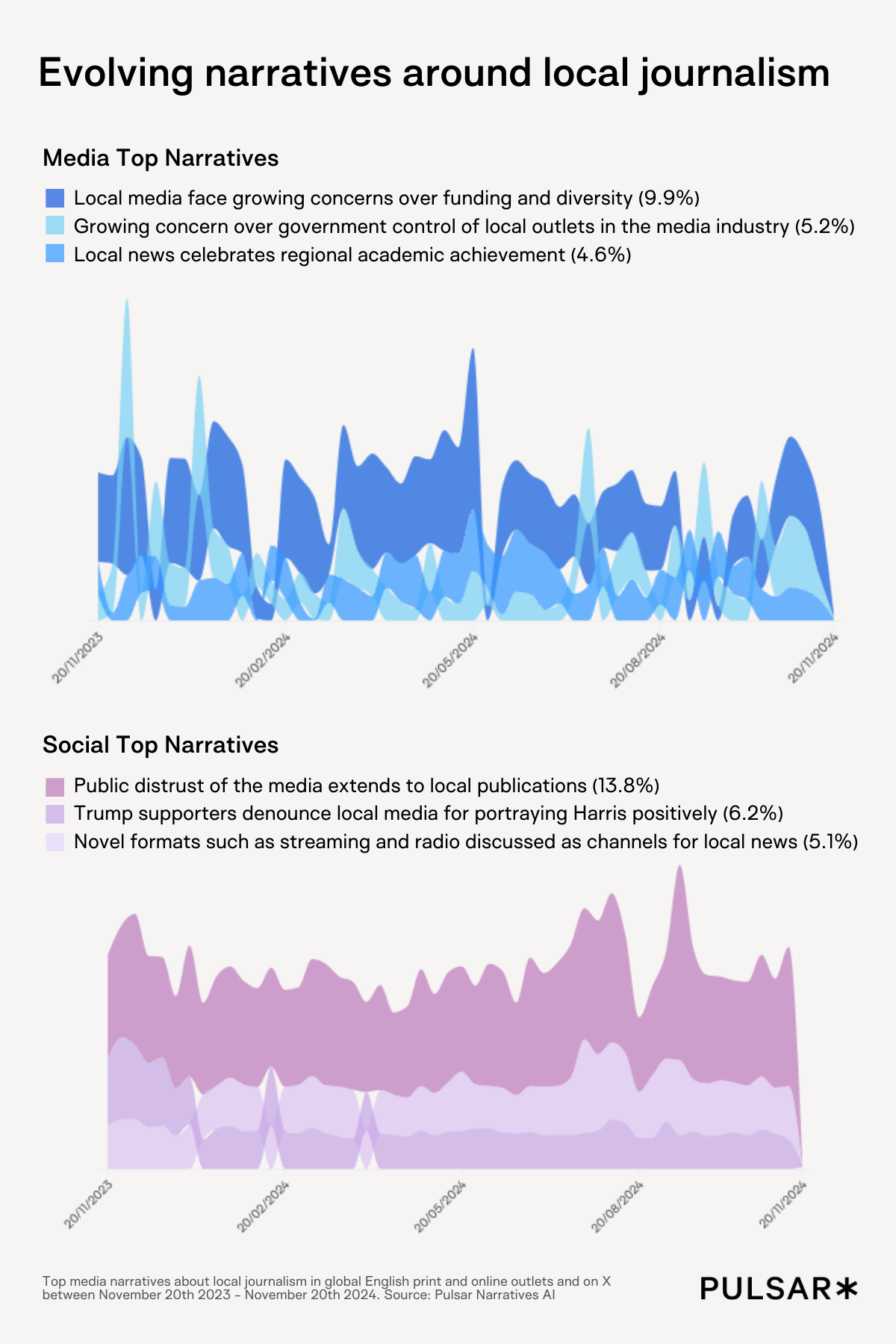
Younger audiences, in particular, show interest in platforms that blend community input with transparency. This reflects a wider shift: audiences now see themselves as participants, not just passive readers.
Trust is hyper-local
When it comes to trust, proximity matters. Local journalists are more likely to be seen as part of the community—and that changes the dynamic. People might be sceptical of national broadcasters, but they’ll still share a piece from their town’s newsletter or community page.
This effect is especially visible in regional Australia, where trust in hyper-local outlets remains high despite national media cuts. We saw similar dynamics in the UK, where audiences praised coverage from local outlets during weather events, strikes, and local elections.
The implications for PR, comms and policy
For professionals working in communications, understanding this shift is critical. Local journalism doesn’t just report the news—it helps frame issues, build consensus and surface voices that don’t always make it into national coverage.
Whether you’re running a public health campaign or trying to reach communities ahead of a policy rollout, engaging with the local media ecosystem is still one of the most effective strategies. But it requires listening, resourcing, and a willingness to move at community pace.
Local journalism isn’t static. It’s becoming more collaborative, more digital and more dependent on its relationship with the audience. From WhatsApp groups to Substack newsletters, the format may change—but the core need for locally grounded reporting remains.
I just want to call out Conor Durkin (@ConDurkin) for his outstanding Substack on politics and policy in Chicago.
We have way, way too little policy journalism on local governments. Thus only the insiders even know what is happening, often.
I wish we had a Conor in every city. pic.twitter.com/b6efHGyz0B
— Dean W. Ball (@deanwball) October 9, 2024
Click here to go back to the State of Journalism homepage.
Want to hear more from Pulsar? Subscribe to our newsletter below.