
Social Listening & Audience Intelligence Guide for Retail & CPG
Dive into more insights
Retail and CPG shopping now moves at viral speed in 2025, powered by TikTok live shopping, collectible crazes, trending snack hacks, and influencer product drops.
Social commerce on TikTok Shop and Instagram Shopping blurs the lines between discovery and purchase, especially for Gen Z and Millennials, who are driving these shifts.
For Retail & CPG teams facing shrinking high street traffic, faster-changing tastes, and fragmented audiences, social listening tools for retail is no longer optional. It’s the central nervous system of modern market strategy. It allows brands to react faster, optimize campaigns dynamically, and feed cultural signals directly into product development.
In this guide, we’ll explore why social listening for retail brands, share actionable frameworks to decode consumer trends, and show how Pulsar TRAC and Narratives AI empower brands to turn real-time audience intelligence into smarter, faster, and culturally attuned decisions.
Table of Contents
1. Why Social Listening is Non-Negotiable for Retail & CPG
Shopping Conversations Have Moved Online
Trust is More Fragile, and Reputation Moves Faster
From Customers to Communities: Where Loyalty is Built
2. Retail & CPG Social Listening Action Playbook
Detect Emerging Trends, Cultural Shifts & Narrative Movements Early
Map the Consumer Journey with Nuanced Understanding
Identify and Engage Key Consumer Channels & Consumer Voices
Optimize Campaign Strategies and Content
Monitor Risks & Manage Reputation Proactively
Competitive Intelligence and Market Opportunities
3. The Retail & CPG Professional’s Toolkit — Mastering Audience Intelligence with Pulsar
The Microscope: Pulsar TRAC for Granular Consumer & Campaign Analysis
The Telescope: Pulsar Narratives for Strategic Cultural Mapping
Measuring What Matters: A Framework for ROI in Retail & CPG Social Listening
Building Your Social Intelligence Tech Stack for Retail & CPG
From Insights to Action: Embedding Audience Intelligence Across Your Organization
1. Why Social Listening is Non-Negotiable for Retail & CPG
Shopping Conversations Have Moved Online
People no longer discover products only in store aisles or through ads. They stumble upon them in TikTok GRWM videos, forum posts about “holy grail” skincare, or YouTube vlogs about weekly grocery hauls. Even small moments like someone posting a picture of their morning coffee or sharing a “dupe” they found at Target create ripples that influence what others buy.
For retail and CPG brands, this is a wake-up call. The moments that shape perception and drive sales are happening outside of their owned channels. A new snack trend can go from a niche foodie forum to the shelves of major supermarkets in months. A viral “dupe” can change an entire category’s pricing dynamics overnight. This is where social listening for retail brands becomes essential. Using retail brand social listening software and social listening tools for retail, brands can surface these shifts in real time, giving them the chance to act early rather than react late.
Trust is More Fragile, and Reputation Moves Faster
Consumers today are more skeptical of brands. They expect transparency about ingredients, sourcing, and values, and they aren’t afraid to call companies out when reality doesn’t match the marketing. One customer complaint, amplified through TikTok or X, can snowball into a trending topic in hours.
But fragility works both ways. Positive advocacy spreads just as fast. A heartfelt user-generated video about a beloved product can ignite demand in unexpected markets. Using social listening retail software, brands can monitor emerging risks while amplifying authentic moments of love—a capability that answers the question, which social media listening tool is best for retail?
From Customers to Communities: Where Loyalty is Built
The most powerful brand movements don’t start with corporate campaigns. They start in communities. Think #DupeTok reshaping beauty spending, or sustainability influencers driving refill and recycling conversations in grocery. These are less trends and more cultural movements that redefine what people value in retail and CPG.
By leveraging social listening for retail brands and advanced social listening tools for retail, brands can tap into deeper loyalty. Instead of merely selling to consumers, they co-create with communities, respond in their language, and align with the values that actually drive purchase.
2. Retail & CPG Social Listening Action Playbook
Detect Emerging Trends, Cultural Shifts & Narrative Movements Early
Retail and CPG conversations evolve rapidly, often propelled by consumer communities, influencers, and external factors such as price shocks or cultural debates. Using retail brand social listening software, brands can capture early signals—not just volume or keywords, but the underlying motivations and emotional tones shaping consumer narratives. Through narrative analysis, teams can identify evolving storylines, archetypes, and sentiment shifts that influence buying decisions and brand perception. This deep cultural insight enables businesses to innovate products, refine messaging, and engage authentically with consumers before trends reach saturation or backlash occurs.
Case Study: Olive Oil Price Shock and Consumer Behavior
Pulsar’s analysis of the olive oil market revealed a notable shift as price increases transformed olive oil from a pantry staple into a premium product. Social listening captured a surge in conversations framing olive oil as “luxury” or “expensive,” with consumers actively searching for affordable substitutes. This narrative shift signaled a broader trend toward budget-consciousness and pragmatic consumption within food categories, informing retailers and brands to adapt messaging and highlight value options proactively.
Case Study: De-Influencing & No-Buy Movements
The rise of the “de-influencing” trend—where consumers actively reject traditional influencer endorsements—reflects a growing cultural demand for authenticity and frugality. Social listening identified a 106% increase in conversations using hashtags like #nobuyyear on TikTok, driven by economic pressures and sustainability concerns. Brands can leverage this insight to reposition campaigns around transparency and responsible consumption, connecting with skeptical audiences seeking value beyond hype.
AI-Powered Competitive Intelligence and Market Opportunities
Beyond marketing, social listening uncovers unmet consumer needs, emotional gaps, and emerging lifestyle trends. This intelligence guides product development, helping brands innovate solutions aligned with authentic consumer priorities and cultural currents.
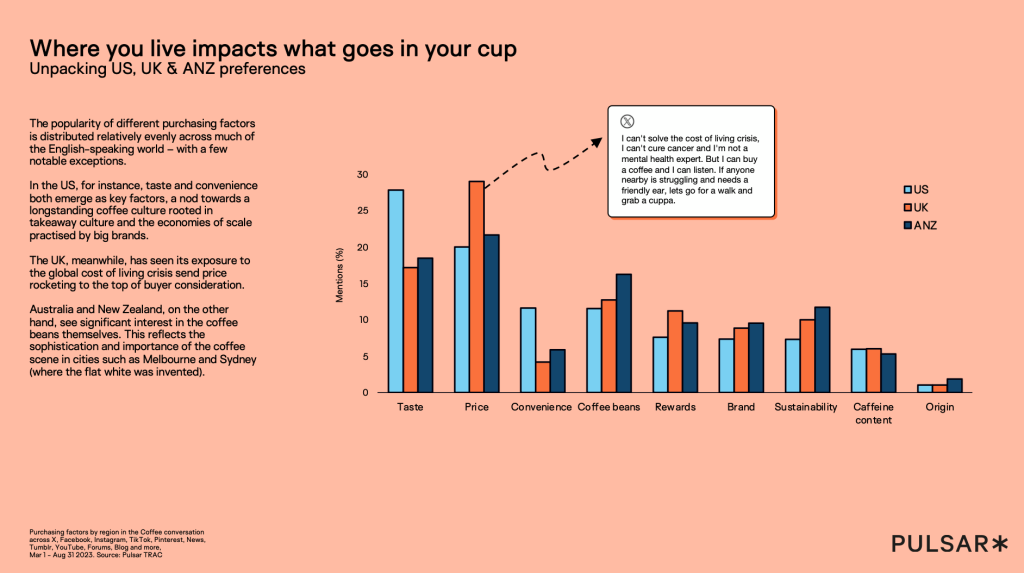
Case Study: Regional Coffee Preferences Unlock Market Opportunities
Social listening around coffee conversations across the US, UK, and Australia/New Zealand revealed distinct purchasing drivers by market.
For competitive intelligence, these insights highlight clear market opportunities: premium bean products for ANZ, value-led offers for the UK, and convenient, flavor-forward propositions for the US. By mapping these behavioral nuances, brands can tailor product development, merchandising, and messaging to unlock region-specific growth.
With the high street shrinking, retail and CPG teams face pressure to achieve more with fewer resources. AI agents are helping by mapping the entire customer journey automatically—tracking pain points, shifting behaviors, competitor activity, and emerging market opportunities in real time, rather than relying on hours of manual tagging or chasing scattered insights.
Beyond saving time, AI agents make insights sharper and more actionable, allowing brands to react faster, optimize campaigns dynamically, and feed cultural signals directly into product.
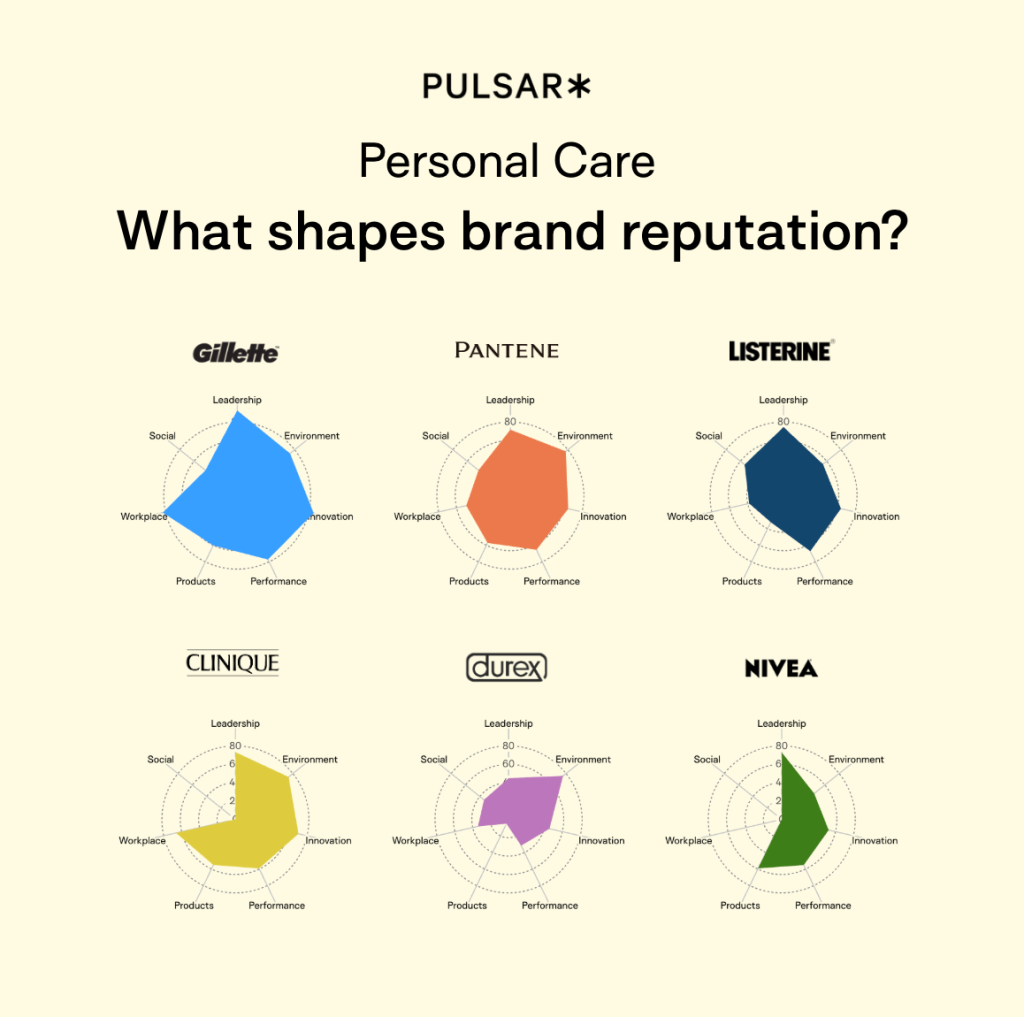
Case Study: Personal Care Brand Reputation
In Pulsar’s Personal Care Brand Reputation Intelligence Report, AI-enhanced social listening retail detected early warning signs around sustainability, inclusivity, and ingredient safety well before they escalated into crises. AI-supported clustering and scoring enabled responsive measurement of fast-paced changes in conversation. For personal care brands, these analyses included frameworks to measure reputation across multiple dimensions, including products, performance, environment, workplace, leadership, and societal impact. Acting on these signals allowed brands to adjust messaging, strengthen trust, and shape the narrative proactively.
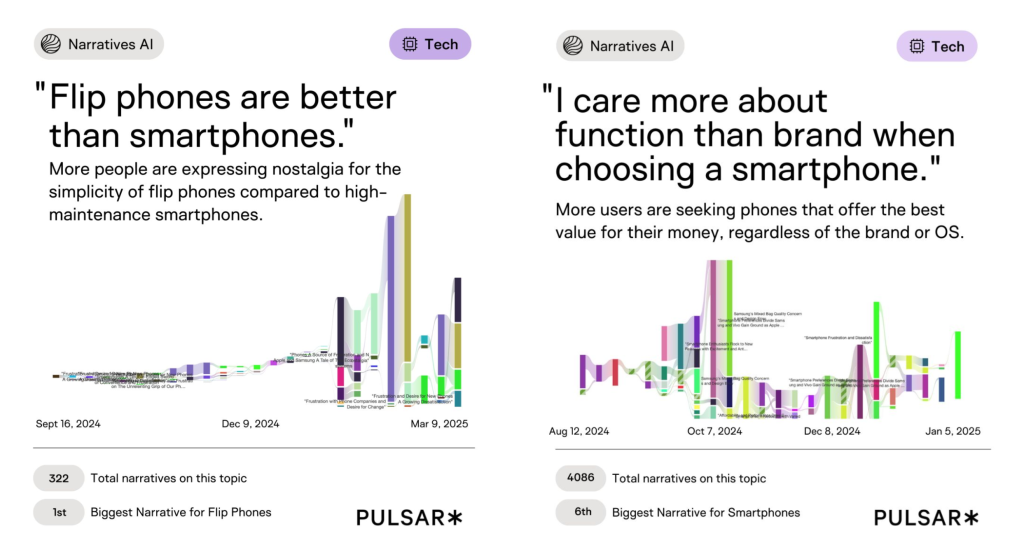
Case Study: Smartphone Narratives
Narratives AI surfaces cultural undercurrents that reshape consumer demand. In the smartphone category, two narratives stand out: growing nostalgia for the simplicity of flip phones and a shift toward function-first purchasing. By quantifying these narratives in real time, retailers can anticipate consumer expectations, align product portfolios accordingly, and position themselves ahead of cultural shifts that could redefine an entire category.
Map the Consumer Journey with Nuanced Understanding
Consumer journeys in Retail & CPG are non-linear and fragmented across platforms, peer groups, and emotional stages. Social listening reveals how people move through awareness, consideration, purchase, and advocacy, illuminating pain points, motivations, and triggers along the way. Understanding these phases allows brands to meet consumers with timely, relevant messaging that resonates with their evolving needs and cultural contexts.
Case Study: Food Delivery Experience and Emotional Cycle
Analysis of food delivery conversations uncovered a cyclical emotional journey among consumers—anticipation, delight, frustration, and loyalty. Complaints often spiked around order accuracy and delivery time, while positive mentions focused on convenience and special offers. By mapping this journey, brands identified critical moments for proactive communication, customer support improvements, and campaign timing that aligns with consumer moods.
Case Study: Desk Setup and Tech Aesthetic Communities
Pulsar tracked how niche cultural groups around “desk setups” and tech aesthetics engage with brands differently based on their values and identities. For example, fandom-driven communities often prioritize personalization and creative expression, while professional-focused groups emphasize productivity and ergonomics. Tailoring content and product offerings to these subcultures enhances relevance and community engagement.
Identify and Engage Key Consumer Channels & Consumer Voices
The Retail & CPG ecosystem includes diverse voices from social influencers, product reviewers, experts, to consumer communities. Social listening identifies these key players and their influence dynamics, enabling brands to build meaningful partnerships that amplify authentic voices and trust.
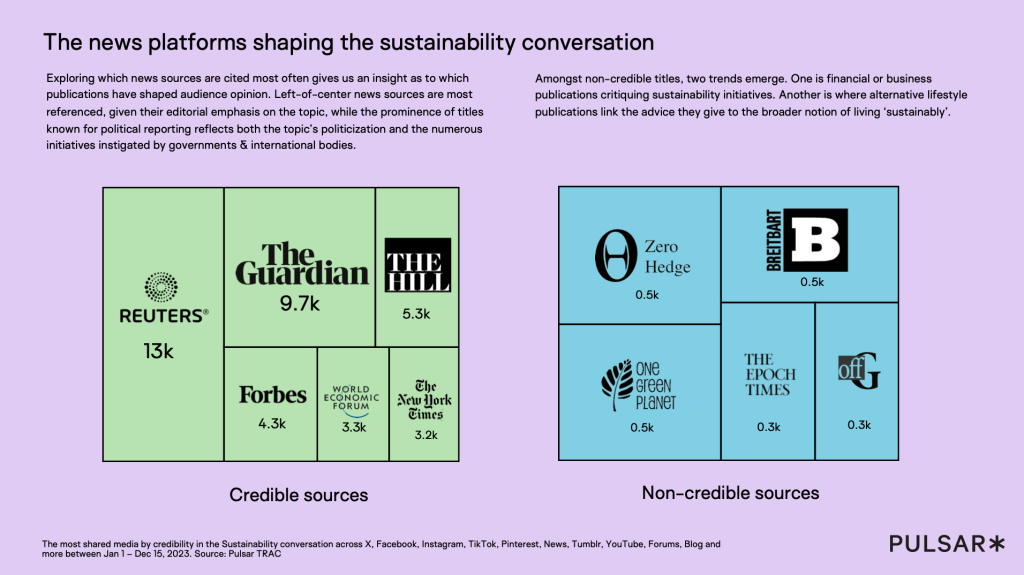
Case Study: The Audience of Sustainability
In Pulsar’s The Audience of Sustainability report, platforms like Reuters (13k shares), The Guardian (9.7k), and The Hill (5.3k) emerged as the most shared credible sources. These outlets drove much of the sustainability discourse, while less credible publications also contributed to the conversation from alternative or critical perspectives. For brands, knowing where audiences get their information ensures messaging appears on the most influential, trusted channels in their category.
Optimize Campaign Strategies and Content
Real-time insights into sentiment, language, and audience preferences empower marketers to fine-tune campaigns with precision. Social listening enables continuous feedback loops for agile optimization, maximizing relevance and impact across segments.
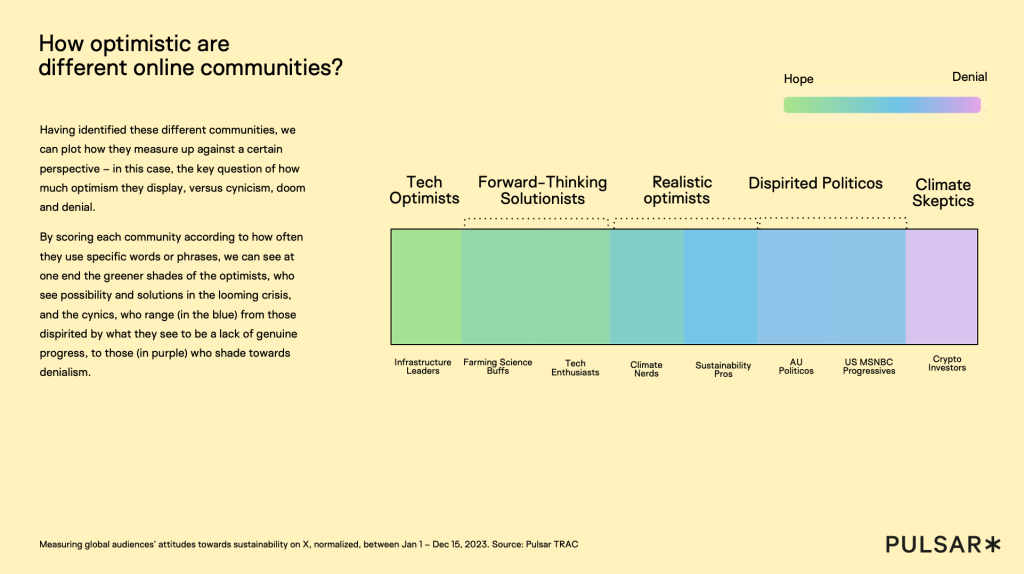
Case Study: Tapping the 'Optimistic Sustainability Audience'
Pulsar’s Audiences of Sustainability report shows optimism levels vary widely—from hopeful, solution-driven communities to those feeling skeptical or fatigued. Matching tone and messaging to each mood boosts both trust and engagement. When launching a sustainable product, a brand uses inspiring, future-focused language for optimistic groups, while addressing skeptics with transparent, fact-driven content by resonating with both camps.
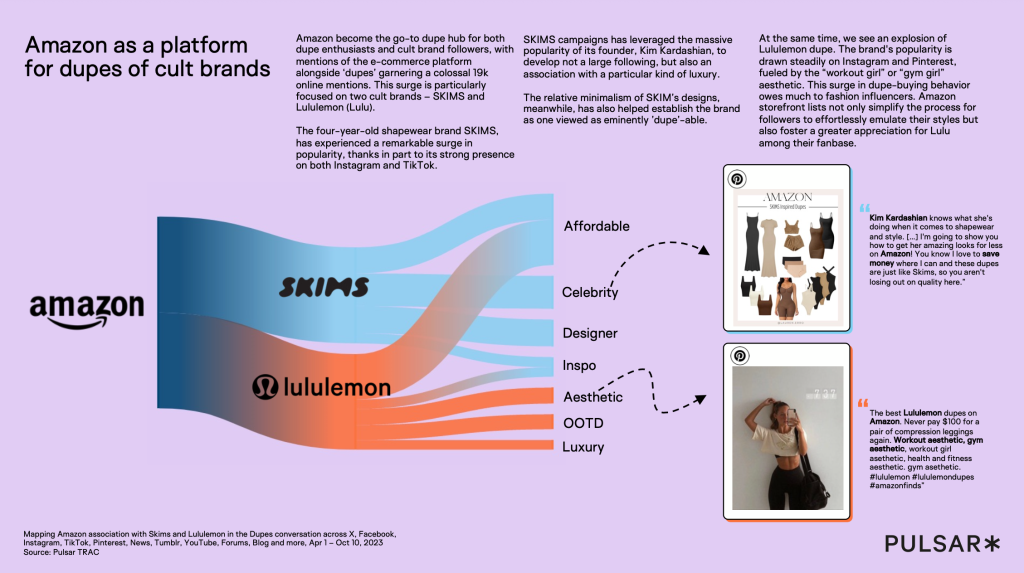
Case Study: Campaign optimization of dupe brands on Amazon
Social listening shows Amazon is a hotspot for “dupes” of cult brands like SKIMS and Lululemon, often trending via TikTok and Instagram. By tracking sentiment, hashtags, and audience motivations—whether savings, style, or trends—marketers can quickly adapt messaging.
Campaigns that spotlight price-savvy alternatives (“SKIMS vibes, half the price”) or leverage influencer storefronts resonate strongly, reframing value as access to both trend and lifestyle. Real-time insights keep brands culturally relevant and ready to pivot with shifting moods.
Monitor Risks & Manage Reputation Proactively
Retail & CPG brands face risks from supply chain disruptions, ingredient controversies, or cultural backlash. Retail brand social listening software serves as an early warning system, enabling brands to detect spikes in negative sentiment, track misinformation sources, and implement timely, targeted responses to protect brand reputation.
Case Study: Christmas Advertising Backlash
The 2024 festive season saw supermarket adverts polarize audiences due to cultural representation issues. Pulsar’s real-time monitoring identified escalating negative sentiment, allowing brands to respond swiftly with clarifications and adapt messaging strategies for upcoming campaigns, preventing long-term brand damage.
Case Study: Brand misinformation index
Built in partnership with NewsGuard, Pulsar’s Brand Misinformation Index tracks brands’ exposure to unreliable news sources and politicized narratives. For example, Tesla frequently tops the index, with brands like Samsung also appearing during periods of heightened misinformation tied to political or ESG-related debate. By surfacing where and how misinformation is spreading, the Index provides an early warning system that helps brands take corrective action—protecting credibility and consumer trust before issues spiral.
3. The Retail & CPG Professional’s Toolkit — Mastering Audience Intelligence with Pulsar
Retail and CPG no longer succeed on gut feeling or outdated sales data alone. Today’s consumers fragment across Instagram, TikTok, forums, and private groups; cultural trends shift at lightning speed; and viral moments can make or break product launches.
Retail & CPG professionals need a toolkit that can zoom deep into granular consumer conversations, then zoom out to map big-picture cultural currents across markets and time. Pulsar delivers exactly this dual view:
The Microscope: Pulsar TRAC for Granular Consumer & Campaign Analysis
Pulsar TRAC provides real-time, tactical intelligence—perfect for teams monitoring product launches, tracking campaign performance, managing brand reputation, or catching early signals of shifts in consumer sentiment.
What TRAC Offers
- Comprehensive Data Coverage: Access TikTok videos, Instagram captions, Threads, YouTube reviews, podcasts, news, and more—all integrated into a single dashboard.
- Behavioral Segmentation: Go beyond age and location to pinpoint micro-communities like “clean beauty advocates,” “coffee ritualists,” or “budget-conscious snackers.”
- AI-Powered Precision: Analyze emotional tone, credibility, engagement, and influencer impact using 50+ filters to isolate meaningful signals from noise.
This microscope view enables Retail & CPG teams to spot early adoption trends (e.g., rising demand for olive oil as a health product), identify emerging risks (like sustainability concerns around packaging), or track the live buzz of a new coffee blend launch.
The Telescope: Pulsar Narratives for Strategic Cultural Mapping
While TRAC surfaces micro-movements, Pulsar Narratives provides a panoramic view—mapping cultural narratives and consumer conversations at scale over months or years. This big-picture perspective is vital for strategists, brand leaders, and innovation teams planning product roadmaps and future campaigns.
What Narratives Offers
- No-Boolean Narrative Briefings: Enter themes like “food delivery convenience” or “clean beauty dupe culture” and instantly see key storylines, drivers, and detractors unfolding across social and news media.
- Macro & Micro Lenses: Track long-term shifts such as sustainability adoption alongside short-term spikes like seasonal Christmas ad reactions.
- Public vs. Media Gap Analysis: Compare consumer conversations against journalist framing—critical for reputation management and messaging strategy.
For example, Narratives can reveal how sustainability conversations evolve from niche advocacy to mainstream demand, helping brands position themselves early and authentically.
Measuring What Matters: A Framework for ROI in Retail & CPG Social Listening
Demonstrating the impact of audience intelligence requires connecting insights to measurable business outcomes. Pulsar supports Retail & CPG teams to quantify value across product innovation, reputation management, competitive intelligence, market foresight, and campaign optimization.
| Strategic Goal | Use Case | Pulsar Tool(s) Used | How the Tool Helps |
| Product Innovation | Targeting “dupe” shoppers and clean beauty enthusiasts | Pulsar TRAC | Reveals audience clusters, trending language, and unmet needs, guiding product development and positioning. |
| Reputation Management | Identifying misinformation or negative narratives impacting brand trust | Pulsar TRAC + NewsGuard Integration | Flags misinformation risks and harmful narratives early, enabling proactive communications and reputation protection. |
| Competitive Intelligence | Benchmarking brand perception and sentiment in food delivery or coffee categories | Pulsar TRAC | Tracks competitor mentions, audience sentiment, and emerging themes to inform competitive strategy and campaign adjustments. |
| Market Intelligence | Monitoring long-term shifts toward sustainability and lifestyle trends | Pulsar Narratives AI | Maps evolving cultural narratives across consumer segments, forecasting demand and guiding brand positioning. |
| Campaign Management | Optimizing targeting and messaging for segmented audiences and tracking real-time impact | Pulsar TRAC + Audience Intelligence Modules | Leverages behavioral segmentation and narrative detection to identify high-value audience clusters, tailor messaging, track engagement, and measure campaign resonance, enabling agile campaign adjustments. |
Conclusions
The speed of cultural change and consumer behavior in Retail & CPG has never been higher. Social listening for retail transforms scattered conversations into actionable intelligence, allowing brands to anticipate trends, respond to communities, and innovate with confidence. By leveraging both micro-level insights and macro-level narrative mapping, brands can move from reactive to proactive, shaping products, campaigns, and reputations before the market catches up. Where speed meets cultural nuance, listening forms the very foundation of growth.
FAQs on Social Listening for retail & CPG
What is the best social listening software for retail brands?
The best social listening software for retail brands combines real-time monitoring, audience segmentation, and cultural insight capabilities. Platforms like Pulsar TRAC and Narratives AI allow teams to track conversations across social media, forums, and review sites, uncover emerging trends, and map narratives. This helps retailers make data-driven decisions for marketing, product launches, and brand strategy.
How can social listening help CPG brands detect emerging trends?
Social listening helps CPG brands detect emerging trends by analyzing online conversations, hashtags, and influencer activity. Advanced tools like Pulsar TRAC identify early signals of consumer interest, cultural shifts, or viral products, allowing brands to adjust product development, marketing campaigns, and influencer collaborations before trends peak.
How do retail brands use audience intelligence to improve customer experience?
Retail brands use audience intelligence to understand customer preferences, motivations, and behavior patterns. Insights from tools like Pulsar TRAC help brands personalize marketing, optimize product assortments, and engage with high-value communities. This cultural and behavioral intelligence ensures a more relevant, engaging, and responsive customer experience that drives loyalty and sales.
To stay ahead of shifting retail & CPG narratives and evolving audience and patient behaviors, subscribe to our newsletter.