
Social Listening & Audience Intelligence Guide for Health & Pharma
Related Sources
Patients are turning to TikTok, Forums, and AI diagnosis tools before, or instead of, booking appointments. In many markets, online communities and digital influencers now rival traditional healthcare providers in shaping trust, signaling a major shift in how health information is sought, shared, and validated across social platforms.
That’s where social listening for pharma & healthcare comes in. Beyond simple monitoring mentions or hashtags, true social listening uncovers why people are talking, how beliefs form, and where health organizations or brands can meaningfully intervene.
To see how these conversations translate into actionable insights, we start by examining why AI-powered social listening healthcare and pharma have become non-negotiable for health and pharma organizations.
- 1. Why Social Listening is Non-Negotiable for Health & Pharma
- Health Conversations Have Moved Online
- The Compliance-Conundrum: Trust Is Harder to Earn, and Easier to Lose
- The Advocacy Opportunity: Mobilizing Communities, Not Just Customers
- 2. The Health & Pharma's Action Playbook
- Detect Emerging Trends, Cultural Shifts & Narrative Movements Early
- Map the Patient Journey with Nuanced Understanding
- Identify and Engage Key Opinion Leaders (KOLs) & Healthcare Professionals (HCPs)
- Optimize Precision Campaigns
- Rapid Crisis Detection & Misinformation Management
- Drive Product Innovation & Development
- 3. A Practical Guide to the Pulsar Toolkit for Health & Pharma
- Pulsar TRAC in Action: From Search Setup to Audience Segmentation
- Pulsar Narratives in Action: Uncovering Deeper Cultural Currents
- Integrating First-Party Data for a 360° View
- 4. Conclusion: From Monitoring to Meaning-Making
1. Why Social Listening is Non-Negotiable for Health & Pharma
Health Conversations Have Moved Online
Health information is no longer confined to clinics or pamphlets. It lives on TikTok’s #HealthTok, doctor forums, YouTube wellness vlogs, and Instagram patient diaries. From chronic illness hacks to hormone therapy debates, people now seek answers and emotional validation online, often before they ever call a doctor.
For health & pharma brands, this shift is massive. It reveals unmet needs—questions about drug access, mental health stigma, or long-COVID support—that traditional health systems rarely surface. Social listening pharma &healthcare lets you map these conversations in real time, spotting emerging themes and knowledge gaps so you can educate, innovate, and respond before misinformation spreads.
The Compliance-Conundrum: Trust Is Harder to Earn, and Easier to Lose
Trust in health institutions is at a crossroads. Around the world, confidence in public health agencies has yet to fully recover from pandemic-era shocks, with many communities questioning the credibility of official guidance. This fragile trust means every message, and every silence matters more than ever.
Healthcare and pharma organizations now walk a tightrope between transparency, accuracy, and regulatory compliance. One misstep—a poorly framed social post, an overlooked wellness trend—can quickly spiral into skepticism, misinformation, or even legal scrutiny.
But this complexity isn’t a dead end. Audience intelligence platforms with built-in compliance and risk-monitoring capabilities allow organizations to engage authentically while staying safe. By reframing oversight as a strategic ally rather than a bottleneck, health communicators can rebuild trust, respond quickly to cultural shifts, and meet people where they really are: online, searching, questioning, and hoping for credible answers.
The Advocacy Opportunity: Mobilizing Communities, Not Just Customers
Social platforms aren’t just where people vent. They’re where movements start. From #InsulinForAll to #LongCOVID, grassroots advocacy campaigns have reshaped U.S. health policy conversations and forced industry responses.
Health and pharma organizations that listen can spot these movements early and align their strategies by amplifying authentic voices, addressing misinformation, and providing evidence-based resources in real time. It’s no longer just about marketing or patient education; it’s about building digital coalitions that turn online energy into real-world impact.
2. The Health & Pharma's Action Playbook
Detect Emerging Trends, Cultural Shifts & Narrative Movements Early
Health conversations and cultural narratives evolve rapidly, often sparked by patient communities, influencers, or new research. Social listening for healthcare captures these early signals with an emphasis on why people are talking rather than just the volume or keywords. Using AI-powered narrative analysis, brands can identify evolving storylines, emotional undertones, and archetypes that shape public understanding and community identity. This deep cultural insight allows organizations to innovate products, refine communications, and authentically engage with complex health and social movements before they reach a tipping point.
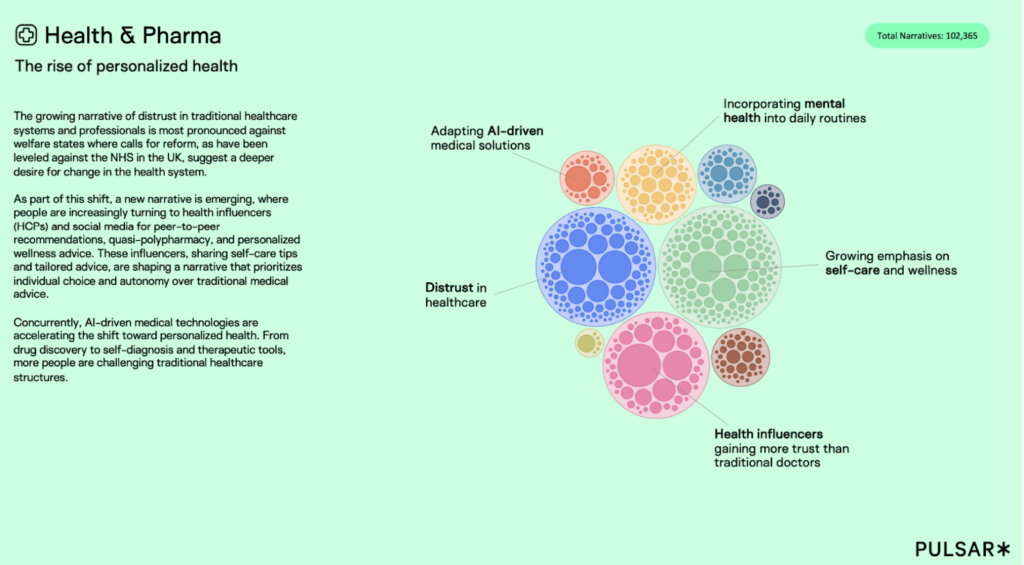 Case study: Narrative Healthcare & Cultural Movements
Pulsar's Inudstry Narrative Report Spring/Summer 2025 tracks how health stories unfold over time by mapping shifts in public sentiment, community archetypes, and narrative frameworks that influence perception and behavior. For example, the evolution of mental health narratives from stigma to empowerment highlights how cultural storytelling drives acceptance and advocacy. Understanding these narrative arcs equips healthcare & pharma social listening teams and organizations to anticipate changes, tailor messaging to resonate emotionally, and connect authentically with diverse audiences.
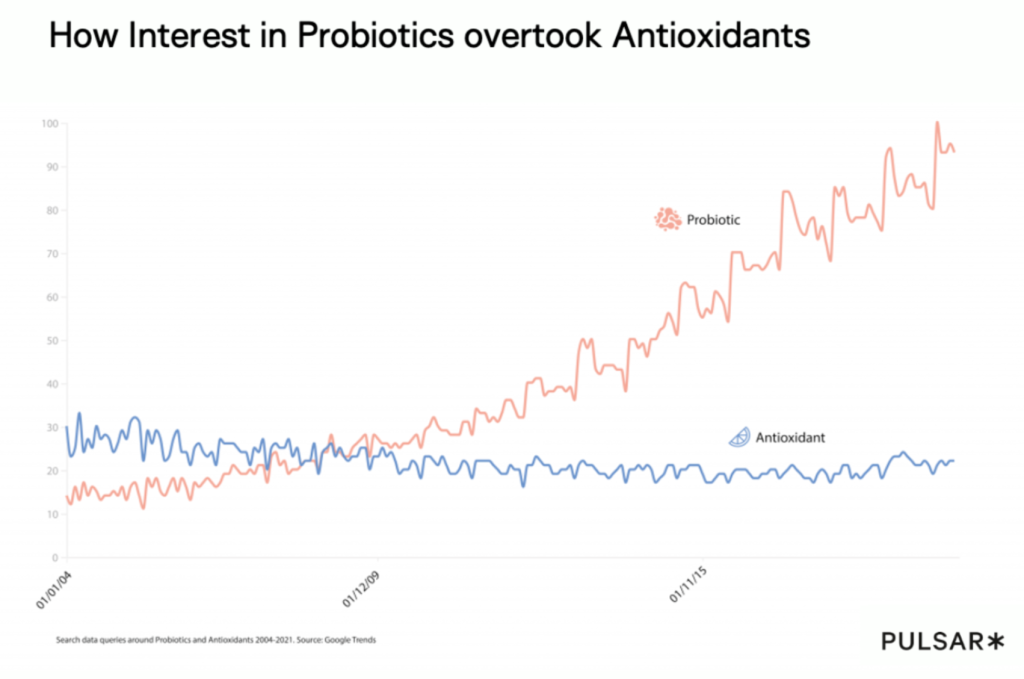
Case Study: Gut Health & Microbiome
In a Pulsar analysis of over 500,000 posts on gut health and the microbiome, a once “fringe” topic moved to the center of mainstream health conversations. Wellness advocates, healthcare professionals, and pop culture figures drove this shift, sparking discussions on symptoms, remedies, and diets. Narrative mapping revealed how the conversation evolved—from fear and confusion to empowerment and lifestyle integration—helping brands and advocacy groups align R&D, communications, and education strategies with emerging public interests and cultural currents.
Case study: Positive Narratives in Diet Culture
Pulsar’s analysis of high-sugar management conversations revealed a strong positivity bias around specific diets, from vegetarianism to keto. While discussions like veganism have cooled in overall volume, they remain overwhelmingly positive—framing food as healing and culturally aspirational. Contrastingly, “low-fat” diets carry negative associations, often criticized as pseudoscientific. Mapping this sentiment shift helps brands anticipate which diet trends are rising or fading, guiding product innovation and health communications aligned with cultural momentum.
Map the Patient Journey with Nuanced Understanding
Patient journeys aren’t linear; they’re fragmented across platforms, peer groups, and stages of self‑education. Pulsar's social listening tools surface these journeys in real time, revealing how people move from symptom discovery to treatment research, through emotional coping and peer validation. Understanding these phases helps brands and public health teams meet patients where they are and align messaging with what matters most at each step.
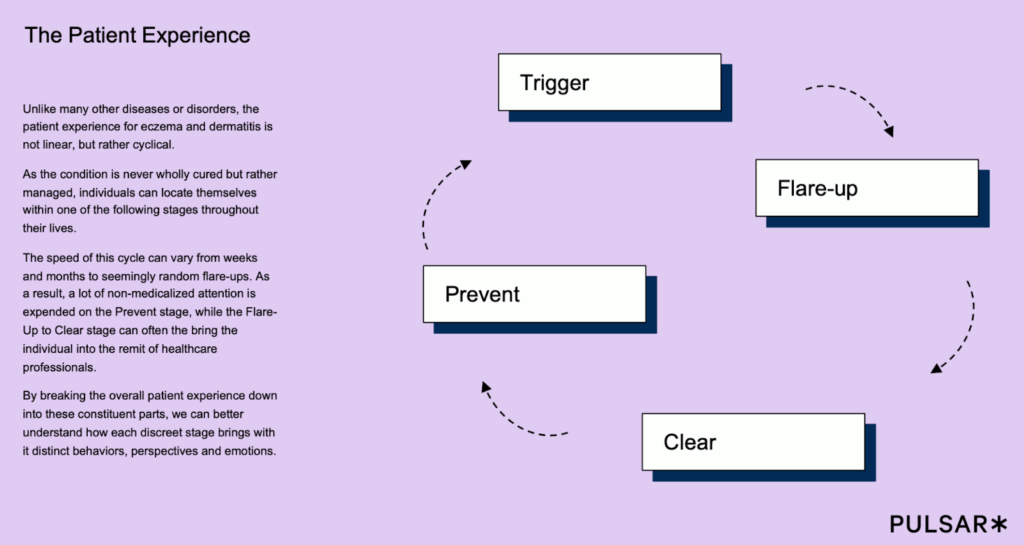
Case Study: Eczema & Atopic Dermatitis
Pulsar’s report on eczema and atopic dermatitis stark differences between adult and pediatric patients and caregivers. It mapped emotional arcs marked by stigma, frustration, and hope, identifying moments where advocacy and product conversations peak. This insight allowed healthcare providers and brands to design smarter patient support, education, and communication strategies grounded in lived experiences.
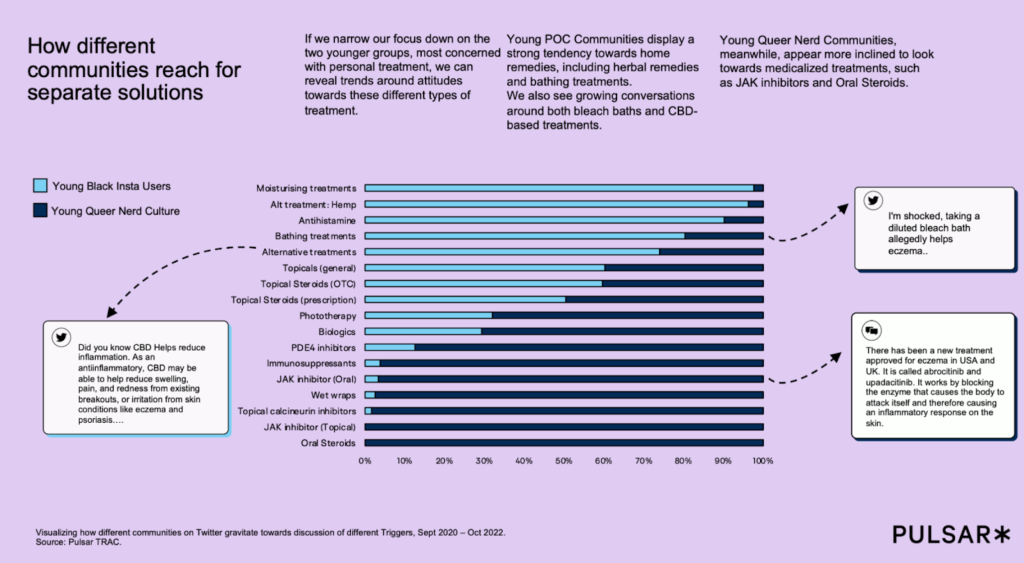
The same analysis also highlighted how treatment choices diverge across cultural communities:
- Young Black Instagram users gravitated toward home remedies like hemp, CBD, and bathing treatments.
- Young Queer Nerd communities favored medicalized treatments such as JAK inhibitors and oral steroids.
This split shows how cultural identity shapes treatment narratives, underscoring the need for personalized education and campaigns that resonate with each community’s values and realities.

Case study: Sugar behavior cycle
Pulsar’s sugar & health research revealed a behavioral cycle underpinning sugar-related conversations. Social and news data showed recurring stages:
- Balance: Attempts at moderation or control.
- Cravings: Gradual rise in desire for sugar.
Binge: Impulsive indulgence, often unpredictable.
Guilt: Consistent undertone of remorse and self‑critique.
This ebb and flow between desire, indulgence, and restraint mirrors emotional journeys seen in other health behaviors—offering opportunities for timely interventions, nudges, and empathetic messaging that align with where individuals are in the cycle.
Case Study: Ovarian cancer patient journey
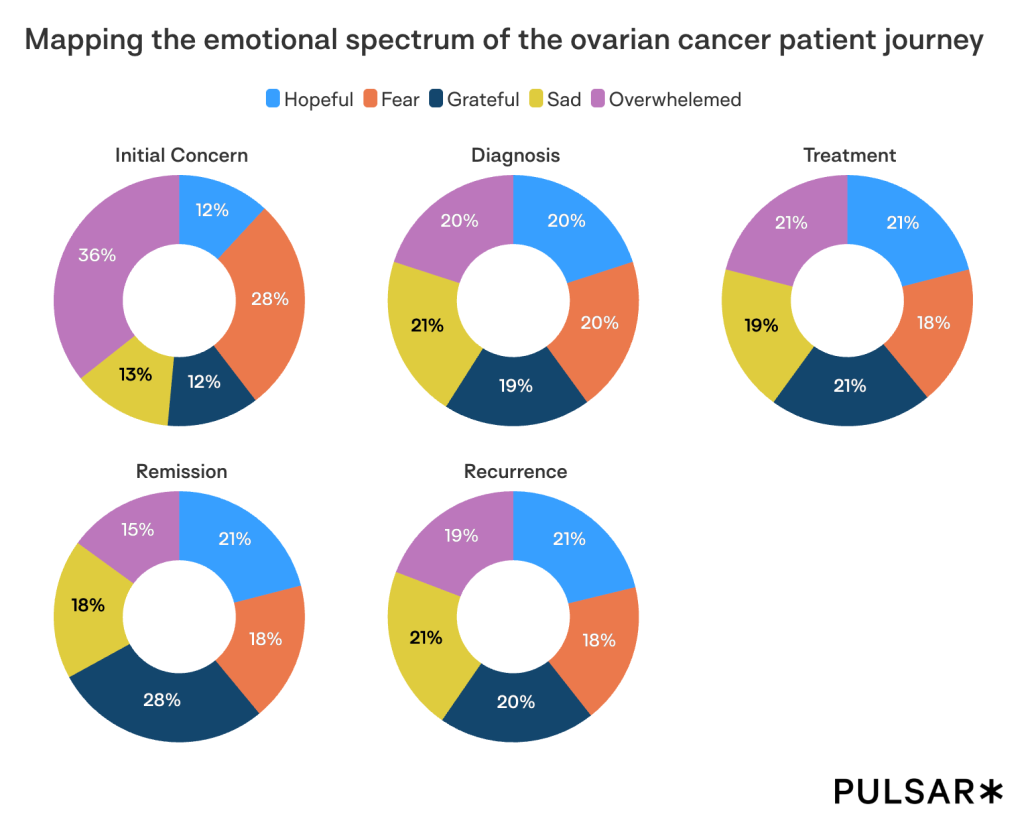
Pulsar’s study on the ovarian cancer patient journey reveals how different emotions are exhibited at various stages. This research highlights that the patient journey isn’t linear but often circular, with emotions evolving and recurring throughout the experience. Understanding these emotional spectrums at each stage is crucial for health and pharma organizations to provide targeted support and communication.
Identify and Evaluate Key Opinion Leaders (KOLs), Digital Opinion Leaders (DOLs) and Health Professionals (HCPs)
The health ecosystem includes a diverse mix of clinicians, researchers, patient advocates, and wellness influencers. Social listening identifies key voices shaping perceptions and advocacy, helping organizations build partnerships that amplify trusted health information.
Case Study: Influential Voices in the Sugar Conversation
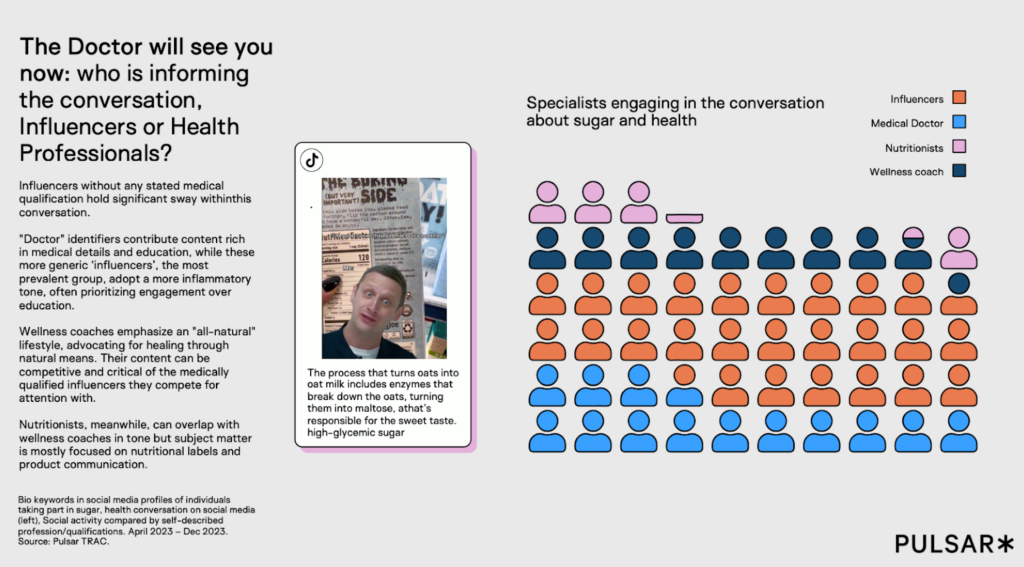
Pulsar’s sugar & health analysis found influencers without medical credentials dominate conversation volume, often using inflammatory or attention‑grabbing tones.
In contrast, HCPs, KOLs, and DOLs contribute fewer posts but deliver deeper educational content.
- Doctors: Identified by bio keywords like “Dr.” or “MD,” these voices share content rich in medical detail and education, anchoring the conversation in scientific evidence.
- Wellness Coaches: Advocate “all‑natural” approaches, frequently adopting a critical stance toward medical authorities.
- Nutritionists: Share dietary insights, often overlapping with wellness coaches but remaining more evidence-based.
By mapping these divergent voices, brands can balance mass‑appeal celebrity moments with evidence‑driven health messaging, ensuring campaigns resonate across both lifestyle and medically aligned communities.
Case study: Dermatitis Influencer Mapping
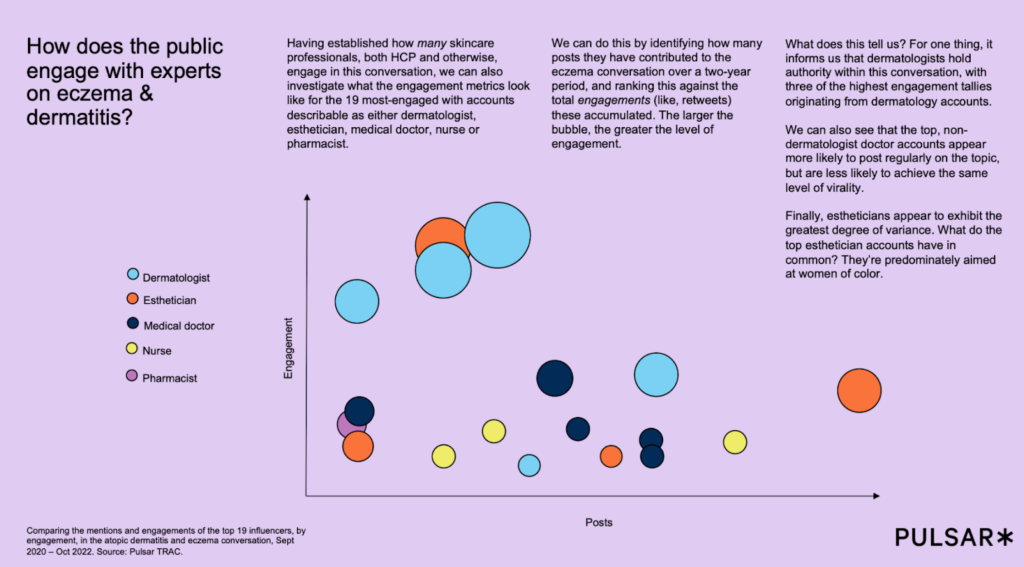
Pulsar’s eczema and atopic dermatitis analysis also examined the 19 most-engaged professional accounts, including dermatologists, estheticians, medical doctors, nurses, and pharmacists, contributing to the conversation over a two-year period. Engagement mapping revealed dermatologists dominate authority in this space, driving some of the highest levels of audience interaction. In contrast, non-dermatologist doctors post more frequently but achieve lower virality, while estheticians show the greatest variance, with top-performing accounts often focused on women of color. These insights enable brands to identify high-impact voices and tailor outreach strategies across professional segments.
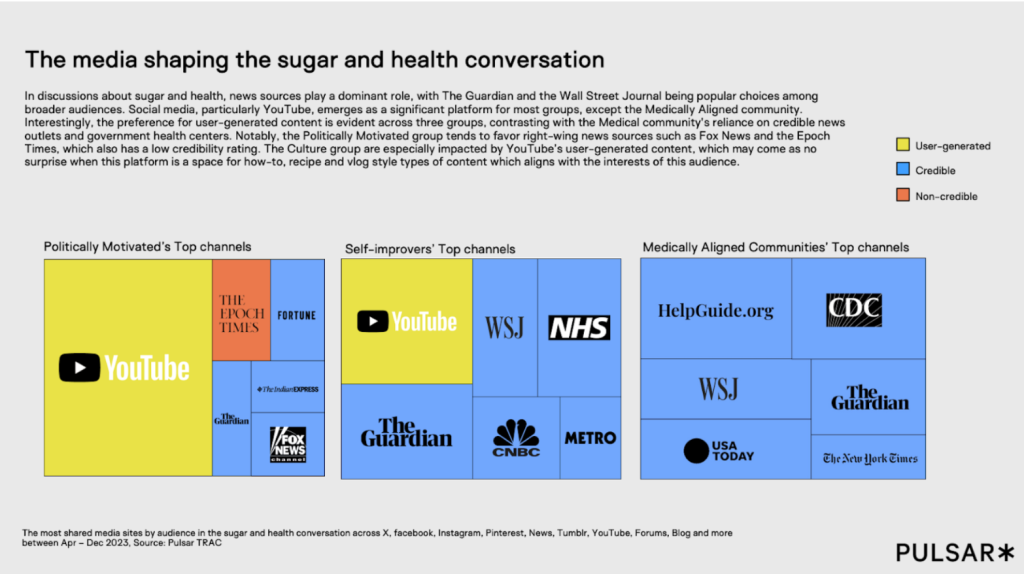
Extending the analysis to media ecosystems, Pulsar TRAC tracked the most‑shared media sources across X, Facebook, Instagram, Pinterest, YouTube, blogs, and forums (Apr–Dec 2023). The findings uncovered clear audience splits:
- Broader audiences gravitated toward mainstream news like The Guardian and The Wall Street Journal.
- Culture‑driven communities leaned heavily on YouTube’s user‑generated content (recipes, how‑tos, lifestyle vlogs).
- Medically aligned groups preferred credible outlets and government health sources.
- Politically motivated communities favored low‑credibility, right‑leaning sites like Fox News and The Epoch Times.
This dual lens, mapping who influences and which platforms drive trust, equips brands and NGOs to engage the right voices, tailor content by audience values, and preempt misinformation before it spreads.
Optimize Precision Campaigns
Real-time insights into sentiment, language, and audience preferences allow marketers to tailor messaging and timing. Social listening pharma & healthcare enables agile optimization and continuous measurement to maximize relevance and impact.
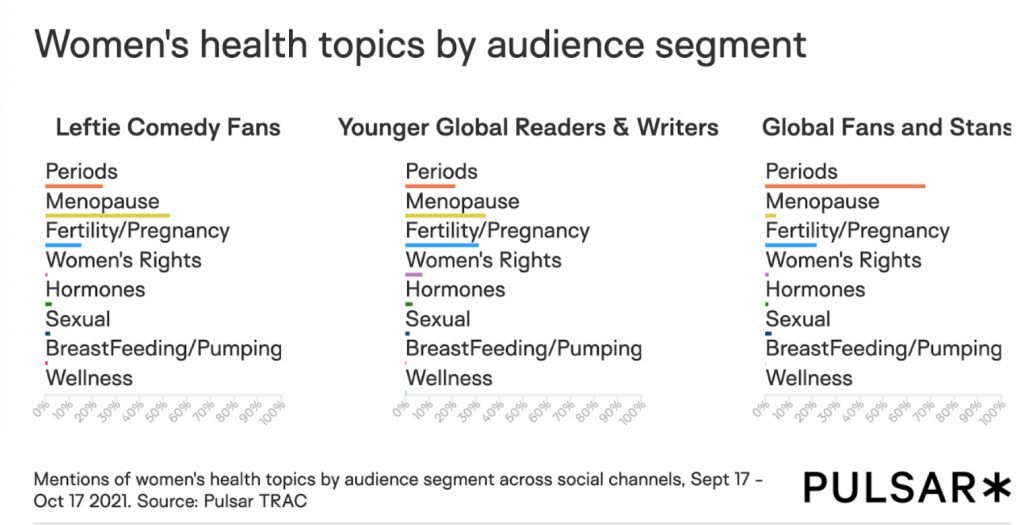
Case Study: Femtech & Women’s Health
Pulsar’s analysis of femtech conversations highlighted unmet needs such as menopause and period tracking, surfacing organically in digital discourse. These insights helped brands align product development and patient education with genuine consumer demand, ensuring campaigns resonated authentically with diverse women’s health audiences.
Case Study: Natural Deodorant Culture Mapping (Sign Salad)
Brand strategy agency Sign Salad used Pulsar to explore the emerging “natural deodorant” conversation across Instagram, TikTok, and reviews. Through brand‑agnostic topic searches and panel analysis of expert voices (e.g., dermatologists), they mapped how professionals and everyday users discussed the category. This revealed that natural deodorants function as a “semiotic playground” in breaking conventions, experimenting with ingredients, and reframing expectations around personal care. By pinpointing overlaps and gaps between expert and mainstream conversations, Sign Salad guided clients toward culturally attuned messaging and future‑facing brand strategies.
Rapid Crisis Detection & Misinformation Management
Health misinformation and controversies can quickly damage trust and safety. Social listening acts as an early alert system to spot spikes in negative conversations, trace misinformation sources, and guide timely, nuanced responses.
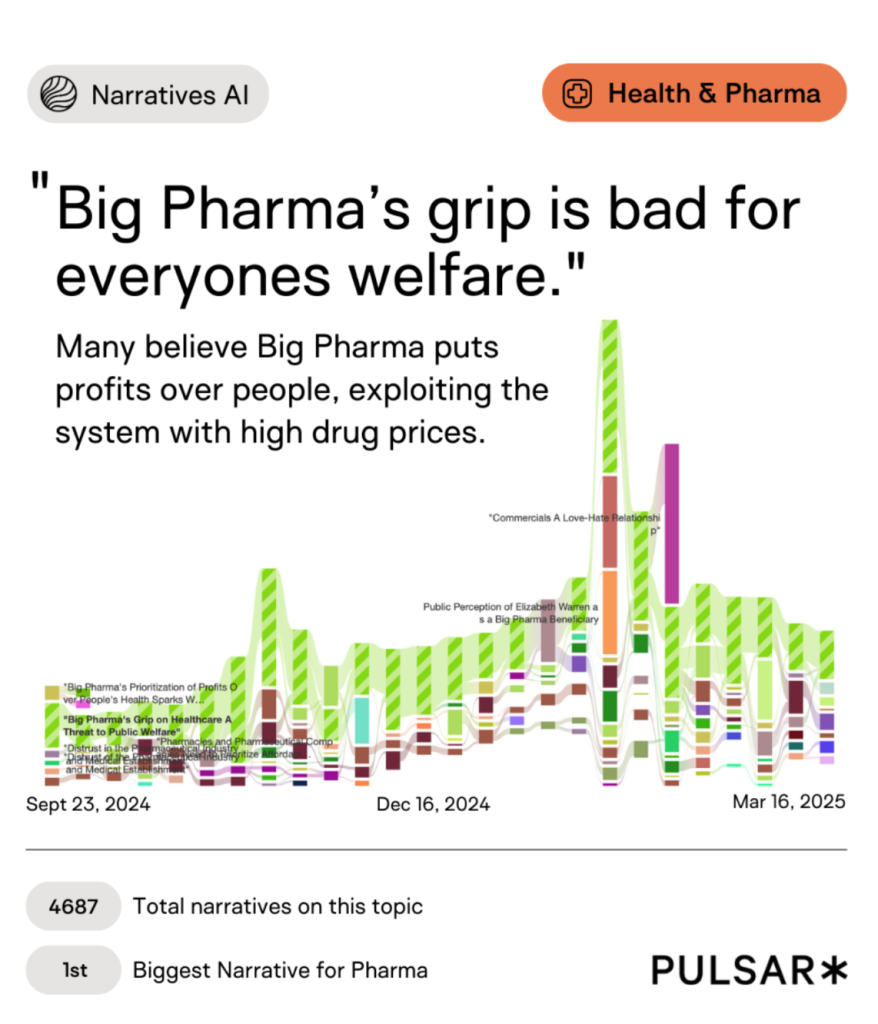
A key example is the persistent and dominant narrative around “Big Pharma’s grip is bad for everyone’s welfare.” Many believe Big Pharma prioritizes profits over people, exploiting the healthcare system with high drug prices—a sentiment reflected in over 4,600 narratives tracked since late 2024. This powerful storyline shapes public opinion and political discourse, often fueling distrust and activism against pharmaceutical companies.
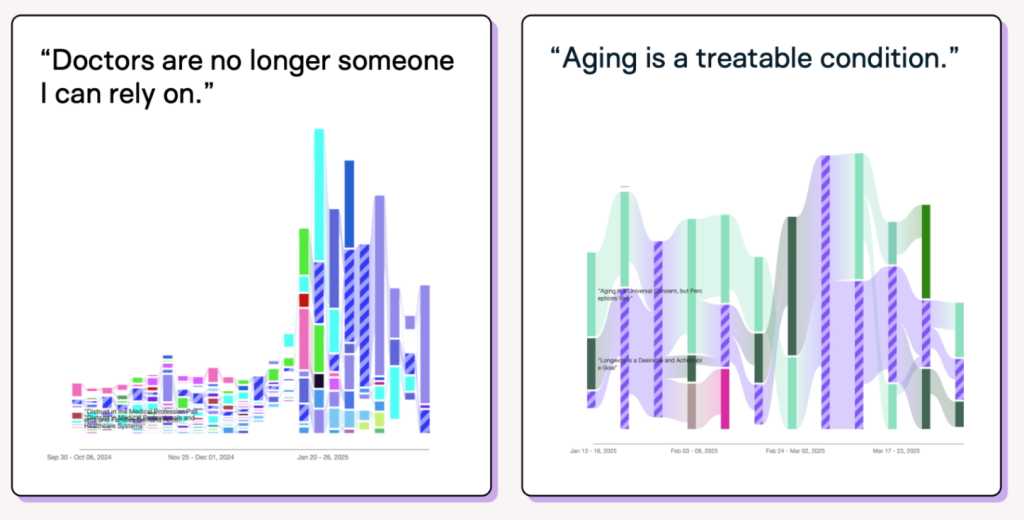
Case study: emerging narratives on doctors
Pulsar’s The Narrative Report S/S 2025 captures growing distrust in doctors and shifting patient behaviors. This includes the belief that aging is something to be actively shaped—a conversation often driven by influencers and peers, who may expose audiences to misinformation. Pulsar Narratives AI helps identify these top health narratives and understand how they influence public perception.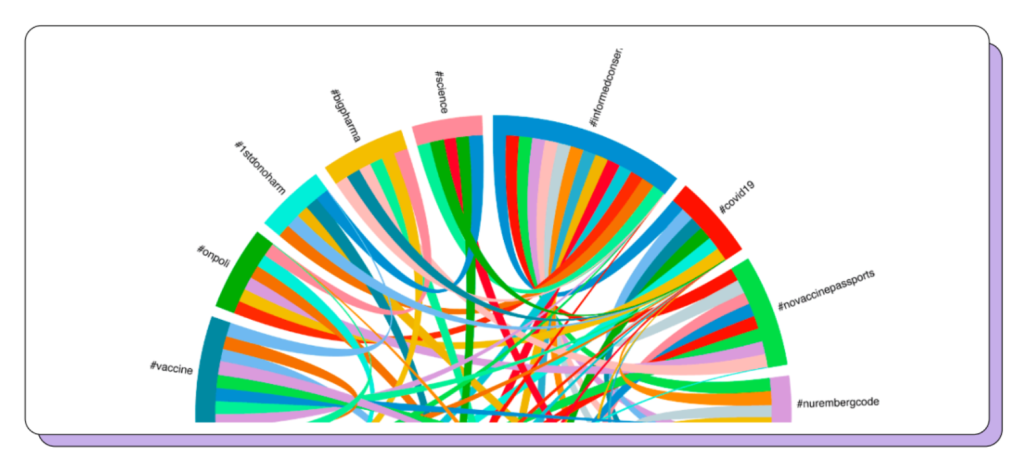
Case Study: Hashtag Misinformation Tracking (#RREAL)
Digital epidemiology expert Sam Martin, collaborating with Oxford University’s Ethox Centre and UCL’s RREAL lab, has used Pulsar to advise the NHS and NIHR on vaccine hesitancy among healthcare professionals. Her research revealed how hashtags like #InformedConsent, #LearnTheRisk, and #Nuremberg2 were leveraged by some health professionals and alt-right groups to spread anti-vaccine misinformation across Twitter, Instagram, and Forums from late 2020 to mid-2021. These hashtags connected vaccine skepticism to conspiracy theories about vaccine passports and bodily autonomy, spreading US-originated narratives into UK discourse. Pulsar’s social listening visualized these trends with sentiment and key topics, enabling early detection of misinformation and guiding targeted responses.
Drive Product Innovation & Development
Social listening for pharma & healthcare doesn’t just optimize campaigns. It informs what to build next. By uncovering unmet needs, lifestyle trends, and emotional gaps in existing solutions, brands can identify whitespace opportunities and innovate products that genuinely serve emerging health priorities.
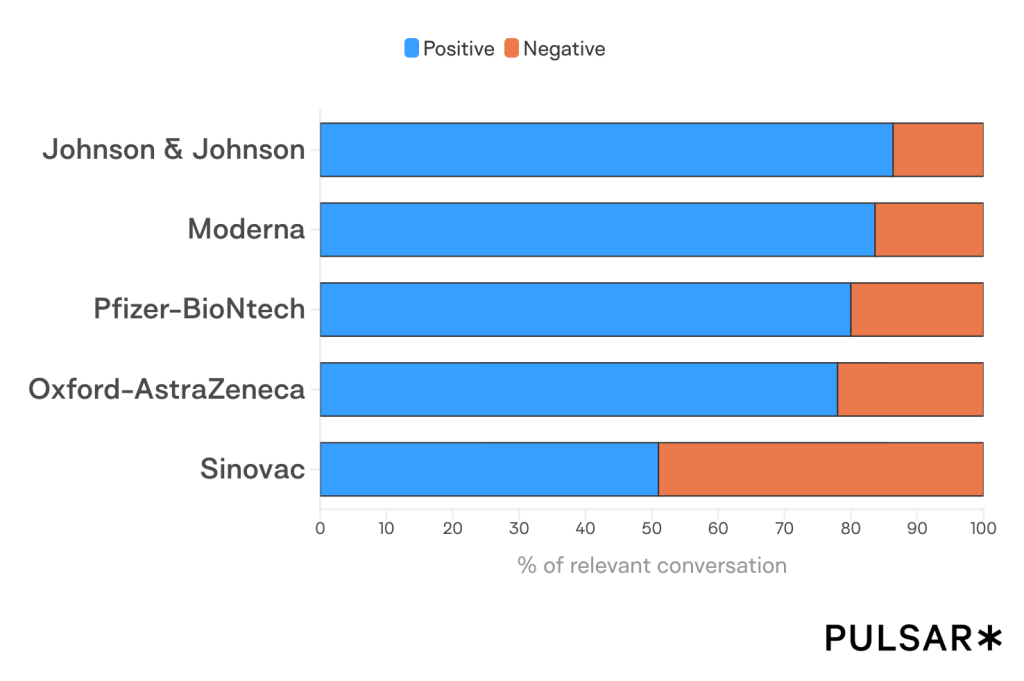
Case study: Vaccine sentiment & Product gaps
Pulsar’s study on public and healthcare professionals’ sentiments towards various COVID-19 vaccines (e.g., Johnson & Johnson, Moderna, Sinovac) revealed distinct perceptions between these two audiences. While public opinion could fluctuate, doctors' and other healthcare practitioners' views on most vaccines remained remarkably stable.
Using AI-powered social listening for pharma, this analysis uncovered the complex reasoning behind these perceptions, sometimes linked to factors like vaccine nationalism. By understanding these differing, stable, and nuanced viewpoints, health and pharma organizations can identify critical gaps in product perception, communication, and potentially future product development—enabling them to better align with both professional and public needs.
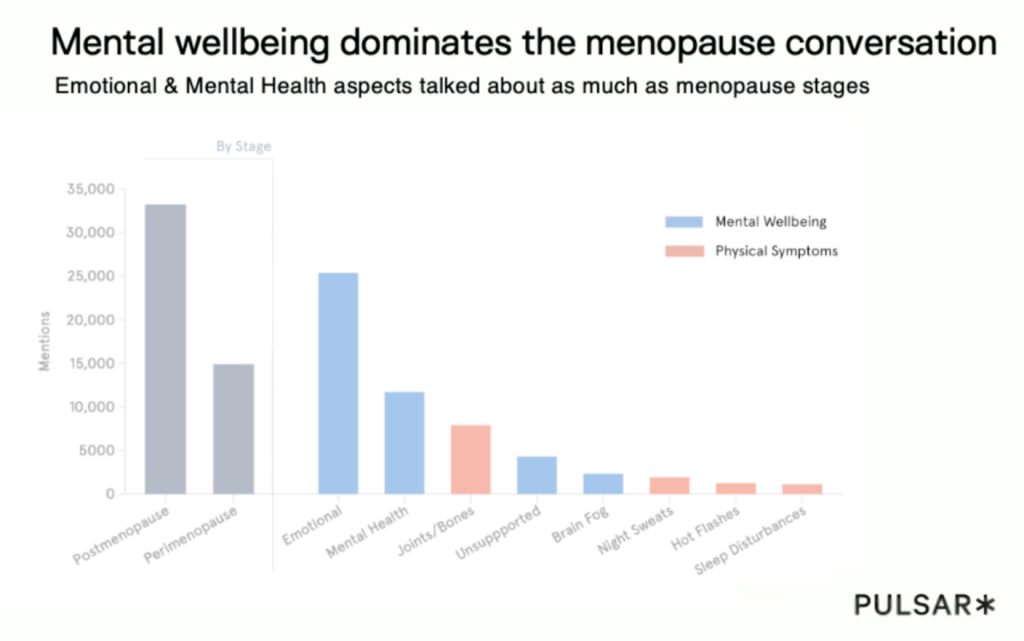
Case Study: Femtech & Menopause Innovation
Pulsar’s analysis of femtech conversations revealed a striking contrast: while period‑tracking and fertility apps dominate women’s health tech, menopause remains largely disconnected from technology. Yet, discussions around menopause frequently highlight mental wellbeing, community, and education—areas where tech could provide meaningful support.
Insights from period‑app discourse show how digital tools foster peer connection and knowledge‑sharing; applying these learnings to menopause represents a clear innovation opportunity. For health startups and established brands alike, this gap signals a chance to create inclusive, tech‑enabled solutions that empower women through life stages long overlooked by traditional product roadmaps.
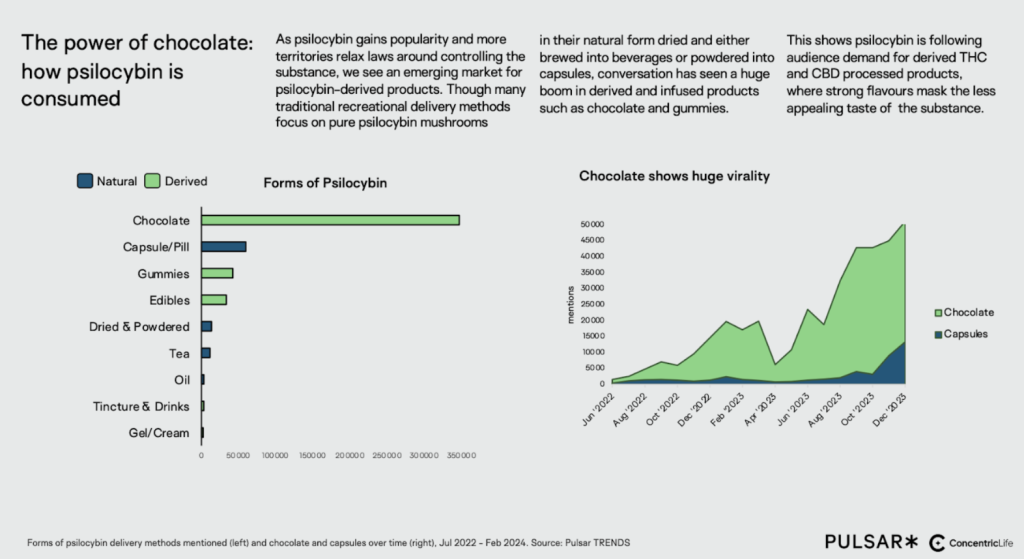
Case Study: Psilocybin‑Infused Products
As laws around psilocybin relax, Pulsar data shows audiences shifting from traditional mushroom consumption (dried, brewed, or encapsulated) toward derived formats like gummies and chocolate. This mirrors the evolution seen in THC and CBD products, where flavor‑forward delivery methods transformed niche substances into mainstream wellness products.
By identifying this pivot early, brands can anticipate consumer demand for palatable, lifestyle‑friendly formats and position themselves ahead of competitors in emerging therapeutic and wellness market
3. A Practical Guide to the Pulsar Toolkit for Health & Pharma
Understanding the strategic value of patient, professional, and public audience intelligence is the first step. The next is realizing how accessible and powerful the right tools can be for health and pharma professionals’ daily workflows. Pulsar is not a data science black box requiring a specialized team. It’s an intuitive, modular command center designed to deliver actionable insights for medical affairs, marketing, R&D, and communications teams.
The Pulsar platform’s power lies in two core components, Pulsar TRAC and Pulsar Narratives AI, which work together to provide micro-level community insights and macro-level cultural trends.
Pulsar TRAC in Action: From Search Setup to Audience Segmentation
- Comprehensive Data Collection: TRAC aggregates data from key social platforms (X/Twitter, Facebook, Instagram and TikTok), plus online news, forums, podcasts, medical blogs, and broadcast transcripts. This ensures healthcare and pharma social listening avoids blind spots, capturing conversations from patients, caregivers, HCPs, and advocates alike.
- Intuitive Search & Analysis: Setting up searches ranges from simple keyword tracking (e.g., "psoriasis treatments") to complex Boolean queries (e.g., "eczema AND (JAK inhibitors OR steroids)"). Pulsar’s AI Boolean Generator simplifies this process. After data collection, users can slice by demographics, sentiment, geography, and more with 50+ interactive filters.
- Audience Segmentation: TRAC uses AI to instantly segment participants into meaningful communities based on interests, treatment preferences, or identities (e.g., “Pediatric Atopic Dermatitis Caregivers” vs. “Immunology Specialists”). This moves analysis from “what’s said” to “who’s saying it,” allowing for tailored communication strategies.
Pulsar Narratives in Action: Uncovering Deeper Cultural Currents
- A Search Engine for Health Beliefs: Narratives AI functions like a search engine for belief systems shaping health conversations. Users can enter broad topics like “vaccine hesitancy” or “menopause” and instantly get a briefing on the top narratives driving those discussions.
- From Topics to Beliefs: Beyond clustering topics, Narratives reveals underlying opinions, fears, and values. For pharma, this insight distinguishes between people merely discussing “clinical trials” and those holding deep-seated mistrust in “Big Pharma ethics.” This allows teams to align messaging with evolving public sentiment and cultural shifts.
Integrating First-Party Data for a 360° View
- Closing the Loop: Pharma organizations can upload their own patient, HCP, or healthcare provider CRM data to TRAC. This creates custom panels that track how known stakeholders engage publicly on social media, revealing changing concerns and interests in real time.
- Example: A pharma company can monitor the social conversations of patients enrolled in a trial, spotting emerging issues or misinformation early, allowing proactive engagement.
Together, these tools provide a unified command center for navigating the rapidly evolving healthcare landscape with strategic agility and cultural intelligence.
4. Conclusion: From Monitoring to Meaning-Making
Ultimately, social listening for pharma & healthcare empowers its organizations to deliver interventions and communications that meet people where they are: online, human, and seeking trustworthy connection.
It transforms passive monitoring into proactive meaning-making by turning vast digital conversations into actionable insight, fostering trust, and advancing better health outcomes for all.
- Detect emerging health trends and unmet patient needs early, informing product innovation and clinical strategies.
- Map complex patient journeys across diverse communities to tailor education, adherence, and support programs effectively.
- Identify and engage key opinion leaders, trusted healthcare professionals, and patient advocates to amplify credible health information.
- Spot and respond swiftly to misinformation and safety concerns, safeguarding public health and brand reputation.
- Craft targeted, empathetic communications that resonate emotionally and culturally with varied audiences, from patients to providers.
- Navigate regulatory and policy landscapes with nuanced insights, anticipating shifts and shaping stakeholder relations.
FAQs on Social Listening for Healthcare & Pharma
Why is AI-powered social listening essential for healthcare and pharma right now?
AI-powered social listening is essential because trust in healthcare is shifting. Patients increasingly rely on influencers, online communities, and AI tools before consulting doctors. With patient behavior becoming fragmented across digital platforms, healthcare and pharma organizations need real-time insights to track conversations, detect trends, and respond effectively.
Who are the voices shaping patient decisions in healthcare and pharma?
Patients no longer look only to doctors for guidance. Influencers, online communities, peers, and even AI tools now shape health choices. Social listening helps healthcare and pharma uncover these voices and engage them with credibility.
How does social listening help healthcare and pharma tackle misinformation and manage crises?
Social listening enables healthcare and pharma teams to detect false claims early, track how misinformation spreads, and respond quickly with accurate messaging. This proactive approach helps organizations protect patient trust and manage reputational risks during crises.
What makes Pulsar’s TRAC and Narratives AI unique for healthcare and pharma?
To stay ahead of shifting healthcare & pharma narratives and evolving audience and patient behaviors, subscribe to our newsletter.