
Pepsi vs Coca-Cola: Which brand attracts more positive narratives?
- Agencies

For brands competing in mature categories, narrative is where advantage is built or lost.
When products are similar and awareness is saturated, the stories people tell about a brand become the real differentiator.
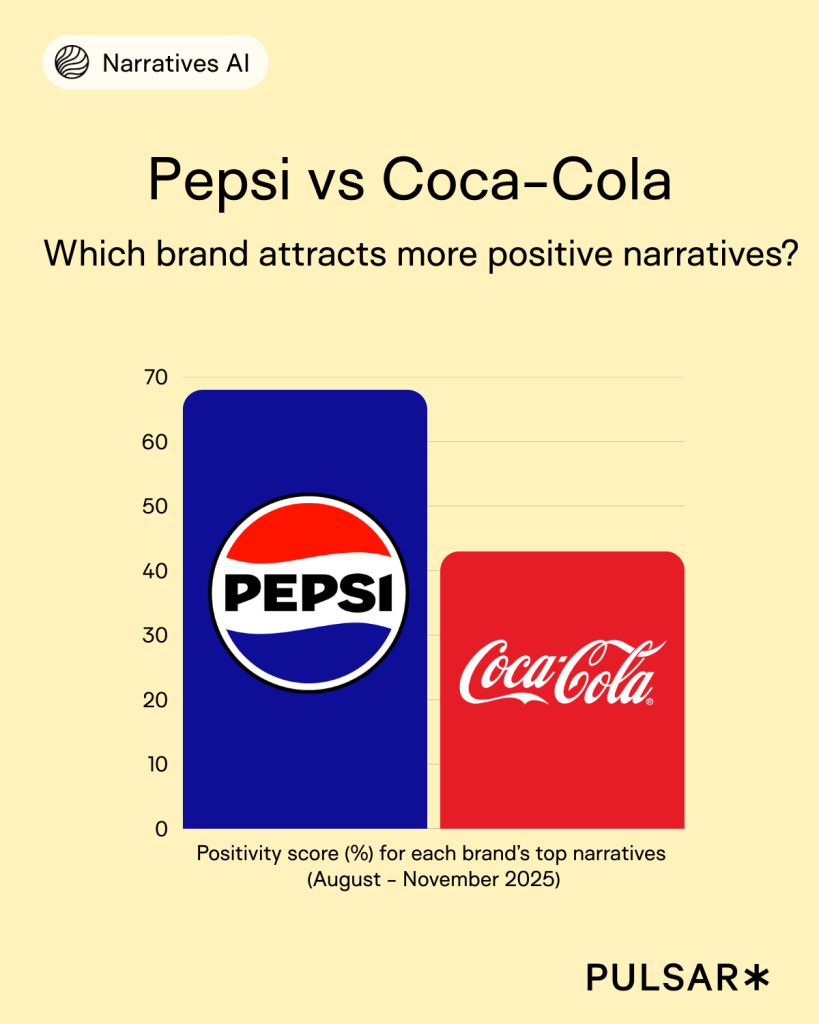
Using Pulsar’s Narratives AI, mapping narrative positivity reveals a clear lead for Pepsi. Between August and November 2025, 74.2% of Pepsi’s narratives are positive, compared to 49.3% for Coca-Cola. The gap points to a meaningful difference in how each brand’s role in culture is currently being interpreted.
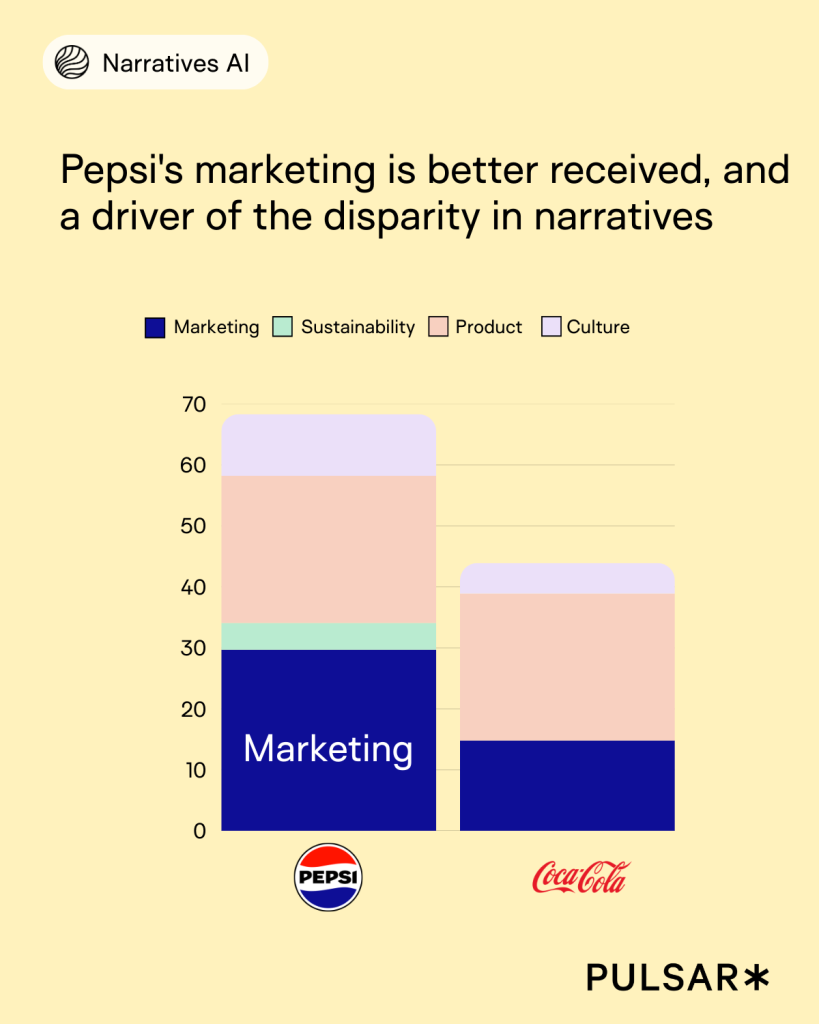
This separation extends beyond sentiment alone. It appears in how audiences describe, share, and amplify each brand’s activity across marketing, sustainability, product, and culture, with marketing narratives emerging as the strongest source of divergence.
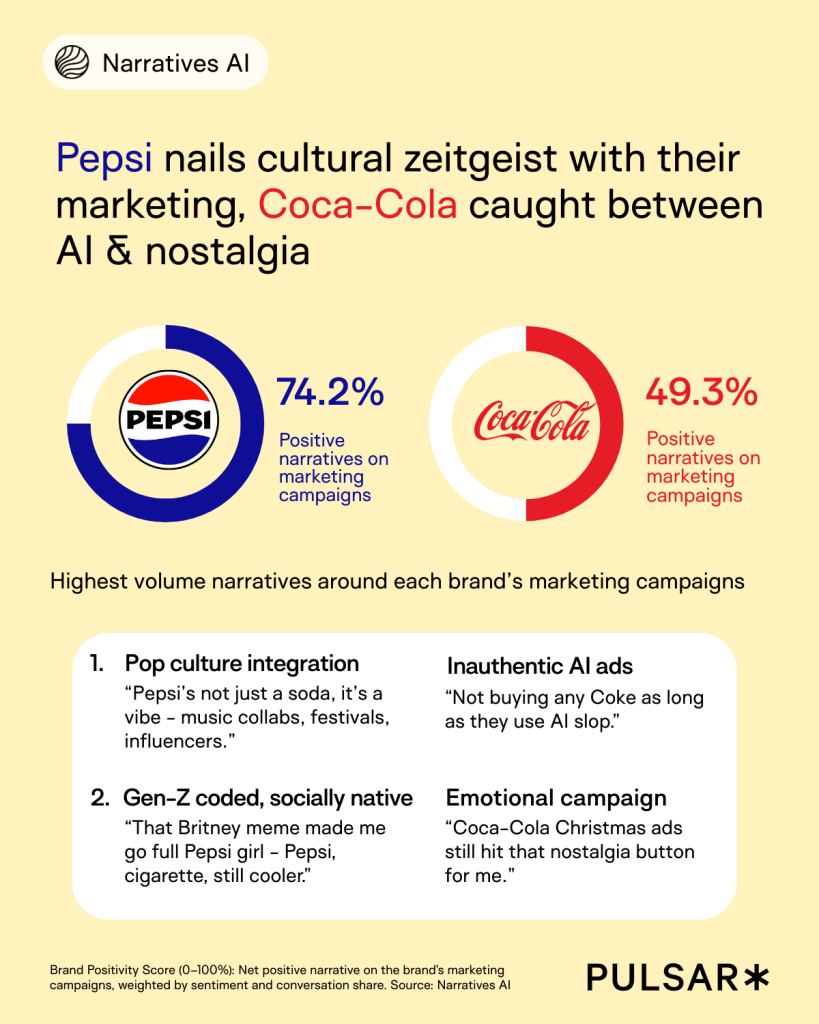
When we isolate marketing narratives, the contrast between the two brands sharpens. Pepsi’s marketing attracts a strongly positive response, driven by campaigns that feel culturally fluent and socially native. Music, sports, memes, and fandoms dominate the conversation, with audiences framing Pepsi as a brand that participates in culture rather than advertising at it.
Pepsi ad featuring Faye Wong (2000) pic.twitter.com/gXWNH28Bvf
— Old Internet (@OldInternetFeel) January 8, 2026
That fluency extends backward as well as forward. Viewed through today’s Y2K revival, Pepsi’s 2000s campaigns are being reinterpreted as work that still maps onto current ideas of cool, circulating as cultural reference points that reinforce the brand’s underdog image.
By contrast, once iconic in marketing, Coca-Cola’s narratives are now more divided. Emotional, nostalgia-led campaigns continue to generate warmth, while newer AI-driven executions introduce friction...
View on Threads
Criticism of inauthentic AI ads pulls positivity down, creating a split narrative between affection for Coke’s heritage and skepticism about how that heritage is evolving.
In attempting to manufacture “cute” and “whimsical” with #AI, Coke has done just the opposite.
Objectively, this commercial is a nightmarish circus of horrors.
I hope the backlash is swift, severe and unforgiving. https://t.co/nI3zDCL0e2
— John "F" Fountain (@FountainCartoon) November 4, 2025
Then, who’s actually shaping the narratives?
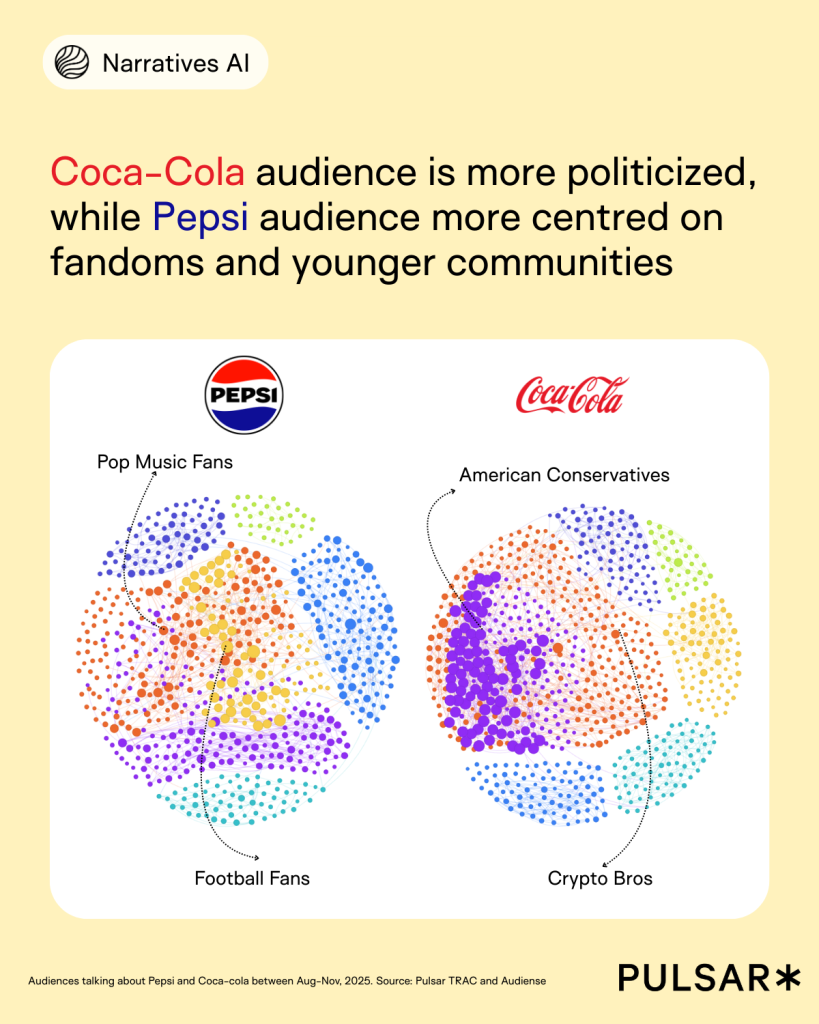
The two brands sit in distinct audience ecosystems. Pepsi’s conversation is driven by younger, fandom-led communities such as pop music and football fans, where brand activity is treated as cultural content to be shared and remixed. Coca-Cola’s audience is more politicized, with strong clusters around American conservatives and crypto communities, making creative choices like AI more likely to trigger debate and scrutiny.
The cola wars are no longer being fought on shelves or in blind taste tests; they are playing out in culture. Pepsi’s narrative momentum comes from marketing that behaves like content and moves easily through fandoms, memes, and shared cultural moments. Coca-Cola faces a more complex balance. Its emotional legacy still carries weight, but newer creative experiments land in audience spaces that are quicker to question intent and authenticity. The rivalry now hinges on how comfortably each brand operates within the conversations shaping public perception.
Pulsar’s Narratives AI reveals how these stories form and gain traction around brand activity, while TRAC shows which audiences are driving them and how they spread. This lens allows you to draw strategic clarity from cultural noise. In categories where brand awareness is a given, advantage belongs to those who understand how culture responds, and adjust before the narrative sets.
To stay up to date with our latest insights and releases, sign up to our newsletter below:
This article was created using data from TRAC